LFM2.5-8B-A1B: A MoE Model with 1.5B Active Parameters Delivering 4x Its Weight Class Performance
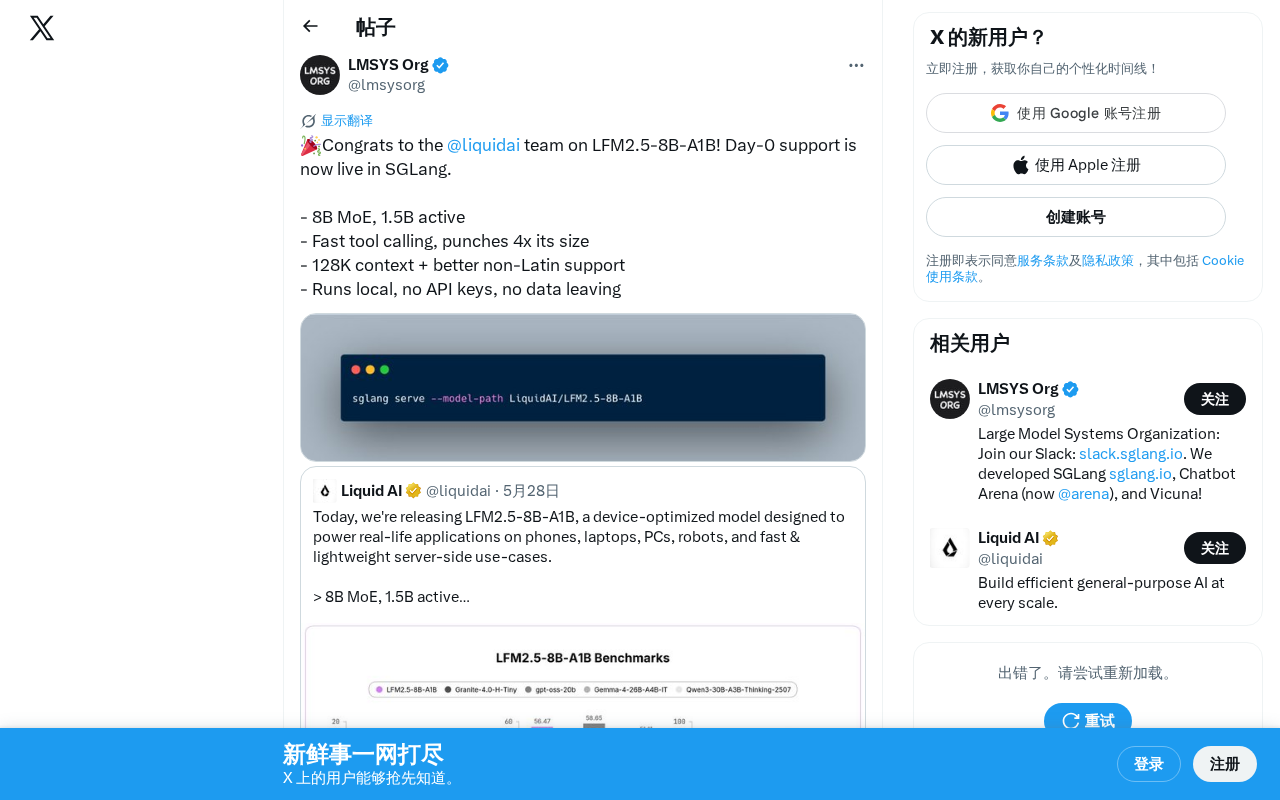
Liquid AI releases MoE model LFM2.5-8B-A1B, achieving beyond-class performance with only 1.5B active parameters.
Liquid AI has released the LFM2.5-8B-A1B model featuring MoE architecture with 8B total parameters but only 1.5B activated during inference, dramatically reducing computational costs. The model excels in tool calling scenarios, claiming 4x weight class performance, and supports 128K context windows and multiple languages. It fully supports local deployment without API keys, with SGLang providing immediate framework support—ideal for privacy-sensitive scenarios and Agent development.
Overview
The Liquid AI team has officially released the LFM2.5-8B-A1B model, a highly efficient language model built on a Mixture of Experts (MoE) architecture. The SGLang inference framework has provided immediate support, allowing users to deploy and use it right away. This model achieves performance far exceeding its scale with an extremely small number of active parameters, drawing widespread attention from the community.
LFM2.5 Core Architecture: 8B Total Parameters with Only 1.5B Active
LFM2.5-8B-A1B employs a MoE (Mixture of Experts) architecture design with 8B total parameters, but only 1.5B parameters are activated during inference. This means the model maintains the knowledge capacity of a large model while dramatically reducing inference computational costs.
The core idea behind MoE architecture is dividing the model into multiple "expert" sub-networks, activating only a subset during each inference pass, thereby significantly improving efficiency without sacrificing model capability. This architecture can be traced back to Jacobs et al.'s research in 1991, but it truly triggered a revolutionary impact in the large language model domain starting with Google's release of Switch Transformer in 2022. The core mechanism of MoE introduces a "Router" (Gating Network) that dynamically determines which expert sub-networks to activate for each input token. Taking LFM2.5 as an example, the 8B total parameters include multiple FFN expert layers, but only approximately 1.5B parameters participate in computation during each forward pass, while the remaining parameters stay in a "dormant" state. This sparse activation mechanism brings two major advantages: first, FLOPs (floating-point operations) during inference are dramatically reduced, directly lowering latency and energy consumption; second, the model's total capacity far exceeds that of dense models with equivalent computational cost, because different experts can specialize in different types of knowledge and tasks. Mistral AI's Mixtral 8x7B (late 2023) and DeepSeek's MoE series pushed this architecture into the mainstream, proving MoE's viability in real-world deployment. LFM2.5's 1.5B active parameter design enables smooth operation even in resource-constrained local environments.
Performance Highlights: Punching Above Its Weight
Outstanding Tool Calling Capability
According to official descriptions, LFM2.5-8B-A1B performs exceptionally well in tool calling scenarios, capable of "delivering 4x its weight class performance." Tool Calling (Function Calling) is a core capability of modern AI Agent architectures, first systematically introduced by OpenAI in June 2023 through the GPT-3.5/4 API. Its technical essence is enabling language models to output structured JSON-format instructions, which external executors use to invoke real functions, APIs, or database queries, then feed results back to the model for next-step reasoning. This capability places special demands on models: they need to precisely understand function signatures (parameter names, types, constraints), correctly identify calling timing within complex instructions, and generate strictly compliant formatted output—any JSON format error will cause the call to fail. LFM2.5's claimed "4x weight class performance" means its scores on tool calling benchmarks (such as the Berkeley Function-Calling Leaderboard) are comparable to models with 4x its parameter count. This means that in practical application scenarios like function calling, this model with 1.5B active parameters can match the performance of 6B-level active parameter models. For developers building ReAct (Reasoning + Acting) frameworks, AutoGen multi-agent systems, and other Agent applications, tool calling accuracy directly determines Agent task completion rates—making this an extremely attractive feature.
128K Context Window and Multilingual Support
The model supports a 128K context window length, capable of handling complex scenarios such as long documents and multi-turn conversations. Supporting a 128K token context window faces multiple engineering challenges. The most critical issue is the computational complexity of the attention mechanism: standard self-attention computation scales quadratically with sequence length, meaning a 128K sequence requires approximately 1000x more attention computation compared to a 4K sequence. Modern long-context models typically employ combinations of techniques to address this: RoPE (Rotary Position Embedding) extrapolation or interpolation to extend positional awareness range; IO-aware algorithms like FlashAttention-2/3 to reduce memory bandwidth bottlenecks; and sparse attention variants like Sliding Window Attention and Sparse Attention to reduce computation. For MoE models, long context also introduces additional KV Cache memory pressure—a 128K sequence's KV Cache can occupy several GB of memory. In practical applications, 128K context enables the model to process approximately 100,000 characters of long documents, complete codebases, or ultra-long conversation histories in a single pass, greatly expanding the boundary of processable tasks. Additionally, LFM2.5 has improved support for non-Latin scripts, which is an important enhancement for users of Chinese, Japanese, Arabic, and other languages.
Local Deployment: A Privacy-First Design Philosophy
A major selling point of LFM2.5-8B-A1B is full support for local execution:
- No API Key Required: No dependency on cloud services, lowering the barrier to entry
- No Data Leakage: All inference is completed locally, suitable for scenarios with strict data privacy requirements
- SGLang Day-0 Support: SGLang, as a high-performance inference framework, integrated this model immediately, allowing users to deploy efficiently through SGLang directly
SGLang (Structured Generation Language) is a high-performance LLM inference framework developed by the UC Berkeley LMSYS team, which quickly gained community recognition after being open-sourced in early 2024. Compared to frameworks like vLLM, SGLang's core innovation lies in its RadixAttention mechanism—intelligently reusing KV Cache through a Radix Tree structure, significantly improving throughput in multi-turn dialogue and batch inference scenarios. For MoE models, SGLang has also implemented specialized optimizations for Expert Parallelism, efficiently scheduling computational loads across different experts in multi-GPU environments. "Day-0 support" means the inference framework completed adaptation on the same day the model was released—this requires advance collaboration between the framework team and model team to jointly handle technical details such as model weight formats, attention mechanism implementation, and tokenizer adaptation, saving users significant manual adaptation engineering work. Due to only 1.5B active parameters, the model has relatively low hardware requirements and can run on consumer-grade GPUs, greatly lowering the barrier for local deployment.
Industry Significance and Development Trends
The release of LFM2.5-8B-A1B reflects several important trends in current AI model development:
- Efficiency First: MoE architecture is becoming the mainstream approach for balancing performance and efficiency—from Mixtral to DeepSeek to Liquid AI, an increasing number of teams are choosing this path
- Local Deployment: With growing privacy awareness and edge computing demands, models that can run efficiently locally are becoming increasingly popular
- Specialized Capability Breakthroughs: Models no longer pursue across-the-board dominance, but instead achieve performance exceeding same-tier models in specific capabilities (such as tool calling)
Liquid AI was founded in 2023 by Ramin Hasani, Mathias Lechner, and other researchers from MIT CSAIL. Their technical foundation is the Liquid Neural Networks (LNN) theory they developed during their time at MIT. LNN draws inspiration from research on the nervous system of C. elegans—an organism with only 302 neurons that exhibits remarkably adaptive behavior. The mathematical essence of Liquid Neural Networks is a class of continuous-time neural networks based on ordinary differential equations (ODEs), where neurons' time constants dynamically change with input, thus possessing stronger temporal modeling capability and robustness to distribution shifts. Compared to Transformer's discrete attention mechanism, LNN demonstrates extremely high parameter efficiency when processing temporal signals (such as robot control and autonomous driving sensor data). The LFM (Liquid Foundation Model) series is the product of combining these theoretical advantages with modern large model engineering practices. The release of LFM2.5 indicates that the team is extending its efficiency advantages into more practical product forms, representing an important transition from academic research to commercialized products.
Summary
For developers, LFM2.5-8B-A1B offers an extremely cost-effective choice: excellent performance in critical scenarios like tool calling, support for long context and multiple languages, and the ability to run entirely locally. Combined with SGLang's immediate support, the deployment and usage experience is quite smooth. If you're looking for a lightweight yet powerful local model for Agent development or tool calling scenarios, LFM2.5 is worth trying.
Key Takeaways
- LFM2.5-8B-A1B uses MoE architecture with 8B total parameters but only 1.5B active, dramatically reducing inference costs
- Outstanding tool calling capability, officially claimed to deliver 4x its weight class performance
- Supports 128K context window with improved non-Latin script support
- Fully supports local execution with no API key required and no data leakage
- SGLang inference framework provides Day-0 immediate support for direct deployment
Related articles
 Tech Frontiers
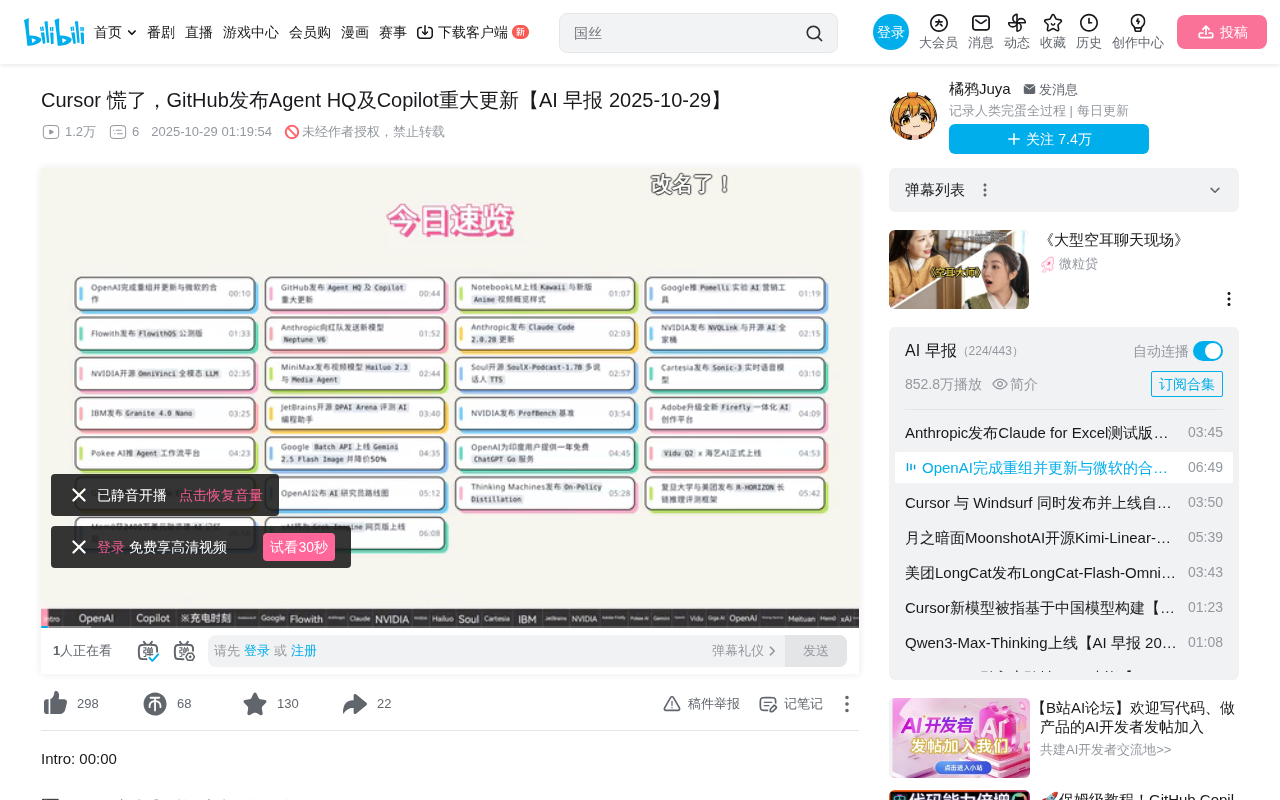
GitHub Agent HQ Launch: AI Coding Tools Enter the Era of Platform Competition
GitHub Universe unveils Agent HQ platform for unified coding agent management, Copilot upgrades with multi-model support. OpenAI completes restructuring, Anthropic tests new model, NVIDIA open-sources AI models.
 Tech Frontiers
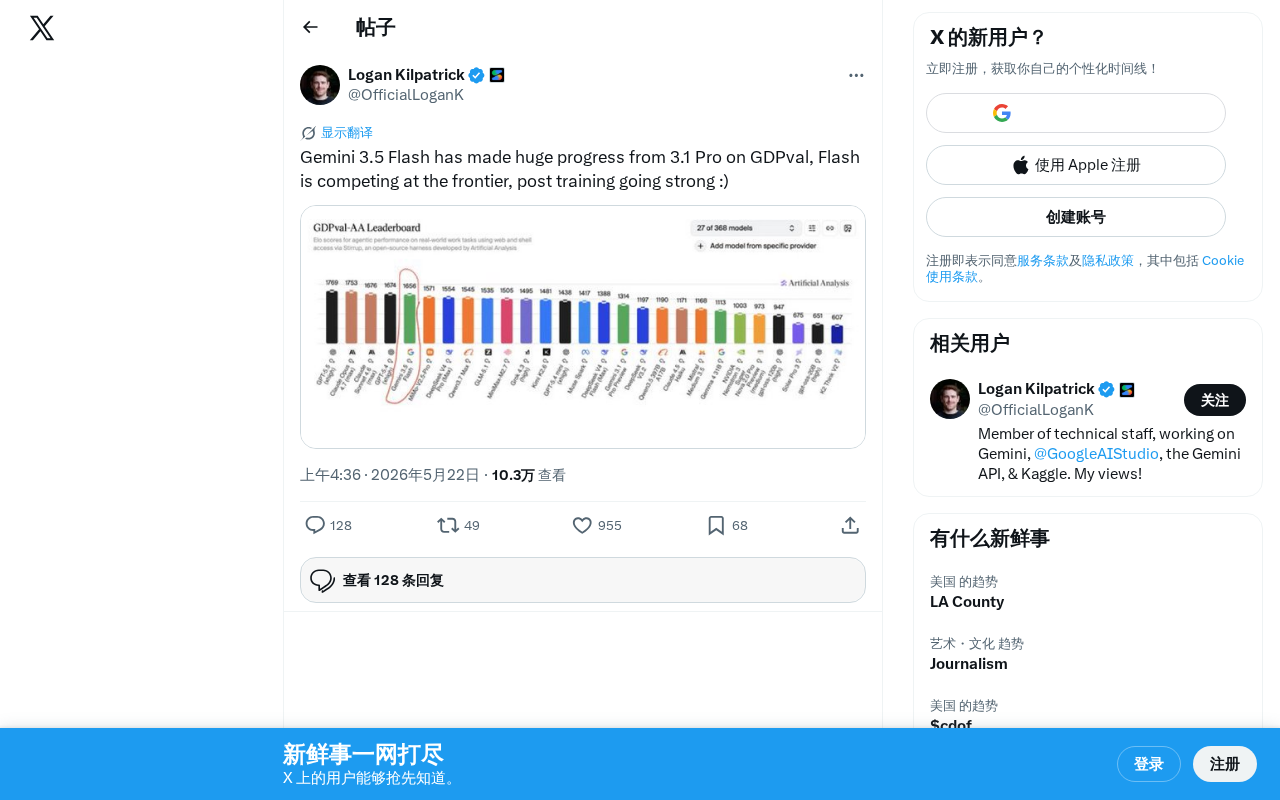
Gemini 3.5 Flash Achieves a Massive Leap on the GDPval Benchmark
Google Gemini 3.5 Flash surpasses Gemini 3.1 Pro on the GDPval benchmark. The lightweight Flash model leverages post-training techniques to approach frontier-level performance, redefining the balance between quality and cost.
 Tech Frontiers
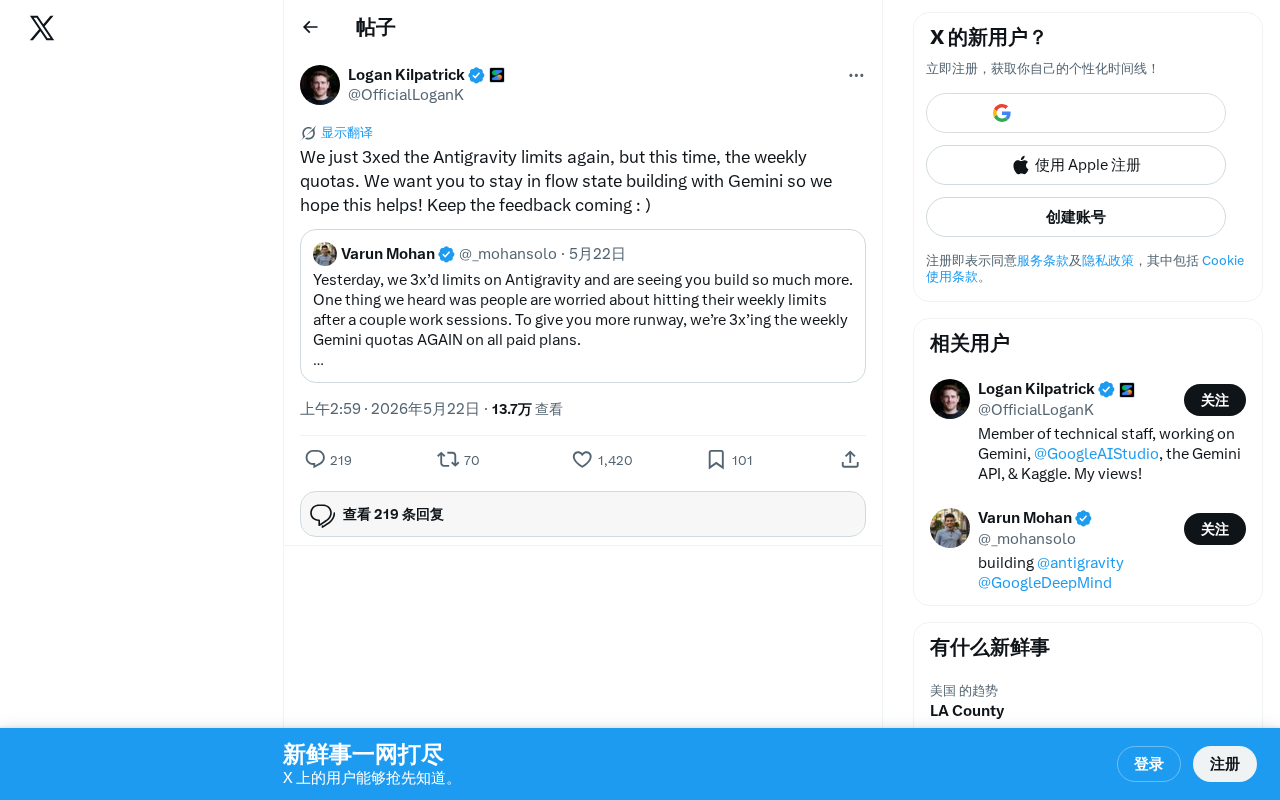
Google Gemini Antigravity Weekly Quota Tripled — AI Coding Without Limits
Google Gemini triples Antigravity weekly quotas following a prior daily quota boost. Analyzing the impact on developers and its strategic significance in AI coding.