n8n Workflow Platform: A Practical Guide to Automation Orchestration and AI Agent Development
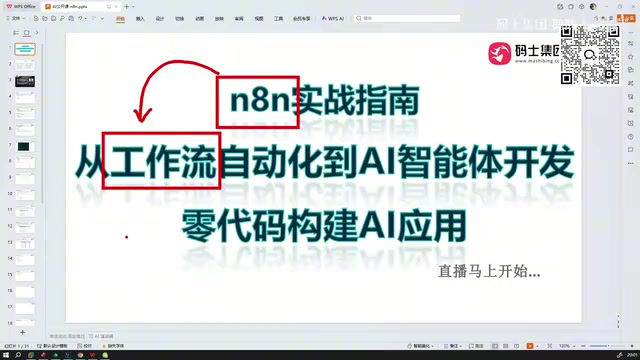
A comprehensive guide to n8n's workflow orchestration and AI Agent development capabilities.
This guide explores n8n as an open-source workflow automation platform, detailing its three core AI modules—AI Agent, Chain nodes, and Tool nodes—and how they enable intelligent automation. It also provides a complete walkthrough for building RAG knowledge base Q&A systems using n8n's visual node-based approach, making enterprise AI applications accessible without coding.
What Is n8n? Far More Than Just an AI Workflow Tool
n8n is an open-source workflow automation platform, but many people have a common misconception about it—equating it simply with an AI workflow tool. In reality, n8n is fundamentally a general-purpose workflow orchestration platform capable of handling all kinds of automation tasks, such as:
- Data cleaning and batch processing
- Scheduled automatic publishing of video content
- Web scraping and data analysis
- Batch collection and analysis of video links and comments
Put simply, n8n's core capability lies in workflow orchestration. Through a visual node-connection approach, it enables users to build complex automation processes without writing code. AI capability is just one of n8n's many integration directions—important, but far from the whole picture.
Workflow Orchestration is a technical paradigm that chains, parallelizes, or conditionally branches multiple independent tasks according to predefined logical relationships. This concept originally emerged from the enterprise BPM (Business Process Management) domain and was later introduced to data engineering by tools like Apache Airflow and Prefect as microservice architectures and DevOps gained traction. What makes n8n unique is its node-based visual programming model, where each node encapsulates an atomic operation (such as an HTTP request, data transformation, or conditional logic), and nodes are connected through data flows to form a Directed Acyclic Graph (DAG). Unlike SaaS competitors like Zapier and Make, n8n is open-sourced under a fair-code license and supports self-hosted deployment, meaning enterprises can keep sensitive data entirely within their own infrastructure to meet data compliance requirements.
n8n's Deep Integration with AI: Three Core Modules
With the explosive growth of AI technology, n8n has rolled out extensive AI-focused updates over the past year, making it a powerful platform for building AI applications.
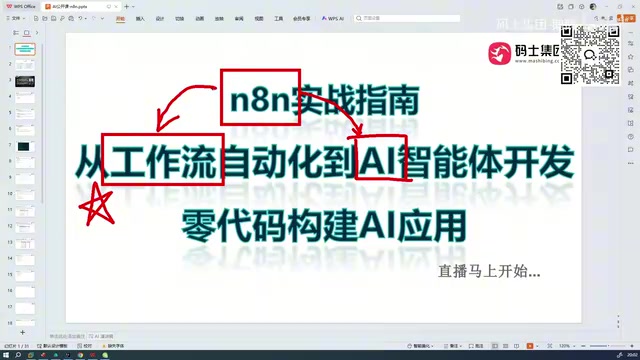
The core content of n8n's AI integration can be summarized into three modules: AI Agent, Chain nodes, and Tool nodes. Let's break them down one by one.
AI Agent: Intelligent Agents with Autonomous Decision-Making
The AI Agent is the core node for building intelligent agents in n8n. Think of it as an AI assistant capable of autonomous decision-making—it analyzes user input and automatically determines which tools to invoke and which steps to execute to complete a task.
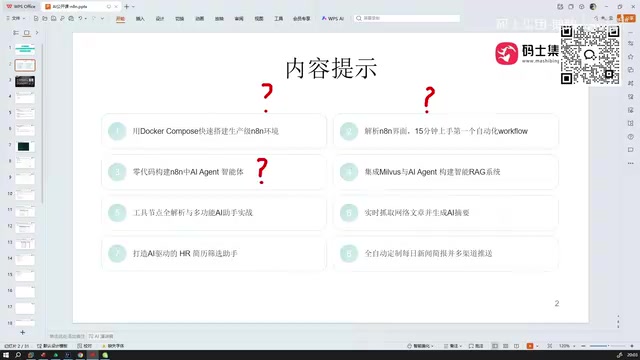
In n8n, the AI Agent node supports integration with various large language models (such as the OpenAI GPT series, Claude, etc.) and can be configured with system prompts, memory modules, and other components to give the agent contextual understanding and multi-turn conversation capabilities. This means your Agent can not only answer one-off questions but also maintain conversational coherence across continuous interactions.
The concept of AI Agent originates from classical artificial intelligence theory—the BDI (Belief-Desire-Intention) architecture—but has been given entirely new meaning in the era of large language models. The core mechanism of modern AI Agents is the ReAct (Reasoning + Acting) framework: after receiving user instructions, the model enters a "think-act-observe" loop—first reasoning about what to do, then calling external tools to execute operations, and finally deciding the next step based on the returned results. This is fundamentally different from traditional single-turn Q&A. OpenAI's Function Calling and Anthropic's Tool Use protocols provide standardized interfaces for this interaction, enabling LLMs to output tool invocation instructions in structured JSON format, and n8n leverages these protocols to seamlessly connect Agent decision-making with actual tool execution.
Chain Nodes: Deterministic Chain-Based AI Processing
Chain nodes are another important type of AI integration in n8n. Unlike the autonomous decision-making of Agents, Chain nodes are better suited for AI tasks with defined processes and clear steps. n8n currently offers three types of Chain nodes, each corresponding to different scenarios:
- Basic LLM Chain: Directly calls a large model to complete single-step tasks like text generation and content summarization
- RAG Chain: Combines Retrieval-Augmented Generation technology to enable precise Q&A based on private knowledge bases
- Sequential Chain: Links multiple AI processing steps together to accomplish complex multi-step reasoning
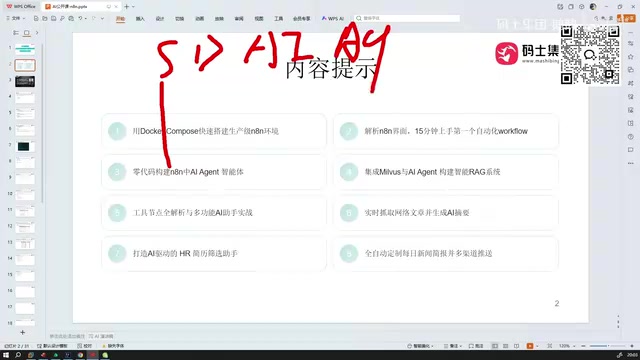
n8n's Chain node design is heavily influenced by the LangChain framework. LangChain is one of the most popular LLM application development frameworks, abstracting complex AI tasks into the concept of "chains"—each chain represents a processing unit, and multiple chains can be linked to form more complex pipelines. n8n visualizes this programming paradigm, allowing users to achieve chain-based calls through drag-and-drop nodes that would otherwise require writing Python code. Sequential Chain is particularly suited for scenarios requiring multi-step reasoning, such as first extracting key information from a document, then generating a structured report based on that information, and finally performing quality assessment on the report—each step's output automatically becomes the next step's input.
These three types of Chain nodes can be flexibly combined to handle different types of tasks, and they also provide a solid infrastructure for building RAG systems.
Tool Nodes: Taking AI from "Conversation" to "Action"
Tool nodes are the key extension of AI Agent capabilities. When an Agent needs to perform specific operations—such as searching the web, querying databases, or calling third-party APIs—it relies on tool nodes. n8n includes a rich set of built-in tool nodes, including:
- Web search tools
- Code execution tools
- Database query tools
- HTTP request tools
- File processing tools
With these tool nodes, AI Agents are no longer limited to text-based conversations—they can truly "take action," completing the full loop from information retrieval to task execution.
Building a RAG Knowledge Base Q&A System with n8n
RAG (Retrieval-Augmented Generation) is one of the hottest architectures in enterprise AI applications today, and n8n provides complete support for building RAG systems. By combining vector database nodes, document loaders, text splitters, and Embedding models, users can quickly set up a functional knowledge base Q&A system.
RAG (Retrieval-Augmented Generation) was first proposed by Meta AI's research team in 2020, aiming to solve two core pain points of large language models: knowledge cutoff date limitations and hallucination problems. The core idea is to retrieve the most relevant document fragments from an external knowledge base before generating an answer, injecting these fragments as context into the LLM's prompt so the model generates responses based on real data. This process involves several key technical components: text splitting (Chunking) strategies directly affect retrieval quality, with common methods including fixed-length splitting, semantic splitting, and recursive character splitting; Embedding models (such as OpenAI's text-embedding-3-small and the open-source BGE series) are responsible for mapping text into high-dimensional vector spaces; and vector databases provide efficient Approximate Nearest Neighbor (ANN) search capabilities, finding the most relevant fragments from millions of documents in milliseconds.
A typical RAG workflow consists of four steps:
- Document Import: Obtain raw documents (PDF, Word, web pages, etc.) through file nodes or API interfaces
- Text Processing: Use text splitters to divide long documents into appropriately sized chunks while ensuring semantic integrity
- Vectorization and Storage: Call Embedding models to convert text chunks into vectors and store them in vector databases like Pinecone or Qdrant
- Retrieval and Q&A: When a user asks a question, first retrieve the most relevant chunks from the vector database, then combine them with an LLM to generate accurate answers
Regarding vector database selection, different products suit different scenarios. Pinecone is a fully managed cloud service that works out of the box but carries data sovereignty risks; Qdrant is written in Rust, offers excellent performance, and supports self-hosting, making it suitable for latency-sensitive scenarios; Milvus, open-sourced by Zilliz, excels with large-scale datasets and has been widely adopted in recommendation systems and image retrieval. For teams just getting started, n8n also supports Supabase's pgvector extension, allowing you to add vector search capabilities directly to an existing PostgreSQL database without introducing additional infrastructure complexity.
The entire process can be completed in n8n through dragging and dropping nodes and configuring parameters—no code required. For teams without deep technical backgrounds, this significantly lowers the barrier to deploying RAG systems.
Summary: Learning Path and Practical Recommendations for n8n
As an open-source, self-hostable workflow platform, n8n has become one of the top choices for building AI automation applications thanks to its deep integration with AI.
n8n supports self-hosted deployment via Docker, Kubernetes, and other methods, which holds significant importance for enterprise AI application scenarios. First, self-hosting means all workflow data, API keys, and business logic run on the enterprise's own servers, meeting data compliance requirements like GDPR and other regulatory standards. Second, self-hosting eliminates the cost pressure of SaaS platforms that charge per execution—for high-frequency automation tasks (such as data synchronization triggered every minute), the cost advantage is substantial. Finally, in a self-hosted environment, users can freely install npm packages and call local services, breaking through cloud platform sandbox limitations to achieve more flexible custom development.
For developers and enterprises looking to quickly implement AI scenarios, mastering n8n's three core AI modules—AI Agent, Chain nodes, and Tool nodes—is the key.
Here's the recommended learning path:
- Beginner Stage: First familiarize yourself with n8n's basic workflow building, understanding core concepts like nodes, connections, and triggers
- Intermediate Stage: Dive deep into AI Agent configuration and optimization, experimenting with different large language model integrations
- Hands-on Stage: Build a complete RAG knowledge base Q&A system, connecting the entire pipeline from document processing to intelligent Q&A
Progressing step by step is the way to truly unlock n8n's powerful potential in AI automation.
Related articles

AI Large Model Learning Roadmap Breakdown: Three Stages from Application Development to Model Fine-Tuning
Deep breakdown of a popular AI large model learning roadmap covering LangChain, RAG, Agent, and LoRA fine-tuning across three stages, with analysis of its strengths and limitations for career changers.
AI Agent Development: A Complete 6-Week Systematic Learning Roadmap
A 6-week systematic learning roadmap for AI Agent development, covering core architecture, ReAct principles, multi-agent collaboration, RAG integration, and deployment.
Four Core Advantages Frontend Developers Have When Transitioning to AI Agent Development
Frontend developers have key advantages for AI Agent development: TypeScript ecosystem fit, low-barrier full-stack bridging, and state management isomorphism. Learn the transition path here.