Nex N2 Pro In-Depth Review: How Does This Chinese Open-Source Agent Model Really Perform?
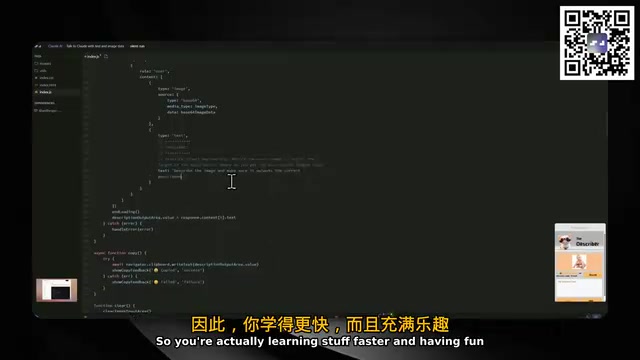
Hands-on review of Nex N2 Pro reveals solid coding skills but notable gaps between official benchmarks and real-world performance.
This in-depth review tests Nex N2 Pro, a Chinese open-source Agent model with 397B parameters (17B active). While it shows strong frontend code generation and advanced Agent workflow design, independent benchmarks rank it 12th — far below official claims of top-5 performance. Clear GPT distillation traces and slow adaptive thinking are notable trade-offs. It's free for two weeks and worth trying, but developers should verify with their own tasks.
Nex N2: A Chinese Open-Source Model Family Designed Specifically for Agent Tasks
While all eyes remain fixed on the closed-source model race among major tech companies, a Chinese team called Nex AGI has quietly released an ambitious open-source Agent model family — Nex N2. This isn't just a model that "thinks" — its core positioning is a model that "acts."
Nex N2 is purpose-built for coding, search, tool calling, deep research, and long-horizon Agent workflows. In the AI field, an Agent refers to an AI system capable of autonomously perceiving its environment, formulating plans, executing actions, and adjusting strategies based on feedback. Unlike traditional single-turn Q&A, Agent workflows emphasize multi-step, multi-tool coordinated execution — the model needs to work like a human engineer: first understand the task objective, then decompose it into subtasks, call external tools like search engines, code executors, and APIs, handle errors and exceptions in intermediate results, and ultimately deliver a complete output. This capability is considered one of the key paths toward Artificial General Intelligence (AGI).
What sets Nex N2 apart from other models is that it unifies all these capabilities into a consistent reasoning loop — decomposing goals, tracking current state, adjusting strategies, verifying results, and iterating continuously. This is crucial for real-world Agent tasks, because the hardest workflows are never purely about "writing code" or "searching the web" — they're hybrid processes that involve searching for context, writing code, calling tools, debugging errors, revising plans, and ultimately verifying output.
Nex N2 Model Architecture and Parameter Specifications
The Nex N2 family includes two models:
- Nex N2 Mini: A 35-billion-parameter MoE model with approximately 3 billion active parameters
- Nex N2 Pro: A 397-billion-parameter MoE flagship model with 17 billion active parameters
MoE (Mixture of Experts) is an efficient model architecture design whose core idea is to divide model parameters into multiple "expert" sub-networks, activating only a subset during inference. For example, Nex N2 Mini has 35 billion total parameters but only 3 billion active parameters, meaning each inference call uses roughly 8.6% of the parameters. This design allows the model to maintain the knowledge capacity of a large model while dramatically reducing the computational resources needed for inference. Well-known models like DeepSeek V2 and Mixtral also employ similar architectures, and MoE has become the mainstream technical approach for balancing performance and efficiency in large models.
The Pro model is built on the QWen 3.5 architecture, supports text and image inputs, and features reasoning, function calling, and structured output capabilities. The context window is 262K tokens. A context window refers to the maximum number of tokens a model can process in a single inference pass — 262K tokens is roughly equivalent to a medium-length book. A larger context window means the model can handle more information in a single conversation, which is particularly important for codebase analysis, long document comprehension, and complex Agent tasks. Currently, Google Gemini supports context windows of 1 million or even 10 million tokens, Claude supports 200K, and GPT-4o supports 128K. Nex N2's 262K isn't behind in absolute terms, but there's still room for improvement as long-context capability increasingly becomes a competitive focal point.
Most exciting of all, the Nex AGI team announced that Nex N2 Pro is completely free for two weeks with unlimited usage — an incredibly attractive opportunity for developers to try it out.
Nex N2 Pro Official Benchmark Data
The benchmark data published by the Nex AGI team is quite impressive:
- Browser Comp: Surpasses Opus 4.7
- Terminal Bench: 75.3 points
- SWE Bench Pro: 58.8 points
- DeepSway: Surpasses Kimi K2.6
- GDP EVOL: Approaching 1600 points
Based on the official data, this represents a case of an open-source model competing head-to-head with closed-source giants, while also surpassing Chinese models like DeepSeek V4 Pro and GLM 5.1.
Hands-On Testing: Detailed Assessment of Coding Ability and Generation Quality
Frontend Code Generation Testing
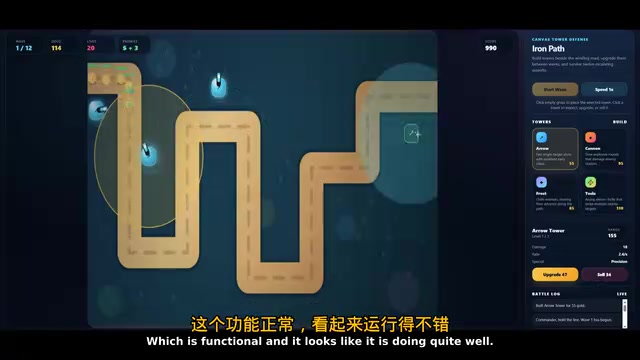
In hands-on testing, Nex N2 Pro demonstrated solid frontend code generation capabilities. Testers asked it to create a macOS clone interface, a Windows 95-style desktop, a tower defense game, and other complex projects — the model delivered functionally robust outputs across the board.
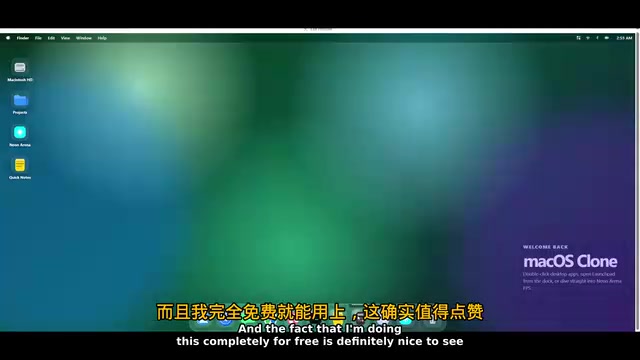
You might not have noticed, but when given more detailed descriptive requirements, the model follows all specifications quite well — including scroll-triggered effects, typography design, dynamic motion effects, and more. In the Windows-style desktop generation, it even managed to code multiple functional components including a Start menu, Paint application, Calculator, and MS-DOS prompt.
Output Style Analysis: Clear Signs of GPT Distillation
One obvious characteristic is that Nex N2's output style is highly similar to GPT models. From the UI elements, color tones, and text fonts to panel layouts in frontend generation, clear GPT-style traces are evident. This strongly suggests the model underwent distillation from GPT-style outputs during the post-training phase.
Knowledge Distillation is a widely used model training technique that transfers knowledge by having a smaller model (student model) learn the output distribution of a larger model (teacher model). When we say "GPT distillation traces," we mean that Nex N2 likely used outputs from GPT-series models as training data or alignment targets during post-training, resulting in generation styles, UI design preferences, and even phrasing habits that closely resemble GPT. This practice is not uncommon in the open-source community — many open-source models draw to varying degrees on closed-source model outputs to improve their own quality — but it has also sparked ongoing discussions about model independence and intellectual property.
This isn't necessarily a bad thing — for users, it means getting output quality close to GPT level for free. But it also explains why the model performs impressively in certain demos yet inconsistently in broader evaluations.
Generation Speed: The Cost of Adaptive Thinking
Due to its adaptive thinking mode, Nex N2 can be extremely slow when generating output. Adaptive Thinking is a dynamic reasoning strategy where the model automatically adjusts its thinking depth and number of reasoning steps based on problem complexity. Simple questions get quick answers, while complex questions undergo multiple rounds of internal reasoning, self-verification, and strategy adjustment. This aligns with the Chain-of-Thought reasoning philosophy introduced by OpenAI's o1 series models, but goes a step further by making reasoning depth dynamically adjustable.
It plans, reasons, self-checks, and iterates — an excellent design for Agent workflows, but when you need quick output, the wait time can be painful. The trade-off is unpredictable generation latency — users may face long wait times even on simple tasks.
How Big Is the Gap Between Independent Evaluations and Official Benchmarks?
This point deserves special attention: independent test results show a significant gap from official claims. In the World of AI Benchmark independent evaluation, Nex N2 Pro ranked 12th, whereas the official claims suggest it can compete with the top five frontier models.
Testers believe Nex N2 exhibits a degree of "Benchmark Maxing" — over-optimization for benchmark tests. This is an increasingly serious problem in the AI industry: model developers may artificially inflate scores by over-training on specific benchmark data distributions, tuning hyperparameters, or even mixing test-set-related content into training data. This causes models to perform excellently on benchmarks but mediocrely on real-world tasks. Academia calls this phenomenon "teaching to the test," and it significantly undermines the credibility of benchmark scores — which is precisely why independent third-party evaluations are becoming increasingly important.
In real-world testing, Nex N2 Pro's performance is more inconsistent, showing a clear gap from the picture painted by official data.
Nex N2 Pro: Comprehensive Assessment and Usage Recommendations
Core Strengths
- Open-source and free, with two weeks of unlimited usage
- Solid coding output quality
- Impressive frontend generation capabilities
- Advanced Agent workflow design philosophy
- Adaptive thinking mode well-suited for complex tasks
Current Shortcomings
- Gap between official benchmarks and real-world performance
- Slow generation speed
- Output consistency needs improvement
- Obvious GPT distillation traces
- 262K context window is relatively limited
How to Use Nex N2 Pro
- Access via OpenRouter API
- Download open-source weights for local deployment (Mini model can be quantized to 8-bit for consumer-grade hardware)
- Test for free online via World of AI Benchmark
Conclusion: Worth Trying, but Stay Rational
Nex N2 Pro is an impressive, underrated, and genuinely useful model — but you shouldn't blindly trust its official benchmark data. In specific scenarios (especially coding and frontend generation), it can deliver an experience close to frontier models, and it's completely free. For developers, the most pragmatic approach is to take advantage of the two-week free period for in-depth testing and evaluate its capabilities against your own real-world tasks.
The pace of progress in Chinese open-source models is truly exciting, but maintaining rational assessment and waiting for more independent benchmark verification remains the right attitude when facing any new model.
Related articles
Free Full-Power GPT on AI Aggregation Platforms? The Risks and Truth Behind Shared Accounts
Deep analysis of AI aggregation platforms promoted on Bilibili, exposing privacy leaks and legal risks of shared account pools for free GPT and Claude access, plus safe alternatives like OpenRouter and DeepSeek.
GPT, Claude, Gemini vs. China's Top Three: A Complete Comparison of Coding Ability, Chinese Language Performance & Pricing
A side-by-side comparison of GPT, Claude, Gemini, Tencent Hunyuan, Qwen, and DeepSeek across coding ability, Chinese language performance, and API pricing to help you find the best fit.
Learn to Code with AI from Scratch: A Complete Learning Path from Beginner to Deployment
A complete learning path for coding with AI from scratch — from concepts and environment setup to using Cursor, Claude, and other AI tools to build and deploy your first project.