Runway Adds Tool Calling to Real-Time Video Characters, Moving from Conversation to Intelligent Execution
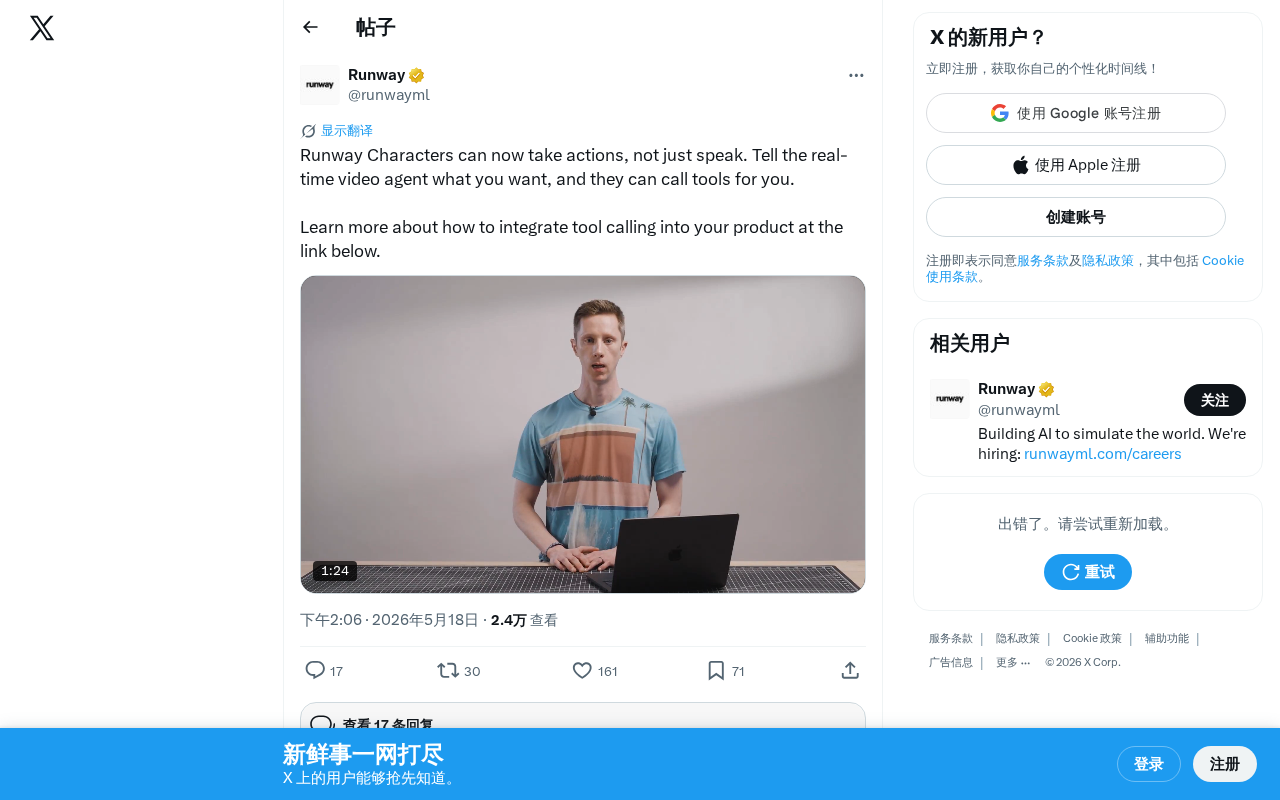
Runway's video characters gain tool calling, transforming from conversational AI into action-capable agents.
Runway has added tool calling capabilities to its real-time video Characters, enabling virtual agents to execute actual tasks like information retrieval, bookings, and system integrations during live video interactions. This upgrade, with open developer APIs, marks Runway's strategic shift from video generation tool to intelligent agent platform, aligning with the broader industry trend toward agentic AI.
Runway Characters Upgrade: From Conversation to Action
Runway recently announced a major update to its real-time video Characters feature — characters are no longer limited to voice conversations and can now perform actual operations. Users simply tell the real-time video agent what task they want to accomplish, and the character can invoke tools to execute the command.
Runway is an AI startup founded in 2018, initially known for its video generation models Gen-1 and Gen-2, later launching more powerful models like Gen-3 Alpha. Since 2024, Runway has gradually transitioned from a pure video generation tool to a comprehensive AI media platform. Its real-time video Characters feature allows users to create virtual characters with specific appearances and personalities, enabling real-time video interaction through cameras. The addition of tool calling capability marks a critical step in Runway's transformation from content generation to intelligent agents.
This upgrade signifies a key leap for AI video agents — from "being able to speak" to "being able to act."
Tool Calling: The Core New Capability of Runway's Video Agents
What Is Tool Calling
Tool Calling is one of the core capabilities in the large language model space, allowing AI agents to identify user intent during conversations and invoke external APIs or services to complete specific tasks. By bringing this capability to real-time video characters, Runway has given these virtual characters genuine "execution power."
From a technical implementation perspective, tool calling typically follows a standard workflow: first, developers register descriptions of available tools with the model (including function descriptions, parameter formats, etc.); then, the model determines during conversation whether the user's intent requires a tool call; if so, the model generates a structured tool call request (usually in JSON format), which the system executes and returns results to the model; finally, the model generates a final response based on the tool's returned results. OpenAI's Function Calling, Anthropic's Tool Use, and Google's Function Calling all employ similar mechanisms. Runway's integration of this capability with real-time video characters means that characters can seamlessly trigger external operations during video conversations, and users can even confirm operation status through the character's visual feedback.
Practical Application Scenarios
With tool calling capabilities, Runway's real-time video characters could support the following scenarios:
- Information Retrieval: Characters can invoke search tools to fetch and display information in real time
- Task Execution: Complete bookings, orders, and other operations through integrated third-party services
- Data Processing: Invoke computation tools for data analysis or format conversion
- System Integration: Connect with enterprise internal systems to automate business workflows
Implications for Developers
Runway has simultaneously opened up integration interfaces for tool calling, allowing developers to embed this capability into their own products. This opens new possibilities for building more interactive AI applications:
- Virtual customer service agents can not only answer questions but also directly help users complete operations
- Digital human livestreams can respond to audience needs in real time and execute actions
- AI teachers in educational settings can demonstrate operations rather than merely explain them
By defining tool descriptions and callback interfaces, developers can give Runway characters domain-specific execution capabilities, significantly lowering the barrier to building embodied interactive AI applications.
Industry Trend Observations
From video generation to real-time interaction to tool calling, Runway is pushing video AI from a "content production tool" toward an "intelligent agent platform." This direction is highly aligned with the current AI industry's agentic trend — AI no longer just generates content but can understand intent and take action.
AI Agents are one of the most important development directions in the AI industry for 2024-2025. Unlike traditional AI assistants that can only generate text, AI Agents possess the ability to perceive environments, formulate plans, use tools, and autonomously execute tasks. From OpenAI's GPTs and Operator, to Anthropic's Computer Use, to Google's Project Astra, mainstream AI companies are all advancing agentic strategies. Core characteristics of agents include autonomy, tool-use capability, memory and context retention, and multimodal interaction. Runway's real-time video characters gaining tool calling capability represents the realization of agentic AI within the vertical scenario of video interaction.
The combination of real-time video characters and tool calling essentially merges multimodal interaction with AI Agent capabilities, providing a more intuitive and natural paradigm for next-generation human-computer interaction interfaces. Human-computer interfaces have evolved from command lines to graphical interfaces, then to touch and voice. The currently emerging "agentic interface" allows users to express intent through natural language or even multimodal means, with AI agents responsible for understanding and executing. Real-time video characters represent the embodied form of this trend — users no longer face text boxes or buttons, but a visualized virtual character with expressions and movements, making the interaction closer to natural communication between people.
Key Takeaways
Related articles

Claude Code for Test Development in Practice: An AI Programming Workflow That Doubles Your Efficiency
A practical guide to Claude Code for test development: auto-generating test scripts, Plan Mode workflows, MCP + Playwright integration, and Subagent parallel tasks to build systematic AI-assisted workflows.
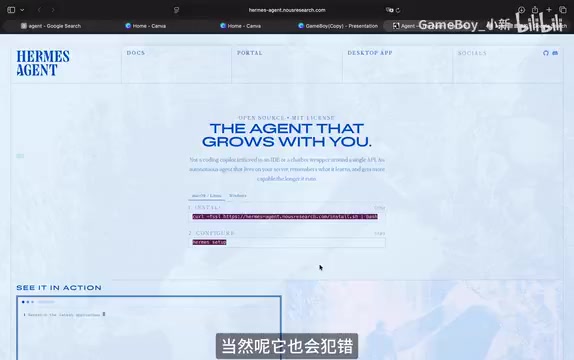
Hermes Agent Hands-On Review: An AI Efficiency Revolution for Indie Game Developers
Indie game developer reviews Hermes Agent vs OpenClaude: intelligent context compression, real-time Memory, remote control via Telegram, and practical use cases in game dev, social media, and email.
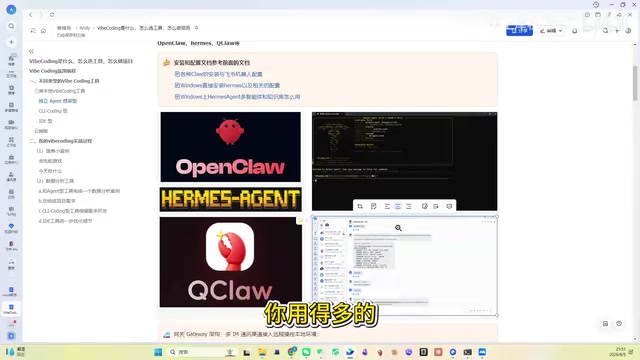
Vibe Coding Beginner's Guide: Tool Selection Across Three Categories with Practical Examples
A comprehensive guide to Vibe Coding's three tool categories: Agent frameworks, CLI Coding, and IDE tools, with practical examples including Snake game and data analysis workbench.