The Vibe Coding Flow State: When AI Coding Speed Outpaces Creative Output
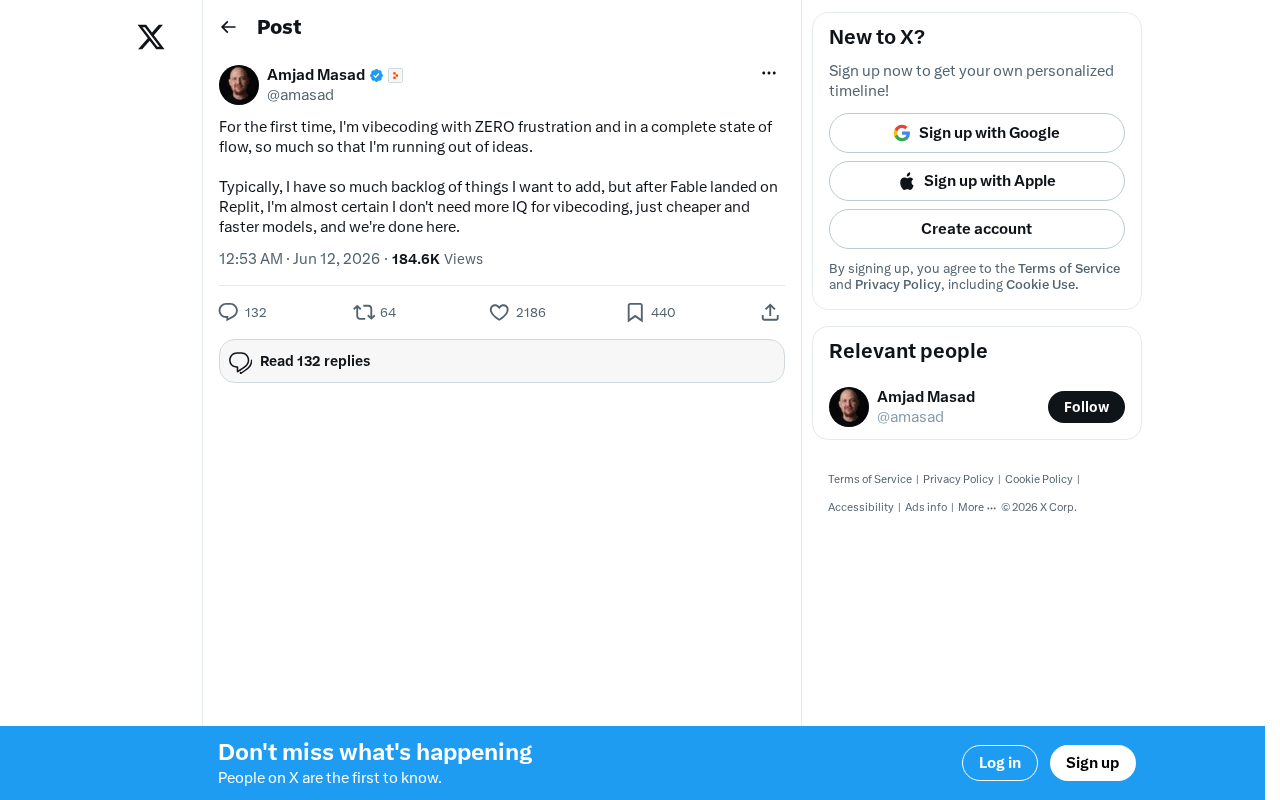
A developer's flow-state Vibe Coding experience signals AI execution now outpaces human creative output.
A developer reported achieving a complete flow state with zero frustration while Vibe Coding using Fable on Replit, noting that AI execution speed now surpasses his ability to generate new ideas. This signals a fundamental shift in software development: the bottleneck is moving from technical execution to creativity, accelerating the indie developer golden age and reshaping how the industry thinks about team value.
A Developer's "Zero Frustration" Coding Experience
Recently, a developer shared his brand-new experience with Vibe Coding on Twitter, sparking widespread attention. He said it was the first time he'd gone through a Vibe Coding session with absolutely zero frustration, entering a complete flow state — to the point where he "couldn't think of any more features to add."
Flow State is a concept introduced by psychologist Mihaly Csikszentmihalyi, describing a state of deep focus, self-forgetfulness, and intrinsic satisfaction that people enter when fully immersed in an activity. In programming, flow state has always been considered the ideal condition for peak productivity. However, in traditional coding, frequent cognitive interruptions — debugging, looking up documentation, waiting for compilation — often make it difficult for developers to sustain this state for long. One of the core value propositions of AI-assisted coding tools is precisely to reduce these interruptions, helping developers enter and maintain flow more easily.
This tweet may seem brief, but it reveals an important turning point in AI-assisted programming: Tool maturity is crossing a critical threshold — moving from "usable but clunky" to "so smooth you forget the tool even exists."
What Is Vibe Coding?
Vibe Coding is an AI-powered programming approach that has recently gained popularity in developer communities. The core idea is simple: developers describe what they want in natural language, and AI handles the actual code implementation. Instead of writing code line by line, you have a conversation with AI to rapidly turn ideas into working products.
This approach dramatically lowers the technical barrier to programming. But the pain point until now has been that AI frequently "misunderstands" requirements, generating code that needs repeated debugging. Developers would burn through enormous energy in the cycle of "describe requirement → AI generates → find issues → re-describe." That's exactly where the frustration came from.
Fable + Replit: The Key Combination That Transformed the Vibe Coding Experience
This developer specifically noted that the turning point came when Fable landed on Replit. Replit is a widely popular online IDE and AI coding platform, founded in 2016, with over 25 million users and a valuation exceeding $1.1 billion. Its core competitive advantage lies in integrating the entire development, collaboration, and deployment workflow into a single browser-based platform — users can write, run, and deploy code without any local environment setup. After 2023, Replit made a major push into AI coding capabilities, launching features like Replit Agent. Fable, as a newly introduced AI model capability layer, brought qualitative improvements in code generation accuracy and multi-turn conversational context understanding.
His exact words are worth savoring:
"I'm almost certain I don't need more IQ for vibecoding, just cheaper and faster models, and we're done here."
This statement contains a profound judgment — current AI models are already "smart enough" for Vibe Coding. The remaining bottleneck isn't capability; it's cost and speed. In the large language model space, there's a classic "capability-cost-speed" impossible triangle: GPT-4-level models have high intelligence, but their API call costs are roughly 20-30x that of GPT-3.5, with noticeably slower inference speeds. The key industry trend underway is that advances in Knowledge Distillation and inference optimization are enabling mid-sized models to approach top-tier coding capabilities at much lower costs. Models like Claude 3.5 Sonnet and GPT-4o Mini, for example, have already demonstrated exceptional cost-effectiveness on code generation tasks — validating this developer's assessment.
From "Backlog Overload" to "Can't Think of What to Build": A Fundamental Shift in the Productivity Bottleneck
The developer mentioned that he used to always have a massive backlog of features he wanted to add, but now AI's execution efficiency has surpassed the speed at which he generates ideas.
Backlog is a core concept in agile development, referring to a prioritized list of features awaiting development. In traditional software development, the backlog almost always far exceeds the team's development capacity, and product managers must constantly prioritize requirements. A developer's backlog being cleared means execution speed has outpaced the rate of demand generation — something virtually unheard of in traditional development.
This is a fascinating phenomenon — for the first time, AI coding tools have made "creativity" rather than "execution" the true bottleneck.
What does this shift mean?
Implications for Individual and Indie Developers
- The golden age of indie developers is accelerating: A single person can build products in extremely short timeframes that previously required a small team
- The competitive dimension is shifting: Technical implementation ability is no longer a moat; product creativity and user insight become far more important
- Learning paths are being reshaped: New developers may no longer need to start from syntax fundamentals, but can begin directly with "what do I want to build?"
Signals for the AI Coding Industry
While this tweet comes from a personal experience, the trend it reflects is universal. When more and more developers report similar "zero frustration" experiences, it signals that AI coding tools are transitioning from the early-adopter phase into genuine productivity tool territory. This phenomenon will have far-reaching implications for the software industry's project management methodologies and staffing models — when execution is no longer the bottleneck, a team's value will increasingly lie in strategic judgment, user research, and creative ideation.
A Reality Check: Is Vibe Coding Really "Mission Accomplished"?
Despite this developer's palpable excitement, we need to stay rational. Vibe Coding is currently best suited for the following scenarios:
- Prototyping and MVP development: Rapidly validating ideas
- Small to medium-sized projects: Applications with manageable logical complexity
- Frontend and full-stack applications: UI-driven product development
For large-scale system architecture, high-concurrency backends, and safety-critical applications, pure Vibe Coding still has clear limitations. Moreover, the premise of "cheaper and faster models" itself requires time to materialize — the API call costs and response speeds of high-quality AI models remain real-world constraints.
Conclusion: The Next Question in AI Coding Has Changed
This tweet documents more than one person's coding experience — it's a milestone signal in the AI-assisted development space. When developers start saying "my ideas can't keep up with AI's execution speed," we know that the paradigm of software development is undergoing a fundamental transformation.
The next question is no longer "Can AI help me write code?" but rather "What else can I think of that's worth having AI build?"
Related articles
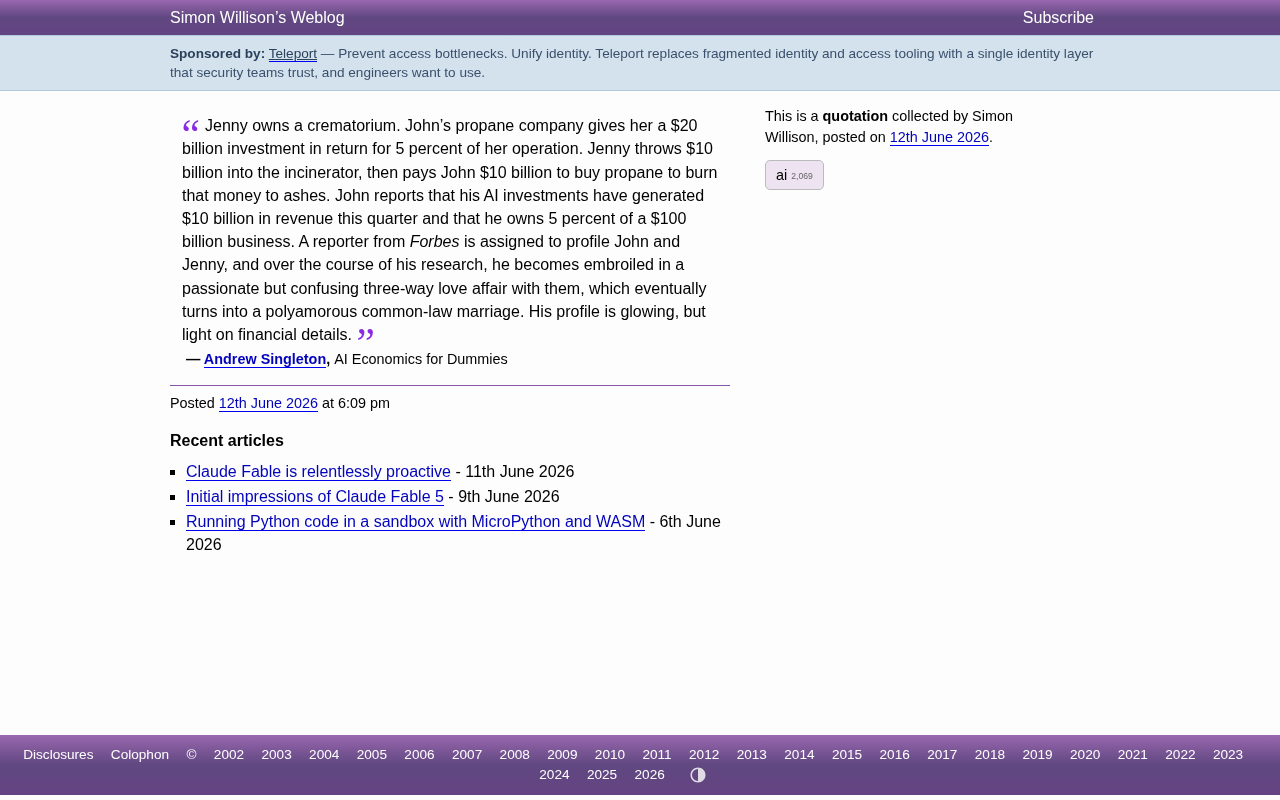
The Absurd Parable of AI Economics: How the Capital Bubble Gets Inflated
A brilliant AI economics satire exposes the absurd capital loop in AI investment: investment becomes revenue, valuations are conjured, and media becomes complicit.
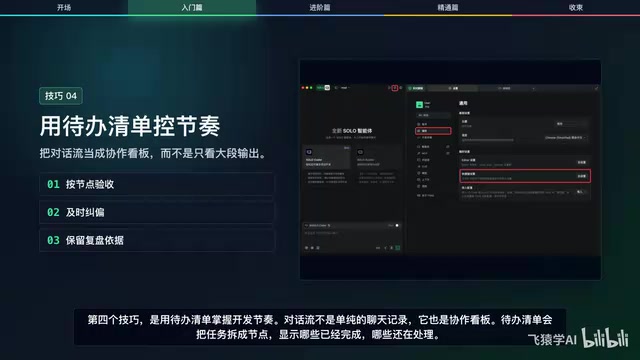
12 Practical Tips for Vibe Coding with Trae SOLO: From Getting Started to Efficient Collaboration
12 practical tips for vibe coding with Trae SOLO covering agent selection, Plan mode, context management, custom rules, and more to build an efficient AI programming workflow.
Trae + WPS: Building a Zero-Code JSA Login Authorization System — A Practical Tutorial
Learn how to use Trae AI programming tool with WPS Bitable to build a JSA login authorization system with zero handwritten code, covering online tables, Web API auth scripts, and remote user management.