Ultimate Review of the Top 10 AI Coding Models: Who Reigns Supreme?
A comprehensive comparison of 10 leading AI coding models to help developers pick the best fit.
This article evaluates the top 10 AI coding models of 2026 across code generation, Agent collaboration, long-context processing, and multimodal capabilities. It covers open-source options like Qwen 3.7 Max and specialized models like Mimo V2.5 Pro, as well as proprietary powerhouses including Claude 4.5 Summit, GPT 5.5, and Claude Opus 4.8, offering practical guidance for developers at every level.
Introduction
With the explosive growth of AI programming tools, competition among coding models has reached a fever pitch. From open-source to proprietary, from lightweight to massive-parameter architectures, every major player is showing their hand. Recently, a review blogger conducted a comprehensive "top-tier panel" evaluation of the ten leading AI coding models, covering dimensions such as code generation, Agent collaboration, and long-context processing.
This article provides an in-depth analysis of the core capabilities of these ten models, helping developers find the programming tool that best fits their needs.
Domestic Open-Source AI Coding Models: Balancing Cost-Effectiveness and Ecosystem
Alibaba Qwen 3.7 Max: The Open-Source Flagship
Alibaba's Qwen 3.7 Max delivers outstanding performance in code generation and Agent planning. As an open-source flagship model, its greatest advantage lies in its exceptional cost-effectiveness. For most developers, this is the go-to choice for everyday programming tasks — it handles complex code generation needs without the burden of expensive API call costs. Its open-source nature also means developers can fine-tune and deploy it privately according to their specific requirements.
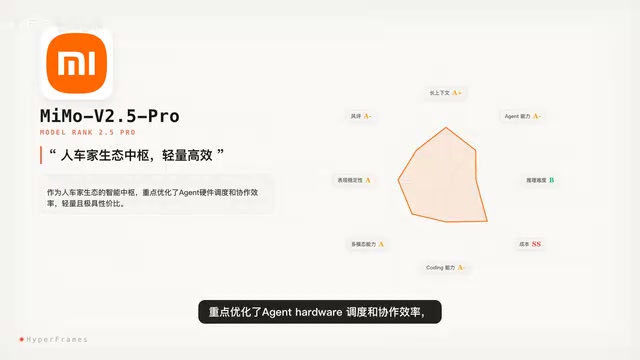
Xiaomi Mimo V2.5 Pro: A Lightweight and Efficient IoT Expert
Xiaomi's Mimo V2.5 Pro has a very clear positioning — serving as the intelligent hub for the people-vehicle-home ecosystem. It focuses on optimizing Agent hardware scheduling and multi-device collaboration efficiency, taking a "lightweight yet highly efficient" approach. For IoT developers and embedded systems engineers, this model offers unique advantages in on-device deployment and hardware interaction scenarios.
Zhipu GLM 5.1: A Robust Choice on Domestic Computing Infrastructure
The highlight of Zhipu GLM 5.1 is its deep training on domestically developed computing platforms. It performs remarkably well in code generation and complex logical reasoning. For enterprise users with strict requirements for data security and computing sovereignty, GLM 5.1 provides a reliable option.
Long Context and Multimodality: The New Competitive Frontier in AI Coding
MiniMax M3: A Multimodal Contender with Million-Token Context
MiniMax M3 boasts a million-token-level ultra-long context window, combined with powerful audio and video multimodal understanding capabilities. It performs impressively in long-document analysis and cross-modal code generation scenarios. When you need AI to comprehend an entire large-scale project codebase, this kind of ultra-long context capability becomes critically important.
Kimi K2.6: A Breakthrough in Agent Swarm Architecture
Moonshot AI's Kimi K2.6 adopts a brand-new Agent Swarm architecture, supporting collaboration among up to 300 sub-agents with extremely powerful context processing capabilities. This "swarm intelligence" architectural design represents an important direction for AI programming — rather than relying on the capability ceiling of a single model, it solves ultra-complex engineering problems through multi-agent collaboration.
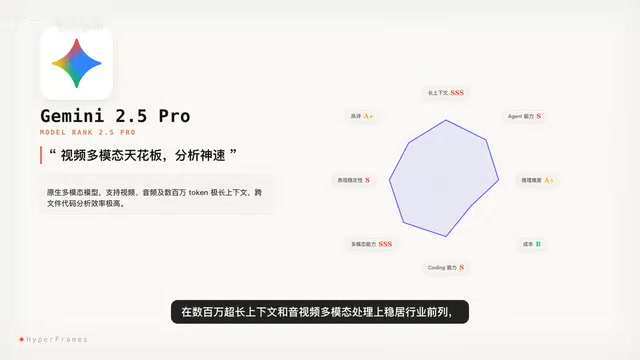
Google Gemini 2.5 Pro: The Efficiency King of Cross-File Code Analysis
Google's Gemini 2.5 Pro leads the industry in multi-million ultra-long context and audio/video multimodal processing. Its cross-file code generation and code analysis efficiency is exceptionally high, making it particularly suitable for code review and refactoring suggestions in large-scale projects. Google's infrastructure advantages allow Gemini to remain smooth even when processing massive codebases.
Top Proprietary AI Coding Models: The Battle for Peak Performance
DeepSeek V4 Pro: The Ultimate Balance of Cost-Effectiveness and Performance
DeepSeek's V4 Pro is built on a novel hybrid attention architecture with 1.6 trillion parameters, continuing to push the boundaries of cost-effectiveness and mathematical/code reasoning. DeepSeek's consistent strategy has been to use more efficient architectural designs to approach or even surpass the performance of larger-scale models, and V4 Pro carries on this tradition.
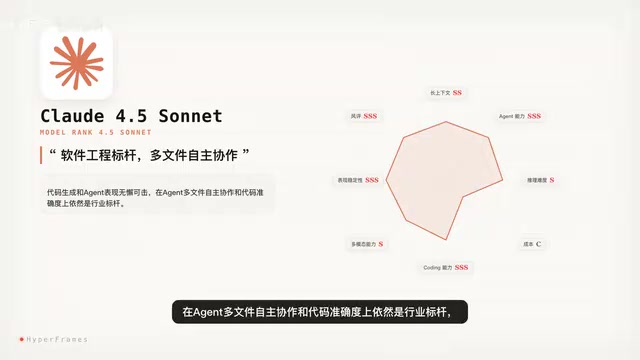
Claude 4.5 Summit: The Industry Benchmark for Software Engineering
Anthropic's Claude 4.5 Summit is rated as the "software engineering ceiling," remaining the industry benchmark in Agent-driven multi-file autonomous collaboration and code accuracy. For scenarios requiring AI to independently complete complex software engineering tasks — such as multi-file refactoring, automated test generation, and CI/CD pipeline optimization — Claude 4.5 Summit's performance is nothing short of impressive.
GPT 5.5: The All-Rounder for Production Engineering
OpenAI's GPT 5.5 pushes the intelligence of general-purpose large models to new heights, with its standout feature being "rock-solid production readiness." Its coding capabilities across the board are impeccable, with no obvious weaknesses. For enterprise applications that prioritize stability and consistency, GPT 5.5 is the safest bet.
Claude Opus 4.8: The Ultimate Coding Intelligence, Regardless of Cost
As the "ultimate intelligence representative" in this evaluation, Claude Opus 4.8 demonstrates extraordinary capabilities in large-scale project systematic refactoring and extreme logical reasoning. This is a model designed for the highest-end demands — when project complexity reaches a level that even human engineers find daunting, Opus 4.8 is the ultimate choice for those pursuing perfection regardless of cost.
How to Choose the Right AI Coding Model for You?
This evaluation reveals that current AI coding models have formed a clear tiered landscape:
- Best for Daily Development: Qwen 3.7 Max (open-source and free), DeepSeek V4 Pro (ultimate cost-effectiveness)
- Specialized for Specific Scenarios: Mimo V2.5 Pro (IoT/embedded), Kimi K2.6 (ultra-complex multi-agent collaboration)
- Enterprise-Grade Engineering: GPT 5.5 (stable and versatile), Claude 4.5 Summit (software engineering benchmark)
- Pursuit of Peak Performance: Claude Opus 4.8 (the ceiling, regardless of cost)
What you might not have considered is that model selection shouldn't be based solely on benchmarks — you also need to factor in actual use cases, budget constraints, data security requirements, and other considerations. For most developers, combining open-source models with select proprietary models is likely the most pragmatic AI coding strategy today.
Conclusion
The current AI coding landscape is flourishing with diversity. Domestic models have already built strong competitiveness in cost-effectiveness and specialized scenarios, while top international models continue to push the boundaries of peak performance. As technologies like Agent architectures, ultra-long context, and multimodal fusion mature, AI coding is rapidly evolving from "assisting with writing code" to "autonomously completing software engineering." What developers need to do is find the tool that best fits their specific needs.
Related articles

AI Agent Development: A Complete 6-Week Systematic Learning Roadmap
A 6-week systematic learning roadmap for AI Agent development, covering core architecture, ReAct principles, multi-agent collaboration, RAG integration, and deployment.
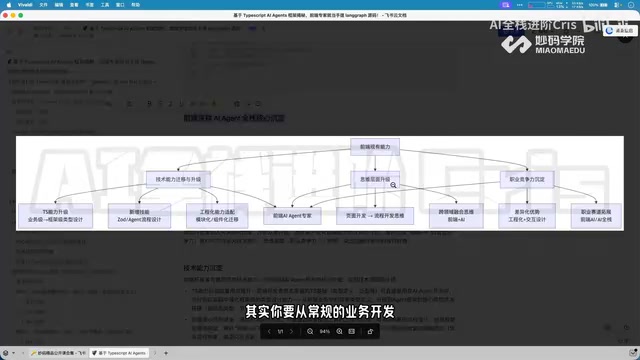
Four Core Advantages Frontend Developers Have When Transitioning to AI Agent Development
Frontend developers have key advantages for AI Agent development: TypeScript ecosystem fit, low-barrier full-stack bridging, and state management isomorphism. Learn the transition path here.
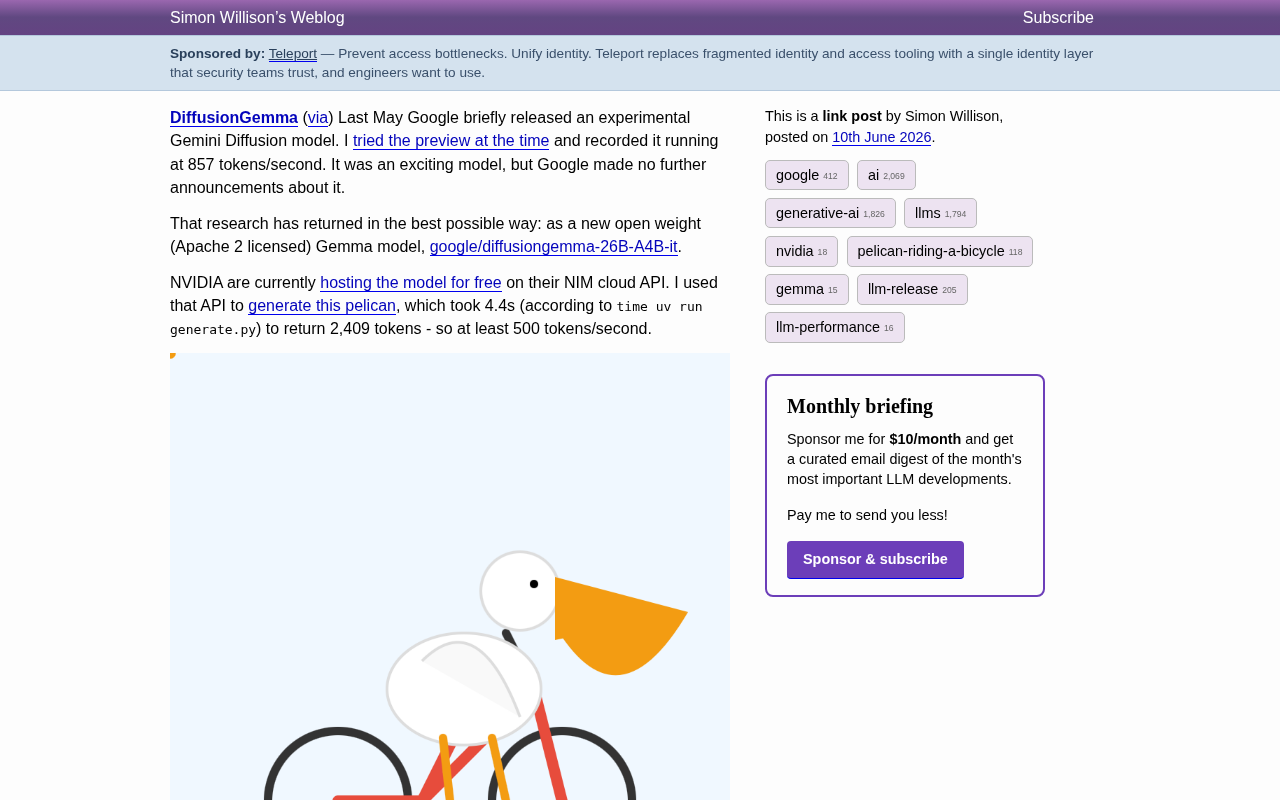
DiffusionGemma: Google's Open-Source Diffusion Language Model Exceeding 500 Tokens/s
Google releases DiffusionGemma, an open-source diffusion language model with Apache 2.0 license. The 26B-parameter MoE model achieves over 500 tokens/s in real-world tests.