Tech Frontiers
869 articles
 Tech Frontiers
The $8 Linux Computer: The Ultimate Cost-Effective Hardcore DIY
An engineer shares how to build an $8 Linux computer, sparking 215 points on Hacker News. We break down the hardware choices, technical trade-offs of low-cost Linux, who can replicate it, and the real value of minimalist hardware.
 Tech Frontiers
Goodbye Token Waste: This API Converts Web Pages into Clean Markdown, Saving 92% of Tokens
A developer built MarkRAG API to convert web HTML into clean Markdown, saving about 92% of LLM tokens and reducing RAG noise and hallucinations. Supports a RapidAPI free tier and works with LangChain workflows.
 Tech Frontiers
AI Eliminates Information Asymmetry: Is the Era of Programmers Making Money Through Outsourcing Over?
Can programmers still make money from outsourcing? A Bilibili creator says AI is eliminating information asymmetry and the outsourcing winter has arrived. This article breaks down the underlying logic, analyzes how student and merchant demand is being squeezed by AI, and offers four viable directions for programmers to shift from selling skills to selling judgment.
 Tech Frontiers
Prompt Engineering from Beginner to Practice: Core Concepts and Limitations Explained
Based on the first lesson of a Bilibili prompt engineering tutorial, this article systematically explains the nature and four roles of prompts, the six-step process and four goals of prompt engineering, and key limitations such as capability ceilings, unstable output, hallucinations, and context limits—helping beginners build correct understanding.
 Tech Frontiers
Three Core Principles of AI Prompt Engineering in 2026: Framework, Conciseness, and Iteration
Is prompt engineering still relevant in 2026? This article distills three core principles from a Bilibili tutorial—framework, conciseness, and iteration—to help you write high-quality prompts and improve AI task results.
 Tech Frontiers
Stop Forcing LLMs Into Time-Series Forecasting! NeurIPS Tests Show: Removing Them Works Better
A NeurIPS Spotlight study shows removing LLMs from time-series forecasting improves results—parameters drop from 6B+ to ~500K. Here's how LLMs really fit and three data-driven paths.
 Tech Frontiers
Bilibili Tutorial Deep Dive: A Complete Guide to Hermes Agent from Beginner to Practical Development
An in-depth analysis of the Bilibili Hermes Agent tutorial: from installing Ubuntu with VMware and Hermes installation and configuration to session management, tool and Skill extension, memory and context mechanisms, and WeChat, QQ, and Feishu messaging platform integration—a complete learning path and practical key points for this AI Agent framework.
 Tech Frontiers
Infinitely Self-Evolving Backrooms: Opus 5.5 Lets Even Its Creator Get Lost
A developer used 15 handcrafted rooms to define world DNA, letting Opus 5.5 infinitely generate Backrooms rooms, characters, and monsters in the background—70 rooms so far, with multiplayer voice chat. This article analyzes its technical architecture, human-AI collaboration mechanism, and the shift of creative control.
 Tech Frontiers
Nous Research Releases Arete-27B: Propaganda Rate Drops from 22% to 0.9%
Nous Research releases Arete-27B, an Apache 2.0 fine-tune of Qwen3.8-27B that cuts propaganda response rate from 22% to 0.9% while keeping Hermes Bench at 65.60%.
 Tech Frontiers
Make AI Remember Your Project: A Guide to Building a Memory System for Claude Code
Claude Code forgets everything in a new window? Use three plain text files—work log, directory, and decision book—to give your AI cross-window project memory in two minutes.
 Tech Frontiers
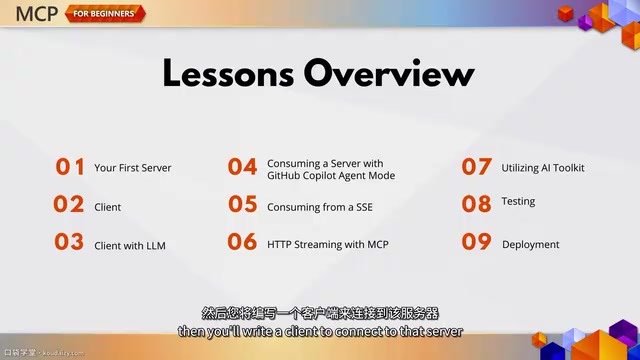
Getting Started with MCP Servers: Multi-Language SDKs and Real-Time Streaming in Practice
A Microsoft developer tutorial walks you through building an MCP server from scratch, covering multi-language SDKs (C#, Java, Python, etc.), VS Code integration, GitHub Copilot testing, SSE and HTTP streaming, and a complete path to local or cloud deployment.
 Tech Frontiers
Byte-Level Auditing: How Tawfiki AI Independently Judges Closed-Source Governance Engines
Tawfiki AI open-sources a byte-level AI governance audit framework where the engine never judges itself, using preregistered rule sets and hash commits for independent scoring. This article breaks down the B001-B005 suites, the witness protocol, and what the 2,000x efficiency claim really means.
 Tech Frontiers
Anthropic IPO Valuation Slips, AI Trade Logic Faces Reassessment
Anthropic's IPO valuation decline draws market attention, a signal that may raise the trading threshold for the entire AI sector. This article analyzes the impact on the AI investment narrative, the transmission paths, and why a single valuation signal should be viewed rationally.
 Tech Frontiers
Privacy Risks of Consumer EEG Headbands Draw Attention
Consumer EEG headbands raise privacy concerns. Hacker News discussion highlights how neural data's immutability, secondary use, and regulatory gaps create a triple privacy threat.
 Tech Frontiers
Ancient DNA Confirms the Mythical Origins of a 'Barbarian' Tribe: A Surprising Convergence of Legend and Genes
A Science-reported ancient DNA study confirms that a tribe the Romans called barbarians had a mythical origin story matching genetic data. This article explores the methodological significance: how ancient DNA serves as independent evidence for validating oral traditions, and what this cross-disciplinary validation approach can teach tech professionals.
 Tech Frontiers
Zero Front: An FPS Environment Built for AI Training
Zero Front is an open-source FPS environment designed for AI/ML training, using low-pixel visuals and a limited palette to simplify visual input so agents can learn efficiently in pixel space. It ships with base weights from one hour of self-play, ideal for RL and multi-agent research.
 Tech Frontiers
A CPU Brain Sandbox with 500 Million Neuron Addresses: The Open-Source Experiment Mikoshi
Developer open-sources Mikoshi HQ500M: a CPU sandbox with 500 million virtual neuron addresses and 896 active spiking neurons by default—experiment with brain-inspired networks without a GPU.
 Tech Frontiers
New OCC Rules: Bank AI Supervision Shifts to Proactive Control, Third-Party Dependency Emerges as Key Challenge
OCC issues new supervisory expectations for bank AI, requiring proactive control rather than post-hoc monitoring across six areas including model risk, data governance, and explainability. Third-party AI dependency is the toughest compliance blind spot to reform.
 Tech Frontiers
Can VLMs Learn Depth and Segmentation During Training but Use Only RGB at Inference?
Exploring whether VLMs can learn depth estimation and semantic segmentation during training while using only RGB input at inference. Analyzing feasibility and engineering challenges from multi-task learning, privileged information, modality alignment, and capacity allocation perspectives.
 Tech Frontiers
Discord Drops Electron: Windows 11 App Memory Usage Plummets 70%
Discord abandons Electron on Windows 11 for native development, cutting memory usage by 70% and eliminating the splash screen. This article analyzes the technical logic behind the rework, the costs of the Electron framework, and the comeback trend of native development, offering technology selection insights for desktop app developers.