#AI编程
9358 related articles

Free Access to Gemini, Claude, and GPT: Hands-On with the Antigravity CLI Terminal
A YouTube demo of Antigravity CLI: install with one command in the VS Code terminal, type ag to freely switch between Gemini 3.1 Flash, Claude Sonnet, and GPT with no API key, plus analysis of use cases and the real limits of free mode.

Free AI Coding Models: The OpenCode + OpenRouter + Kilo Code Combo
A free AI coding model combo built on OpenCode, OpenRouter, and Kilo Code: registration, API Key setup, free model selection, who it suits, and the risks.

The Truth About Free LLM APIs: No Account Needed, But Limits Are Tighter Than You Think
The state of free LLM APIs in 2026: GitHub Models is gone, OpenCode Xen needs no account, and OpenRouter's 50 requests/day cover only 6-8 small fixes. 429s stem from single hosts.
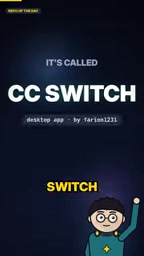
CC Switch: The Desktop Powerhouse for One-Click Switching Between Claude Code, Codex, and Gemini CLI
CC Switch is a free, open-source desktop app for one-click switching of model providers across Claude Code, Codex, and Gemini CLI, with unified MCP server, skill, and prompt management, plus a token usage and cost dashboard. Supports Windows, Mac, and Linux.
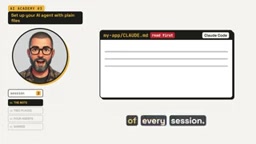
CLAUDE.md, AGENTS.md, GEMINI.md: A Configuration Guide to AI Coding Assistant Instruction Files
AI coding assistants read instruction files before every session. This article explains the naming differences between CLAUDE.md, AGENTS.md, and GEMINI.md, clarifies the division of labor and priority between project and user files, and offers practical advice for mixed-tool teams to unify configuration with AGENTS.md.
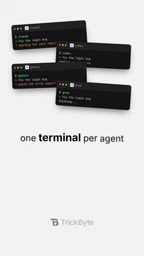
Orca: A Free Open-Source IDE That Runs Claude, Codex, Gemini, and Grok Simultaneously
Orca is a free open-source agent IDE that runs Claude, Codex, Gemini, and Grok simultaneously. Each task is isolated in its own Git worktree, with parallel prompting, result comparison and merging, agent-driven IDE, mobile handoff, and remote SSH across Mac, Windows, and Linux.
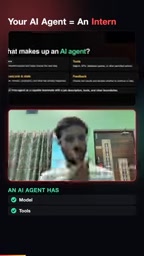
Treat Your AI Agent Like an Intern: The Right Mindset for Agent Design
Treat AI Agents like interns, not colleagues: define job descriptions, provide tools, set permission boundaries, and check tool call results to decide whether to continue or stop. This mental model helps you design more controllable and efficient agent systems.

How to Use ChatGPT Agent Effectively: A Three-Step Guide to Building a Precise AI Assistant
Based on a YouTube tutorial, this guide explains a three-step method for using ChatGPT Agent effectively: define a clear role, write concise prompts with constraints, and iterate with continue/refine.
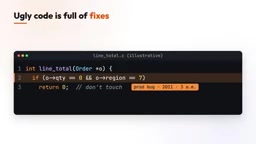
Cisco Lets 27-Year-Old Engineer Rewrite 98% of Code with Unlimited AI Tokens — Will It Work?
Cisco gave a 27-year-old engineer unlimited AI tokens to refactor 98% of legacy code. We break down the facts, three AI migration wins, and the judge that decides it all.

The Hands of Agentic AI: Function Calling and Tool Contracts Explained
A deep dive into function calling and tool use in Agentic AI: how models request tools via schema, why the five-element tool contract matters more than code, and the difference between function calling and code execution.

Build Your First AI Agent with Claude Code in 20 Minutes — No Code Required
No code needed: build an AI agent with Claude Code in 20 minutes. A complete four-level walkthrough from workspace and skills manual to memory and cloud scheduled tasks, with hands-on steps and FAQ.
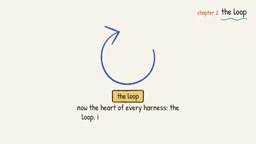
Agent Harness Explained: Build an AI Agent by Hand in Python
A deep dive into how Agent Harness works: the model decides, the Harness executes. Build an agent loop in under 20 lines of Python, covering tool calls, stop conditions, context management, and permissions.
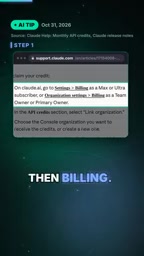
Hidden Perk of Claude Subscriptions: Max Includes $100/month in API Credits
Claude Max includes $100/month in API credits, Ultra $200—as long as you manually link a Console organization after 7 days. Here's how linking works, what it covers, the irreversible binding, and the per-cycle expiry rules.
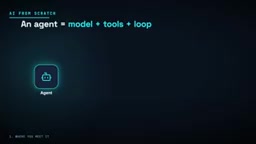
The Essence of AI Agents: Building a ReAct Loop in 50 Lines of Code
From Anthropic's AI shopkeeper experiment, this article dissects the essence of AI agents: model + tools + loop. Build a ReAct loop in 50 lines of Python, revealing tool-calling principles, infinite loop traps, and the step safety valves in four frameworks.
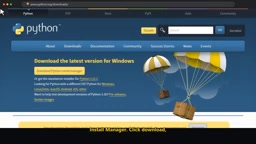
Build an AI Agent from Scratch with ~100 Lines of Python, No Framework Needed
Build an AI Agent from scratch with ~100 lines of Python, no framework needed: connect to LLMs, define tools and schemas, implement the tool-calling loop, and give your Agent conversational memory—with full steps and pitfalls to avoid.
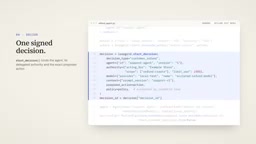
LoopGrid + OpenAI Agents SDK: Adding Human Approval and Verifiable Records to AI Operations
Learn how LoopGrid integrates with the OpenAI Agents SDK to enable human approval and verifiable records of AI operations, ensuring sensitive tools run only after approval via signed decision records for compliance audits.
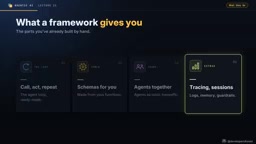
OpenAI Agents SDK vs LangGraph: How to Choose a Python Agent Framework
Compare OpenAI Agents SDK vs LangGraph for Python agents: agent-first teams with as_tool and handoff vs workflow-first graphs with loops and checkpoints.
Cursor Launches Agent SDK: Agent Development Enters the Code-First Era
Anysphere launches Cursor Agent SDK with Markdown prompts, TypeScript tools, built-in evals, and self-hosting. Plus GPT-6.1 Terra, Gemini 4.0 Argon, and agent safety research.
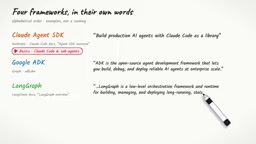
AI Agent Frameworks: A Whiteboard Guide to Whether and When to Use Them
A whiteboard explanation of AI Agent frameworks: they run the loop of calling models, executing tools, and feeding back results. Compare LangGraph, OpenAI Agents SDK, Claude Agent SDK, and Google ADK, and analyze Anthropic and OpenAI's views on whether to use a framework and when to call APIs directly.
What Really Counts as a True AI Agent? Three Core Elements and One Test
Starting from three vendors' differing definitions, this breaks down what makes a true AI agent: goal, tools, loop—plus one test: who decides the next step, code or model.