#AI编程
9358 related articles

What Is Dify? A Workflow Platform for Building AI Apps with Zero Experience
What is Dify? Based on a beginner Bilibili tutorial, this article covers Dify's positioning as an AI app development platform, its three core features (integrated backend services, LLMOps monitoring, hundreds of models), five app types, and how to access the website or install via GitHub.

Local AI Slow on Mac? The Real Bottleneck Isn't the Chip—It's the Cache
Slow local AI on Mac may not be a chip problem but a cache problem. This article analyzes the differences between Pre-Fill and Decode phases, common causes of prefix caching failure, and provides a no-cost troubleshooting checklist.

Google Open-Sources Elephant-Goldfish: Using Spec-Driven Development to Break AI Coding's Conversational Bias
Google open-sources the Elephant-Goldfish Model plugin: an elephant writes specs, a goldfish with zero context reviews adversarially, and drift detection compares code—breaking AI coding's conversational bias and making spec-driven development an engineering discipline.

Using Code Golf and RLHF to Train AI to Explore the Demoscene
Reddit developer datavorous shares an experiment: fine-tuning a model on golfed JS and using self-rated RLHF on 40k samples to explore Demoscene syntax and incomplete code.

GPT-6 Astra: Turn Your Home Into a Playable, Controllable Game With One Prompt
A creator used GPT-6 Astra to turn a phone video of his home into a walkable 3D game with family characters and pets, plus Home Assistant integration to control real lights and TV. This article breaks down the capability chain and its significance.

Open-Source Tool Agent Harness Lab: Experimentally Validating Coding Agent Instruction Improvements
Agent Harness Lab is an open-source tool for testing coding agent instruction improvements. It supports Claude Code and Codex with analysis, comparison, and reporting workflows to help developers scientifically evaluate whether AGENTS.md or skill changes truly improve agent performance.

Monzo's In-House AI Coding Agent: 1,800 Tasks a Day and Over 10% of Merged Code
Monzo's in-house Slack AI coding agent Agent Chip handles 1,800+ tasks daily and contributes over 10% of merged PRs. We break down its MCP gateway, sandboxed architecture, and platform strategy.

Three Skills Let AI Agents Self-Submit and Merge PRs: Soul Loop, Full Send, and Full Stop in Practice
t3.gg shares three Skills that transform AI coding workflows: Soul Loop for Codex code review, Full Send for autonomous PR submission and merging, and Full Stop for working until mergeable but never merging. Details on trigger design, merge gates, and multi-Agent orchestration.

ChatGPT and Codex Usage Limits Merged: OpenAI Moves to Unify Coding and Conversation
OpenAI merges ChatGPT and Codex usage limits into a unified quota system. This analysis examines the impact on developers, teams, and subscription models, and the signal of platform integration behind the move.

GPT-6.1 Terra Hands-On Test: Can a Low-Cost Model Be Your Daily Driver?
OpenAI's GPT-6.1 Terra targets low cost and speed. This article consolidates a Bilibili hands-on test, covering pricing tiers, quota consumption logic, availability, and computer use, development, and frontend performance, with practical task-based selection advice.

GPT-6.1-Terra Hands-On Test: A Balance of Cost-Effectiveness and Speed
Based on a Bilibili hands-on video, this analysis examines GPT-6.1-Terra's real performance: task cost only a fraction of competitors, backend capability ranked third, 3D webpage built in under 10 minutes, but frontend design remains a weakness and Computer Use still stutters despite speed gains.

GPT 6.1 Terra Hands-On: Three Times Faster, Half the Cost, but Prone to These Mistakes
GPT 6.1 Terra tested: several times faster and half the cost on clear-goal tasks with three perfect bug-fix runs, but lazy on open design, causing unplayable levels and 3D rendering errors.

GPT-6.1 Terra Hands-On: Insanely Fast, But Prone to Giving Up Midway?
Bilibili hands-on test of OpenAI GPT-6.1 Terra: insanely fast, priced at $1/M input and $5/M output, coding ability between Luna and Soul. Computer use is decent on Mensa tests but tends to give up early on robotic arm and Blender tasks. Simple but capable game dev, with recurring inverted-controls issues needing follow-up fixes.

GPT-6.1 Terra Hands-On: Blazing Fast, but Outperformed by DeepSeek?
GPT-6.1 Terra vs DeepSeek hands-on: four front-end tasks done in under 5 minutes, but completion and detail lag clearly behind. We break down official benchmarks, third-party reviews, and real experience to reveal the trade-offs behind the speed.

GPT-6.1 Terra Hands-On Test: Builds a 3D House in 56 Seconds, 5x Faster Than Soul and Cheaper
Hands-on test of GPT-6.1 Terra: same floor plan, Terra builds a 3D house in 56 seconds—5x faster than Soul and 15x cheaper than Astra. Full comparison of speed, quality, and cost across four tiers, plus trap-question tests and buying advice.
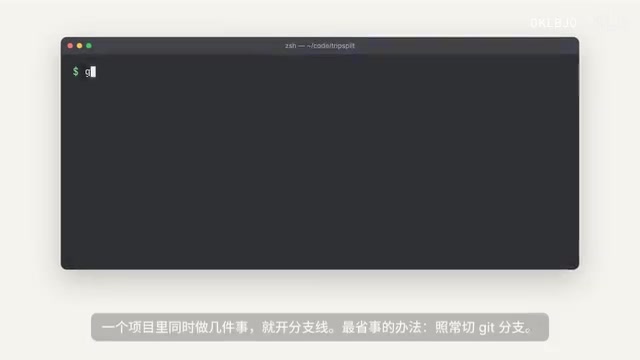
Trace Canvas 0.3.0 Tutorial: Manage Multiple AI Agents with a Single Map
Trace Canvas 0.3.0 full tutorial: use a local canvas to map multiple AI agent sessions as a subway line diagram — split lines by project, branch by Git branch, and manage goals, to-dos, session logs, diff comparison, and multi-machine sync.
AI Stealing Programming Jobs? Computer…
AI Stealing Programming Jobs? Computer Science Enrollment Cools
Hacker News discussion shows AI job replacement expectations are affecting CS enrollment. Analysis of three forces, debate, and implications for curricula and students.

Claude Code Installation Guide for China: Bypass Login and Avoid Bans with CC Switch
Claude Code installation guide for China: use NPM to avoid permission errors, bypass account login and bans with CC Switch, plus four permission modes and prompt-writing tips.

Claude Code + DeepSeek Tutorial: China Mirror + Official Configuration
A complete tutorial for integrating Claude Code with DeepSeek: Node.js setup, China mirror speedup, nine-setting configuration, and real cost comparison of Flash vs. Pro models.

AI Large Model Interview Deep Dive: Agent Architecture and Project Practice
A Bilibili creator shares an in-depth AI large model interview guide: a three-month learning path covering Agent architecture, prompt engineering, the full RAG pipeline, and hands-on projects, teaching you how to speak with depth and avoid quick-success traps.