OpenAI Swarm Framework Explained: The Core Mechanisms of Function Call and Handoff

A deep dive into OpenAI Swarm's core mechanisms: Function Call for tool invocation and Handoff for agent collaboration.
This article provides an in-depth analysis of OpenAI's Swarm multi-agent orchestration framework, focusing on its two core mechanisms: Function Call and Handoff. It explains the agent concept through a computer analogy, details how Instruct models enable structured output for tool calling, and explores how the Handoff mechanism enables flexible task routing between specialized agents. The article also covers local deployment practices with models like Qwen.
Introduction
OpenAI recently open-sourced a multi-agent orchestration framework called Swarm. While the company has made it clear that this is not a production-ready tool, the two core concepts it introduces — Function Call and Handoff — are likely to become standard paradigms for future agent platforms. This article starts from the basic concept of agents and dives deep into Swarm's design philosophy, core mechanisms, and how to deploy and practice with it locally.
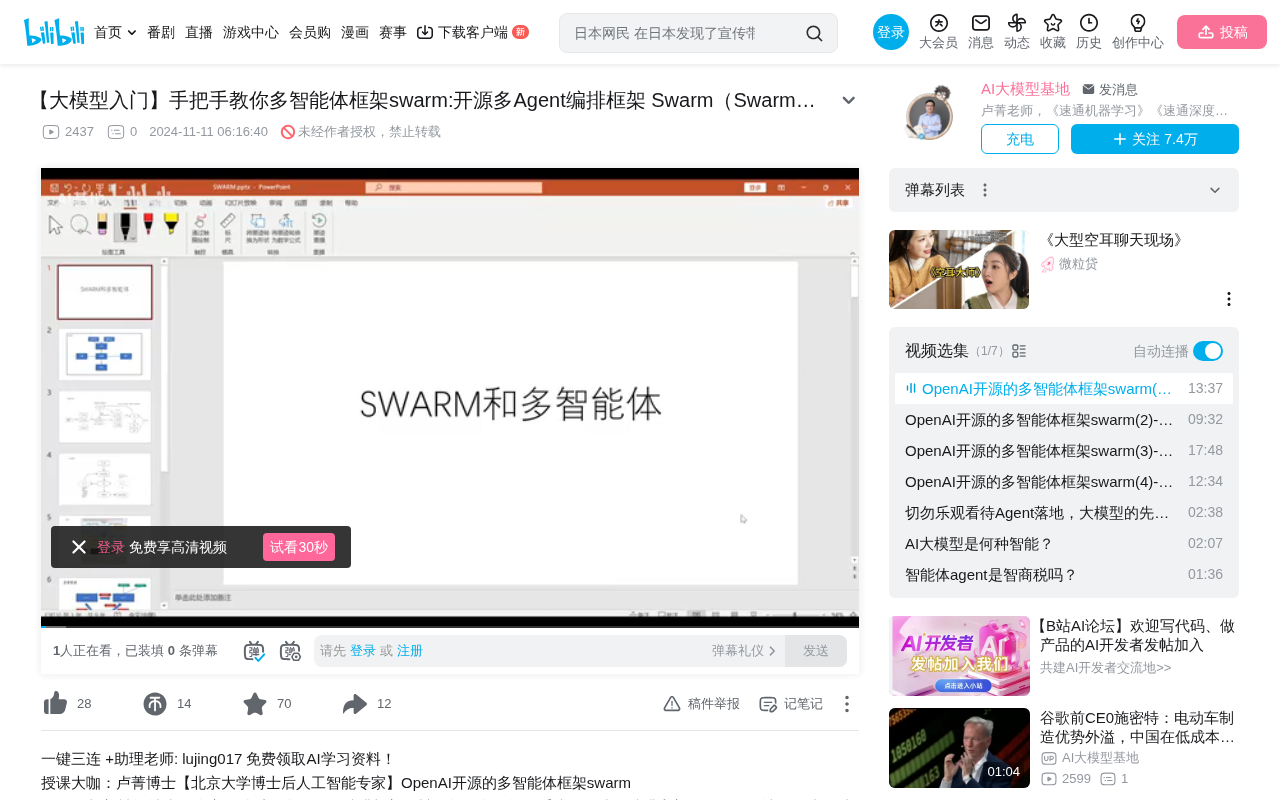
What Is an Agent?
Understanding Agents Through a Computer Analogy
Although the concept of an agent has existed for a long time, its definition has always been somewhat abstract. We can use an intuitive analogy to understand it:
- LLM = CPU: A large language model is like a powerful processor (say, an i7). It provides core reasoning capabilities, but a CPU alone can't do anything.
- Tool Calling = Peripherals: Just as a CPU needs to control printers, network cards, and other peripherals to complete specific tasks, an LLM also needs to invoke external tools (weather APIs, databases, computation engines, etc.).
- Long-term Memory = Hard Drive: This corresponds to RAG (Retrieval-Augmented Generation), which provides persistent data storage.
- Short-term Memory = RAM: Runtime context information that is cleared after use.
- Environment = Input Devices: Keyboards, mice, cameras, etc., corresponding to user inputs.
- Planning = Human Control: The scheduling logic that determines what tasks the machine should execute.
This analogy reveals a key fact: the concept of agents has been around for a long time, but the "CPU" of the past (traditional AI models) wasn't powerful enough, leaving agents stuck in the theoretical stage. The emergence of LLMs is essentially equipping agents with a supercharged core. In fact, the concept of an Agent can be traced back to distributed artificial intelligence research in the 1980s, when researchers proposed a theoretical framework stating that autonomous Agents should possess three core capabilities: perception, reasoning, and action. However, limited by the capabilities of AI models at the time, these theories could not be implemented as practical systems for a long time.
Three Classic Examples of Agents
Example 1: RAG (Retrieval-Augmented Generation)
RAG is the simplest form of an agent. Retrieval technology itself has long been mature in fields like search and recommendation — RAG simply combines retrieval technology with LLMs, giving them the ability of "long-term memory."
RAG was first proposed by the Meta AI research team in 2020. Its core architecture consists of two stages: retrieval and generation. In the retrieval stage, the system converts the user query into a vector representation through an embedding model (such as BGE, E5, etc.), then performs similarity search in a vector database (such as Milvus, Pinecone, FAISS, etc.) to find the most relevant document fragments. In the generation stage, the retrieved document fragments are fed into the LLM as context along with the user's question, and the model generates an answer based on this external knowledge. RAG addresses two core pain points of LLMs: the knowledge cutoff date limitation and hallucination issues, enabling models to respond based on up-to-date, verifiable information.
Example 2: Tool Use
LLMs are notoriously poor at math, but if you attach a computation engine like MatLab and let the LLM orchestrate it, complex mathematical operations become trivial. Similarly, checking the weather, operating databases (NL2SQL), and other tasks all fall under the category of tool calling. The essence of tool calling is letting the LLM act as a "dispatcher" — it doesn't need to perform all computations itself; it only needs to understand user intent, select the appropriate tool, organize the correct parameters, and integrate the returned results. This "division of labor" model dramatically expands the capability boundaries of LLMs.
Example 3: HuggingGPT-Style Task Planning
HuggingGPT is a classic planning-oriented agent framework, jointly proposed by Zhejiang University and Microsoft Research Asia in 2023. Its core innovation lies in using a large language model as a controller to coordinate hundreds of specialized AI models on the Hugging Face platform to complete complex tasks. When a user presents a complex request (e.g., "Generate an image of a little girl reading a book, with the same pose as a certain boy, and describe it with speech"), the system will:
- Decompose the task into multiple subtasks (pose estimation, pose generation, object detection, speech synthesis, etc.)
- Select the appropriate existing model for each subtask
- Execute them sequentially and aggregate the results
The system architecture is divided into four stages: Task Planning, Model Selection, Task Execution, and Response Generation. In the Task Planning stage, the LLM analyzes user requirements and decomposes them into a DAG (Directed Acyclic Graph) of subtasks with dependencies; in the Model Selection stage, the system selects the most suitable expert model from the model library based on each subtask's type. This architecture pioneered the "LLM as Controller" paradigm and has had a profound influence on the design of subsequent multi-agent frameworks.
Common Characteristics of Agents
From the three examples above, we can distill the core characteristics of agents:
- A strong reasoning LLM: It doesn't need extensive domain knowledge, but must possess powerful reasoning and orchestration capabilities.
- Existing external tools: Most of the tools being called existed before LLMs.
- The LLM calls tools and integrates results: This is the quintessential Agent use case.
Function Call: The Key Mechanism for Agent Tool Invocation
The Core Problem: How to Ensure Parseable Output
An LLM takes strings as input and produces strings as output. But to implement tool calling, a critical problem must be solved: How do you ensure the output string conforms to a specific format specification so that it can be parsed by a program?
If the LLM simply outputs a passage of natural language text, a human might understand which tool it intends to call, but a machine cannot parse and execute it. Therefore, the output must be in a structured format — JSON is the most common choice, though XML and other formats also work. The key is that "conforming to a specification makes it parseable."
The Function Call mechanism was officially introduced by OpenAI in the June 2023 GPT-3.5/GPT-4 API update. Its core idea is to enable the model during inference to generate not only natural language responses but also structured function call requests. The implementation of this mechanism relies on the model learning from a large number of function signatures and call examples during training, enabling it to understand when to call an external tool, which tool to call, and how to organize the parameters. Technically, Function Call is typically implemented by injecting JSON Schema descriptions of available functions into the system prompt. During inference, the model determines whether a function call is needed, and if so, outputs a JSON object conforming to the Schema rather than natural language.
How Instruct Models Support Function Call
To address the format specification problem, a specialized category of Instruct models emerged. Taking Qwen2.5-14B-Instruct as an example:
- The input format is standardized into a
{role: "user", content: "..."}structure - During training, the emphasis is: when the input format is standardized, the output data must also be standardized
- This enables the LLM to reliably output structured data like JSON, thereby supporting subsequent Function Calls
Instruct models are trained through techniques such as Instruction Tuning and Reinforcement Learning from Human Feedback (RLHF). Unlike base pretrained models, Instruct models undergo an additional alignment training phase: first, Supervised Fine-Tuning (SFT) teaches the model to follow instruction patterns, then methods like RLHF or DPO (Direct Preference Optimization) further optimize output quality. The introduction of dialogue templates like ChatML (Chat Markup Language) further standardizes the message format for different roles (system, user, assistant, tool) in multi-turn conversations, providing a stable format foundation for Function Call.
This is why when using LLM APIs, we need to organize inputs according to specific message formats (role + content) — this isn't redundant; it's a prerequisite for ensuring controllable output.
Handoff Mechanism: Task Transfer Between Agents
What Is Handoff?
The other core concept proposed by the Swarm framework is Handoff. In a multi-agent system, different Agents are responsible for different domains. When an Agent determines that the current task exceeds its capabilities, it "hands off" the task to a more suitable Agent.
From a technical implementation perspective, a Handoff is essentially a special type of Function Call — when an Agent decides it needs to transfer a task, it calls a function that returns another Agent object, and the framework then transfers conversation control to the new Agent. The elegance of this design lies in reducing the complex multi-agent routing problem to a function calling problem that the model is already good at, without requiring an additional routing model or rule engine.
Advantages of Handoff
This mechanism enables multi-agent systems to:
- Achieve professional specialization: Each Agent focuses on its area of expertise
- Dynamically route tasks: No need to predefine fixed workflows
- Scale flexibly: Adding new Agents doesn't affect the existing system
Compared to traditional fixed workflow orchestration (such as state graphs in LangGraph), the Handoff mechanism is closer to the collaboration model in human organizations — like call transfers in a customer service center, where a front-line agent transfers the customer to a specialized department upon discovering the issue is beyond their scope, without needing to predefine all possible transfer paths.
Swarm Framework: Positioning and Limitations
OpenAI has explicitly stated that Swarm is not suitable for production environments, for reasons including:
- Insufficient stability with many uncertainties
- Compatibility issues with some local models (e.g., Qwen)
- Code modifications needed for local deployment
However, its value lies in thought leadership — the combination of Function Call + Handoff is likely to become the industry standard for multi-agent orchestration.
It's worth noting that Swarm doesn't exist in isolation. In the multi-agent orchestration space, the industry already has several frameworks including AutoGen (Microsoft), CrewAI, LangGraph (LangChain ecosystem), and MetaGPT. The core differences among these frameworks lie in the communication patterns and collaboration paradigms between agents: some use fixed workflows (e.g., sequential execution, DAG graphs), some use dynamic conversations (e.g., debate, negotiation), and others, like Swarm, use the Handoff mechanism for flexible routing. Swarm's unique value lies in its minimalist design — it builds a complete multi-agent collaboration framework with just two core abstractions: Agent and Handoff. This lowers the barrier to understanding and usage, enabling developers to quickly grasp the essence of multi-agent systems.
Local Deployment Practice Guide
In actual deployment, there are some minor compatibility issues between the Swarm framework and local models like Qwen, requiring modifications to certain functions in the source code. The main changes are concentrated in API call-related functions — the modifications are small in scope but crucial for smooth operation.
The Qwen series of models, developed by Alibaba Cloud's Tongyi Lab, is one of the strongest comprehensive open-source LLM series for Chinese. The Qwen2.5 series offers multiple sizes ranging from 0.5B to 72B, with the Instruct versions having undergone complete instruction fine-tuning and alignment training, supporting Function Call capabilities. Local deployment typically relies on inference frameworks such as vLLM, Ollama, or llama.cpp, serving through OpenAI-compatible APIs. The compatibility issues between the Swarm framework and local models mainly stem from: differences in ChatML template implementations across models, subtle differences in Function Call return formats, and varying levels of support for the tool_choice parameter.
Practitioners are advised to proceed with the following steps:
- First understand Swarm's core concepts and design philosophy
- Set up a basic environment following the official examples
- Make targeted compatibility code adjustments based on the characteristics of your chosen local model
- Start with simple dual-Agent interactions and gradually build complex multi-agent systems
Conclusion
Although the Swarm framework is not yet mature, it provides a clear approach to building multi-agent systems: using Function Call for tool invocation and Handoff for inter-agent collaboration. Understanding these two core concepts not only helps with using Swarm but also enables us to design more elegant multi-agent architectures in other frameworks. For AI developers, mastering the core ideas of multi-agent orchestration will provide a competitive edge in future Agent development.
From a broader perspective, multi-agent systems represent the inevitable evolution of AI applications from "single-model Q&A" to "multi-model collaboration." As LLM reasoning capabilities continue to improve and Function Call mechanisms become increasingly mature, we have good reason to believe that future AI applications will increasingly adopt multi-agent architectures, and the design principles championed by Swarm — simplicity, flexibility, and composability — will serve as an important reference in this field.
Key Takeaways
Related articles
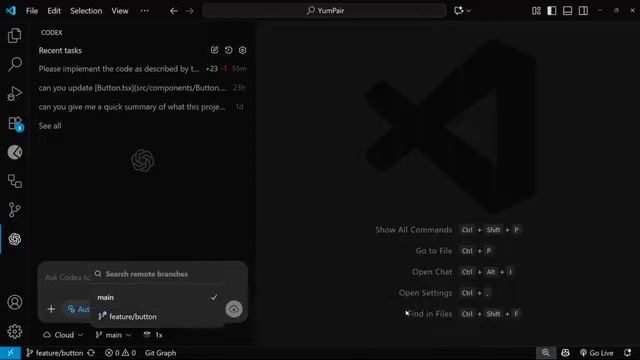
OpenAI Codex Cloud Task Delegation: The Complete Workflow from VS Code to PR
A detailed guide to OpenAI Codex extension's cloud task delegation, covering the complete workflow from initiating cloud coding tasks in VS Code to reviewing changes and creating Pull Requests.
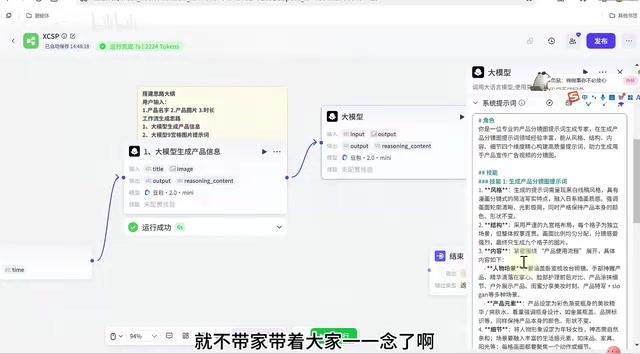
Coze Workflow in Practice: Complete Tutorial for AI One-Click Product Promo Video Generation
Step-by-step guide to building a Coze workflow for AI product promo videos, integrating HappyHours and Jimeng across 12 nodes with nine-grid storyboards and polling loops.
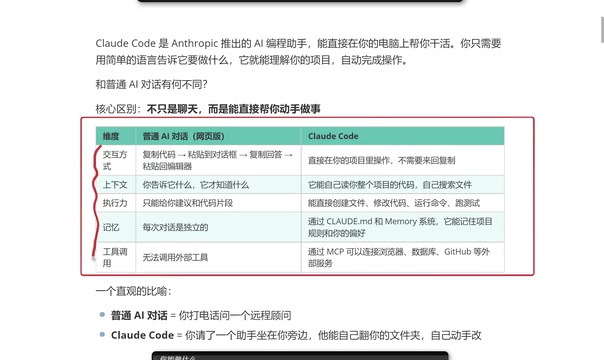
Getting Started with Claude Code: 5 Key Differences from Traditional AI Chatbots
Explore 5 key differences between Claude Code and traditional AI chatbots like ChatGPT, covering interaction, context, execution, memory, and tool integration.