Deep Dives
In-depth AI analysis, industry observations, and technical insights — slow down and read.

Tor Network Hit by Sustained DDoS Attack, Emergency DoS Defense Fix Released
The Tor Project quickly releases a DoS defense fix amid a sustained DDoS attack. This article analyzes its emergency response mechanism, the offense-defense game in anonymous networks, and lessons for the open-source community, exploring resilience building for critical infrastructure.

Building the Linux Desktop Email Client Parcel with Zig
Parcel is a Linux desktop email client written in Zig that recently appeared on Hacker News. This article analyzes its technical positioning, significance for the Zig desktop ecosystem, and early-stage community signals.

AI Reaches Half of All Jobs, Yet 'Who Is Hiring?' Posts Hit 12-Year Low
Hacker News post notes 'Who is Hiring?' postings stuck near 12-year lows while AI reaches half of all jobs. We unpack how both signals can hold true, analyzing channel migration, funding cycles, and AI's structural impact on hiring.
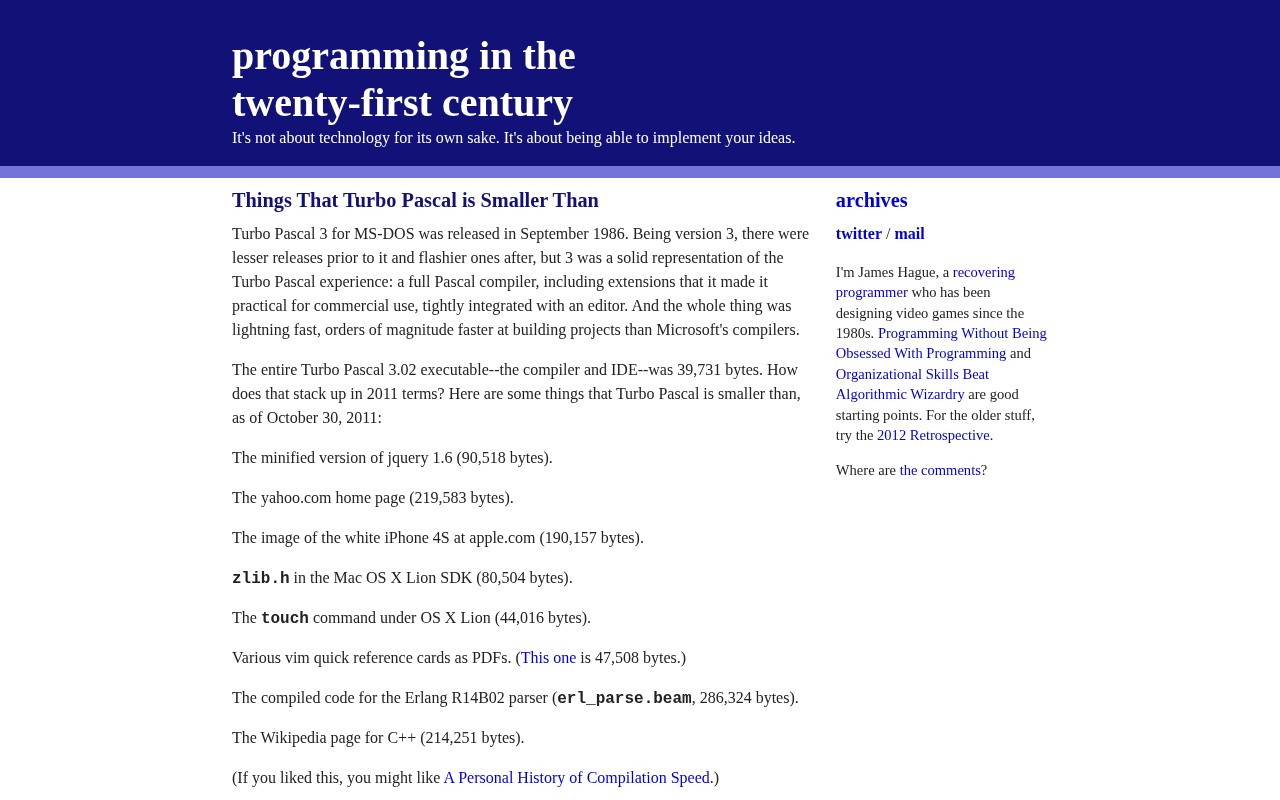
Turbo Pascal Is Smaller Than These: A Nostalgic Look at Code Size and Efficiency
Turbo Pascal's tiny compiler size serves as a benchmark for measuring software size. Hacker News revisits an old article, sparking reflection on modern software bloat and development efficiency, exploring how constraints breed elegant design.

Apple Launches Health AI Research App to Explore AI Medical Q&A
Apple launches a new research app to study how people use AI to answer everyday medical questions. This article analyzes its positioning, the research value of AI health Q&A, and what Apple's research-first strategy signals for the AI healthcare sector.

Datasette Geospatial Plugin datasette-maplibre 0.1a0 Released: Built with a Single Prompt
Datasette's new geospatial plugin datasette-maplibre 0.1a0 is released, combining MapLibre GL and OpenFreeMap to display GeoJSON shapes and lat/lon points on one map, mostly built by Claude from a single prompt, and runnable in Datasette Lite.
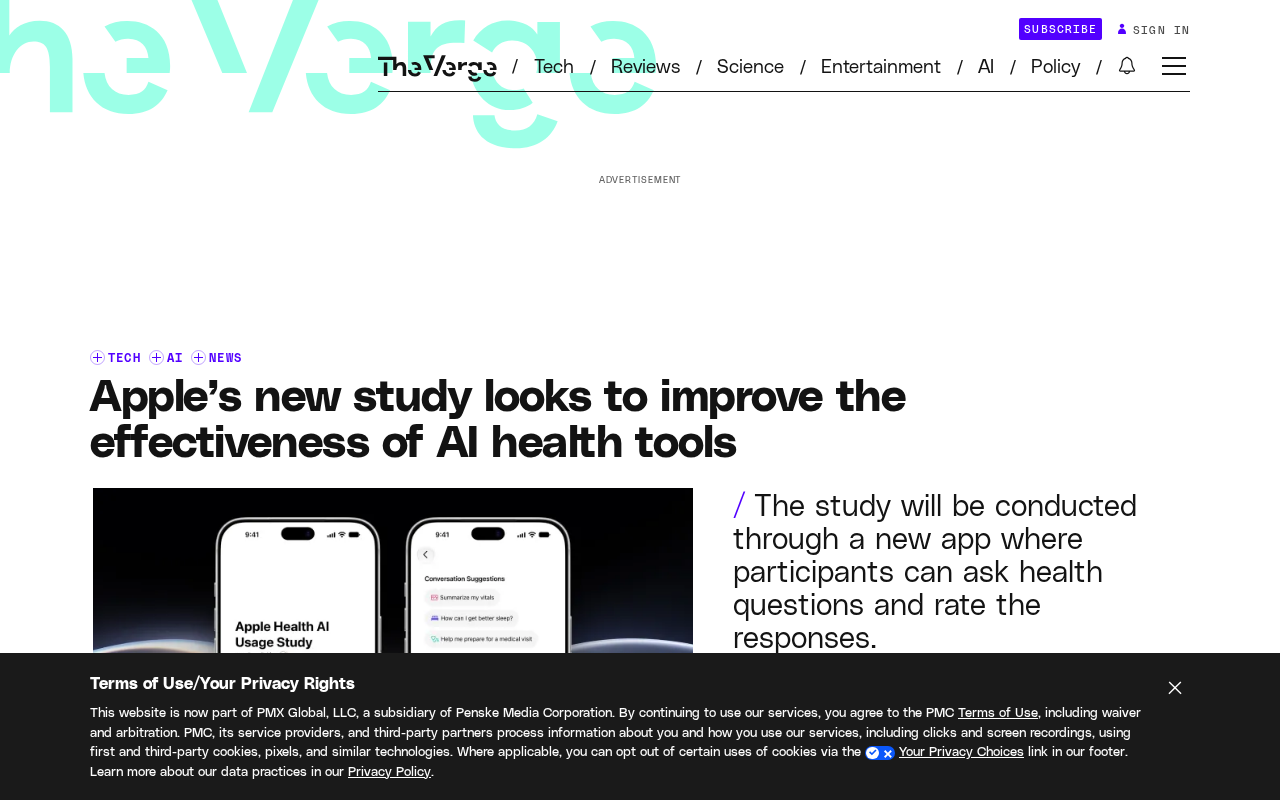
Apple Teams Up with OpenEvidence to Study the Practicality of AI Health Tools
Apple partners with clinical AI platform OpenEvidence on the Apple Health AI Usage Study to examine how users interact with conversational AI health tools and answer effectiveness.

Qwen4-Max Released: Tongyi Qianwen's Next-Generation Flagship Model Debuts
Alibaba's Tongyi Qianwen releases Qwen4-Max, its next-generation flagship model, trending on Hacker News with 218 points and 71 comments. Here's the release info, community focus, and what the flagship positioning means.

The End Is Coming for Nvidia's Blank Check in the AI Economy
Nvidia's "blank check" role in the AI economy is facing a countdown. This article analyzes how intensifying competition, rising customer bargaining power, and scrutiny of ROI are weakening its pricing power, and explores the chain effects on the AI industrial chain.

Once We Gave the Robot a Mouth, It Started Roasting Its Boss
Animotion Robotics built a complete head and mouth system for robot Éloi, with 19 DoF in the mouth (12 lips, 5 jaw, 2 cheeks). Mouth-movement testing reaches V3.0, aiming for more natural, lively facial motion during speech.

The Truth Behind Anthropic's $80.7B Half-Year Loss: 90% Is Paper Valuation, and Q2 Is Already Profitable
Breaking down Anthropic's prospectus: of its $80.7B half-year loss, 90% is paper valuation from convertible note fair value changes; real operating loss is just $690M, and Q2 operations are already profitable at $970M. The real risk is $265.6B in compute contracts—the IPO is about locking in compute tickets early.

Anthropic IPO Prospectus Decoded: The $80.7 Billion Loss and the Mystery of the Largest IPO
Anthropic's prospectus shows an $80.7B half-year loss, but $72.4B is non-cash accounting; actual operating loss is just $693M. We decode its five-year path, revenue growth, China stance, and IPO prospects.

Anthropic S-1 Breakdown: A $16.3B Revenue vs. $600B Compute Commitment Bet
Anthropic's S-1 reveals $16.3B in H1 revenue at 85% gross margin alongside over $600B in compute commitments. We break down the financials, customer mix, debt structure, and risk disclosures, plus the optimistic and skeptical views on its long-term obligations.

Hierarchical Bayesian PANN: Population Modeling of Hyperelastic Laws Under Small-Sample Noisy Data
Hierarchical Bayesian physics-augmented neural networks (PANN) tackle population modeling of hyperelastic laws under small-sample noisy data, separating sample variation from measurement noise and providing quantified uncertainty for new material predictions.

Delayed Effects of Temporary Weight Decay in Muon Pretraining
Muon pretraining study finds temporary weight decay has delayed effects: loss rises at removal but is lower at completion, driven by weight norm deficit and relative step size dynamics.

Orthogonal Null-Space Projection: UUE, a New Lightweight LLM Unlearning Framework
The paper proposes UUE, a framework that disentangles LLM forgetting from utility via orthogonal null-space projection and convex target-free optimization, achieving efficient unlearning with lightweight adapters and significantly outperforming existing methods on TOFU and WMDP benchmarks.

Fuse-All MoE: A Load-Balanced Inference Kernel on TPU
Fuse-All MoE is a TPU-oriented MoE inference kernel that fuses token gathering, expert projection, gated activation, and output write-back with load balancing for PD-disaggregated serving, cutting runtime from 2.3x to 1.09x on imbalanced EP16 prefill and boosting throughput up to 34.5% over the Megablox EP16 baseline.

OpDis-PS: Diffusion Posterior Sampling Solves the ECGI Operator Discrepancy Challenge
OpDis-PS is a diffusion posterior sampler that models signal-dependent operator discrepancy to improve ECGI reconstruction accuracy, outperforming classical regularization and learned predictors under lung conductivity changes and subcutaneous fat layer discrepancy, especially on pathological data.

New Breakthrough in Multi-Agent System Security: SecMAS Defends Against Response Manipulation Attacks
The paper proposes the Response Manipulation Attack ReMA, which iteratively optimizes malicious responses to manipulate multi-agent system decisions, and designs the SecMAS secure aggregation rule that uses semantic similarity to select consistent responses, providing theoretical security guarantees and experimentally proving effective defense against various attacks while maintaining comparable utility.

G-CAST: Enabling E-commerce Agents to Keep Evolving Amid Demand Drift
G-CAST is a governed continual self-training system from Alibaba's 1688 team that uses reward routing, entropy-based data orchestration, governed reward evolution, and checkpoint switching to keep e-commerce Agents evolving amid demand drift and toolchain evolution. It has been deployed in the YuanCai B2B procurement Agent.