All articles
37623 articles

ServerBench: Can Coding Agents Build Their Own LLM Inference Serving Systems?
ServerBench evaluates whether LLM coding agents can design specialized inference serving systems, with latency-compliant token value per dollar as the core metric; Claude Sonnet 5.5 reaches 4.87x the vLLM reference on Gemma E4B.

What to Do When a Robot's Memory Gets Fuzzy? A New System Automatically Corrects Errors
Robot memory object descriptions can become outdated or wrong, affecting environment interaction. A new study proposes a system that identifies and corrects unreliable object descriptions in robot memory, improving long-term autonomy. This article analyzes its approach and significance.
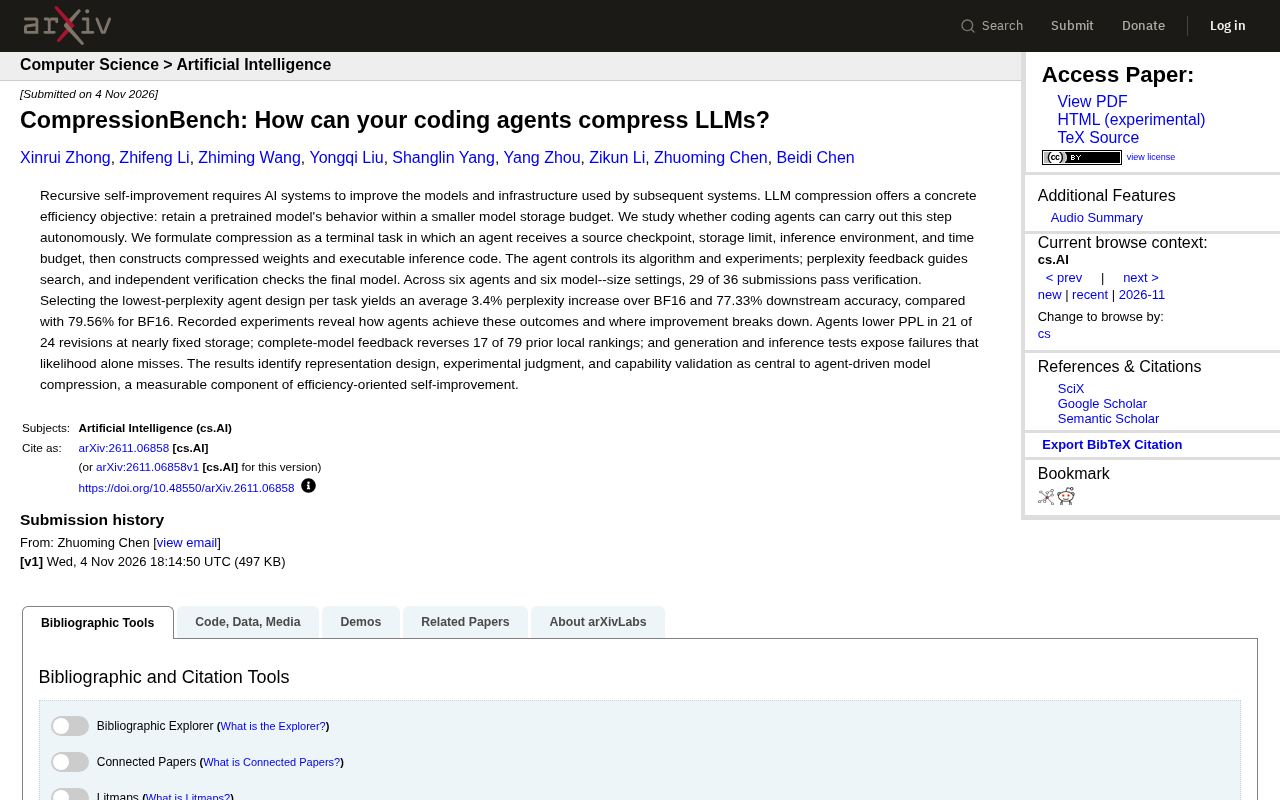
CompressionBench: Can Coding Agents Autonomously Compress LLMs?
CompressionBench studies whether coding agents can autonomously compress LLMs: 29 of 36 submissions passed verification, average perplexity rose 3.4%, and downstream accuracy was 77.33% vs. 79.56% for BF16. It highlights representation design, experimental judgment, and capability verification as core challenges.
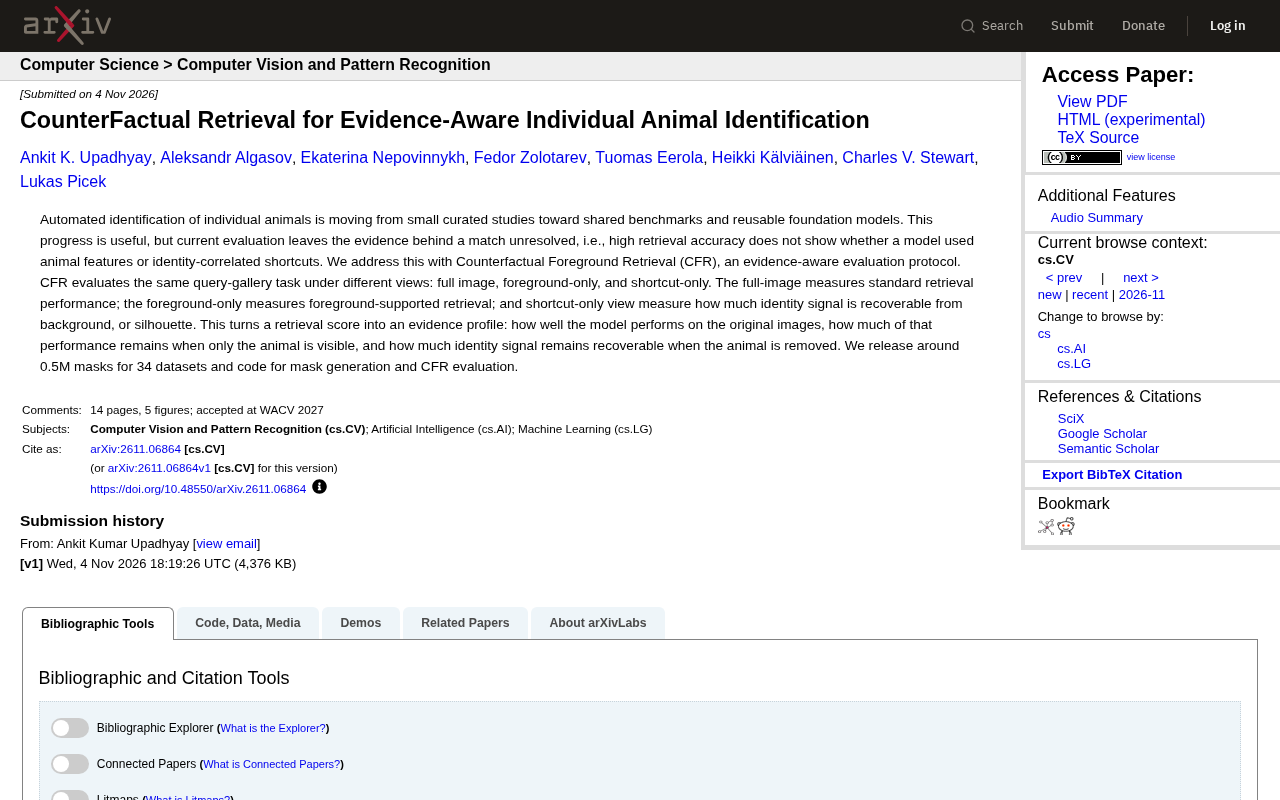
Counterfactual Retrieval: Making Animal Individual Identification Models 'Explain' Their Decisions
Counterfactual Foreground Retrieval (CFR) proposes an evidence-aware evaluation protocol that decomposes animal individual identification model decisions via full-image, foreground-only, and shortcut-only views, releasing 0.5M masks covering 34 datasets.

Turn-Level Best-of-N Sampling: A New Strategy for Inference-Time Scaling of LLM Agents
This article explains turn-level Best-of-N sampling, a generator-selector framework that improves LLM agent accuracy and consistency on long-horizon tasks through training-free inference-time scaling.

GBPNet: Teaching Linear Code Decoders Smarter Message Passing
The paper proposes GBPNet, a generalized belief propagation network that preserves Tanner graph message-passing symmetry while adding learnable message scaling and cascaded variable node updates, combined with progressive and high-SNR training to achieve lower BER than traditional BP and state-of-the-art neural decoders on multiple linear codes.
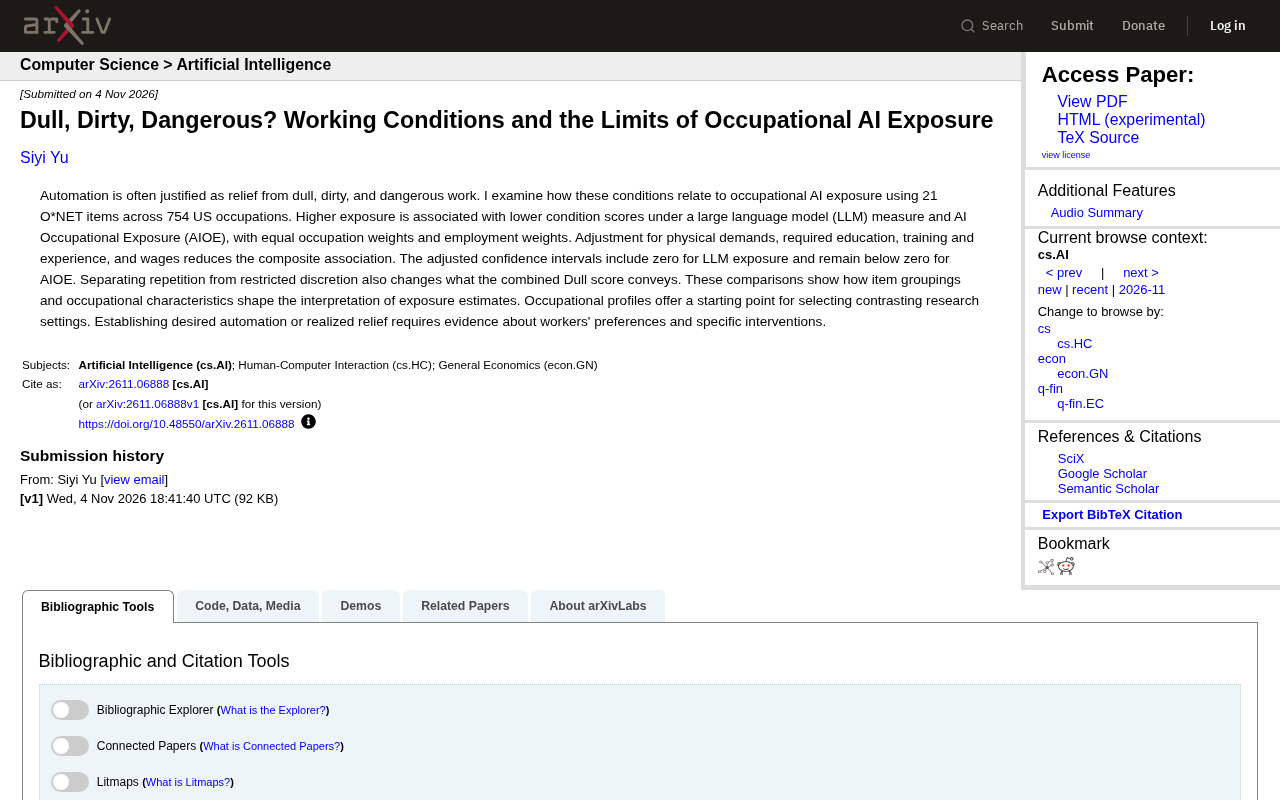
The AI Deautomation Myth: High-Exposure Occupations Don't Necessarily Have Worse Working Conditions
A study of 754 U.S. occupations finds higher AI exposure correlates with lower working-condition scores, challenging the "AI replaces bad jobs first" narrative. Associations weaken substantially after adjusting for physical demands and human capital—exposure is not automation benefit.

HALO: Simulation Data-Driven Zero-Shot Transfer for Humanoid Robots
Apple's AI/ML team proposes HALO, synthesizing vision-language-motion data in 1,000 procedurally generated virtual homes to train humanoid robots in multiple physical skills, achieving zero-shot transfer in six unmapped real environments with a 91% success rate across 360 trials.

Hardwired Distributed Processing Unit: Pushing Neural Network Decisions to the Sensor
Hardwired Distributed Processing Unit (HDPU) implements sensor-side neural network decisions on FPGA without host inference. Crosswalk detection case shows fixed-latency decisions, host core time savings per frame, and tens of thousands-fold data reduction, offering an ultra-low-power solution for edge AI.
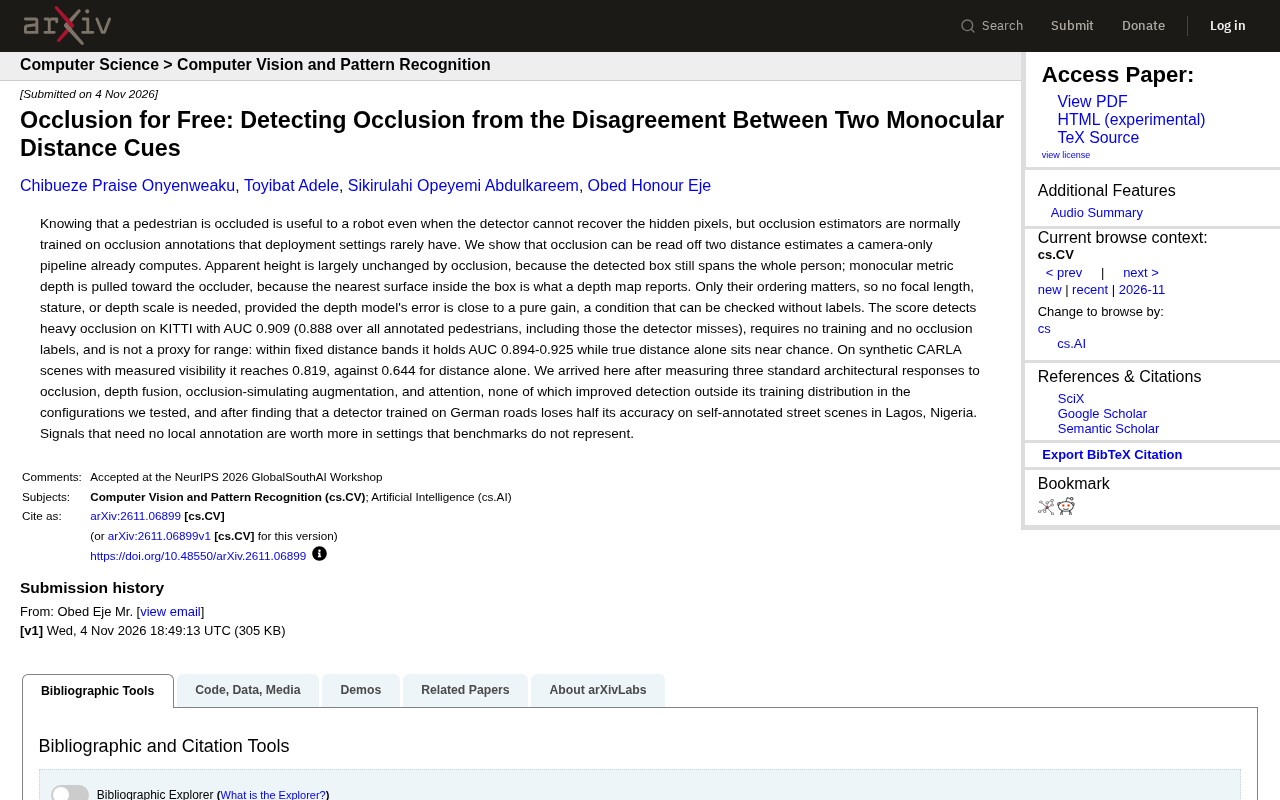
Occlusion Detection Without Labels: Dual Monocular Distance Cue Disagreement
A training-free, annotation-free occlusion detection method uses ordinal disagreement between apparent height and monocular depth cues, achieving AUC 0.909 on KITTI with robust cross-domain performance, offering new ideas for robot perception.

PARGAR: How Graph Attention Neural Receivers Solve the Sparse Pilot Problem
The PARGAR paper proposes a pilot-aware graph attention neural receiver that models the OFDM resource grid as a graph with pilot-anchor links, achieving lower BER than the CNN-based DeepRx under sparse DMRS layouts, offering new ideas for 5G/6G neural receiver design.

BEAKER Benchmark: Evaluating the Embodied Brain of Self-Driving Laboratories
BEAKER is an embodied AI benchmark for self-driving chemistry labs, featuring 1,000 expert-annotated samples across 11 image/video tasks and 28 multimodal models evaluated, revealing the gap between procedure understanding and fine-grained action execution.

FrontierPhysics: A New Benchmark for End-to-End Evaluation of Physics Research Agents
FrontierPhysics is an end-to-end physics research benchmark built by 42 physicists, with 56 tasks across theoretical, computational, and experimental physics. Tested on 22 models in 26 configurations, none passed more than 46 of 168 runs, with key weaknesses in reasoning rigor and expert intuition.
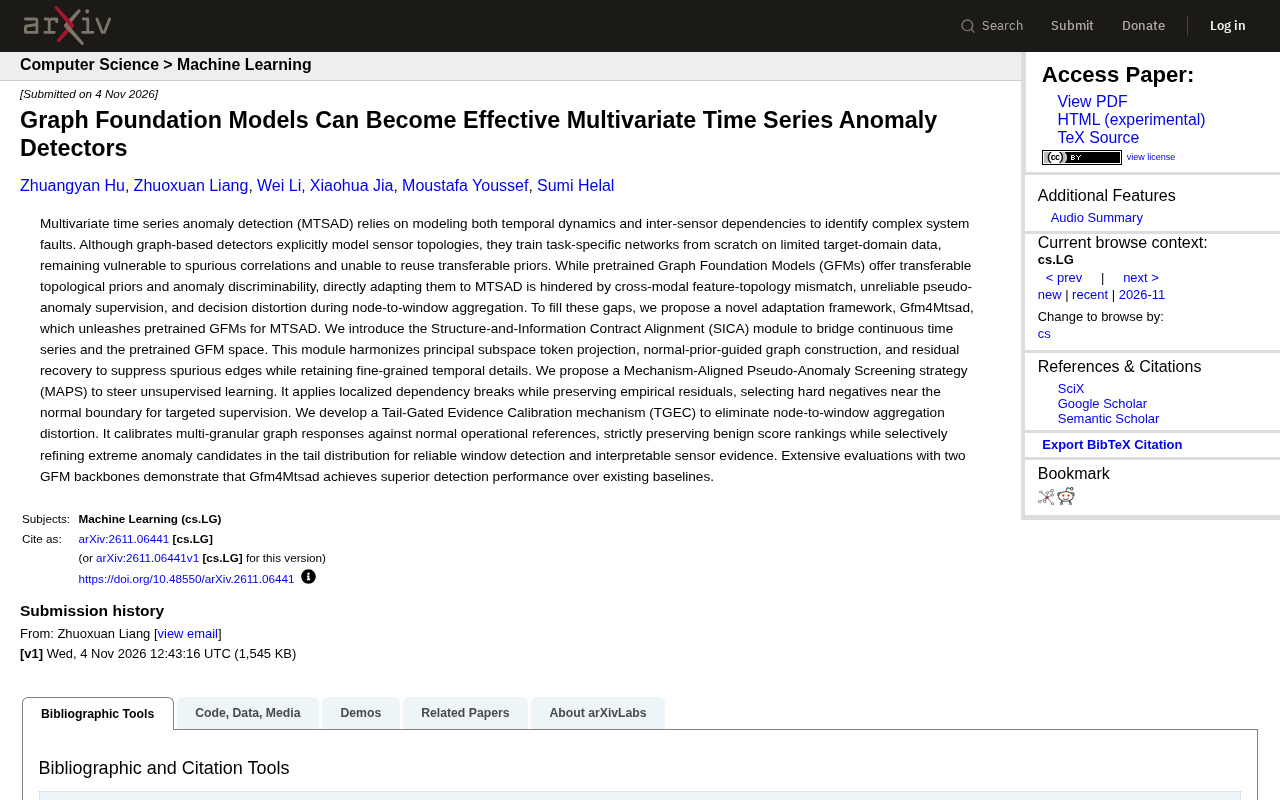
Adapting Graph Foundation Models for Multivariate Time Series Anomaly Detection: An Analysis of the Gfm4Mtsad Framework
The paper proposes Gfm4Mtsad, a framework adapting pretrained graph foundation models to multivariate time series anomaly detection via SICA alignment, MAPS pseudo-anomaly screening, and TGEC aggregation calibration.
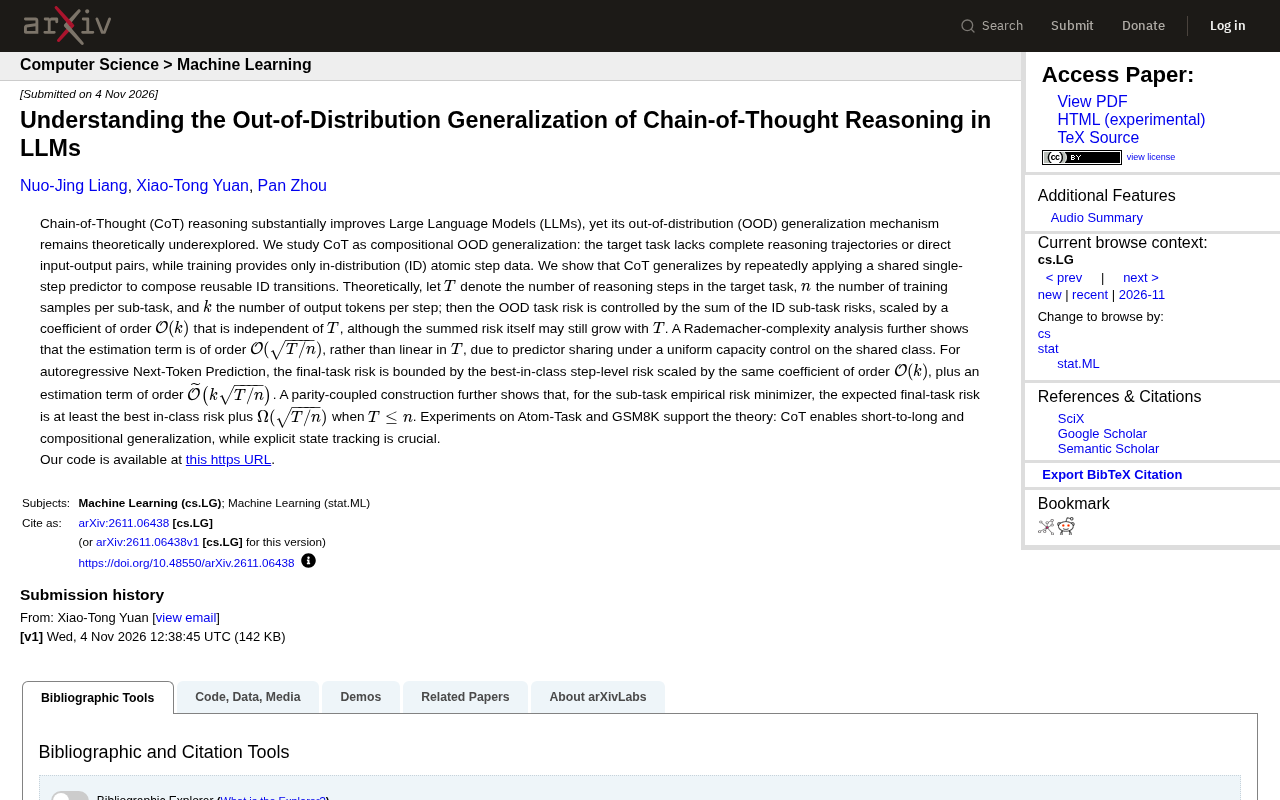
Why Does CoT Reasoning Generalize? Theory Provides First OOD Guarantee
The paper formalizes CoT reasoning as compositional OOD generalization, proving CoT generalizes via a shared single-step predictor composed repeatedly, with risk bounds of O(k) coefficient and O(√(T/n)) estimation term, validated on Atom-Task and GSM8K, highlighting explicit state tracking.
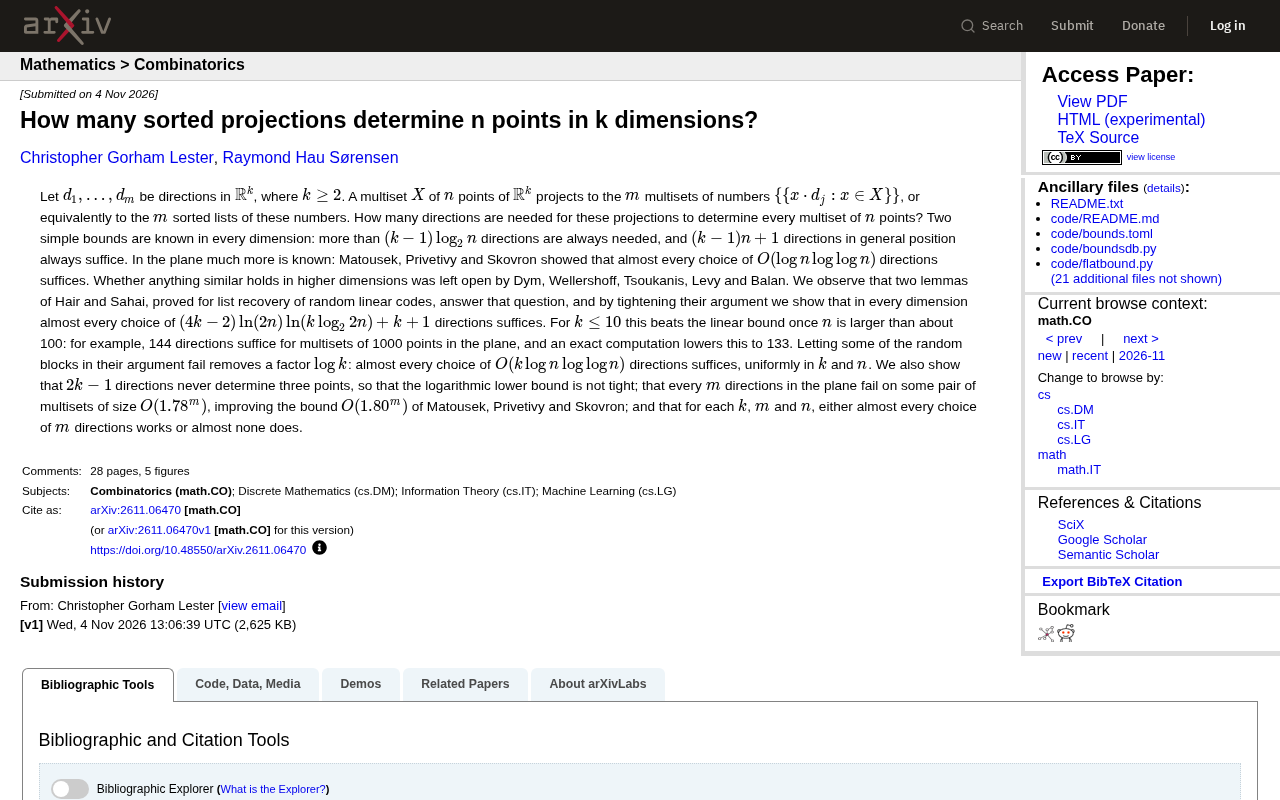
How Many Directional Projections Are Needed to Uniquely Determine n Points in k-Dimensional Space?
How many directional projections are needed to uniquely determine n points in high-dimensional space? New research uses a coding theory lemma to give a breakthrough upper bound: almost any O(k log n log log n) directions suffice, significantly improving the linear bound.
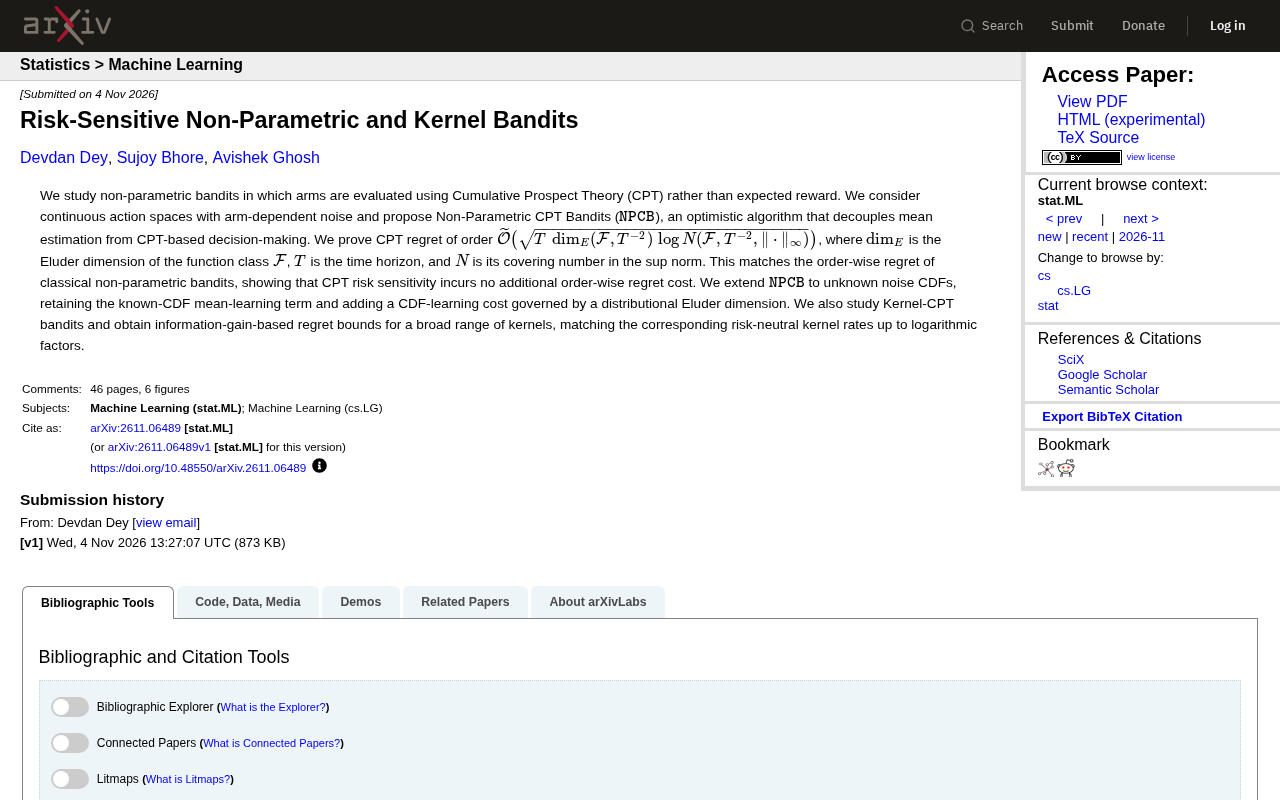
Risk-Sensitive Non-Parametric and Kernel Bandits: CPT Regret at No Extra Cost
NPCB introduces Cumulative Prospect Theory into non-parametric and kernel Bandits, proving CPT risk-sensitive regret matches classical non-parametric Bandits with no extra cost, and extends to unknown noise CDF and kernel methods.
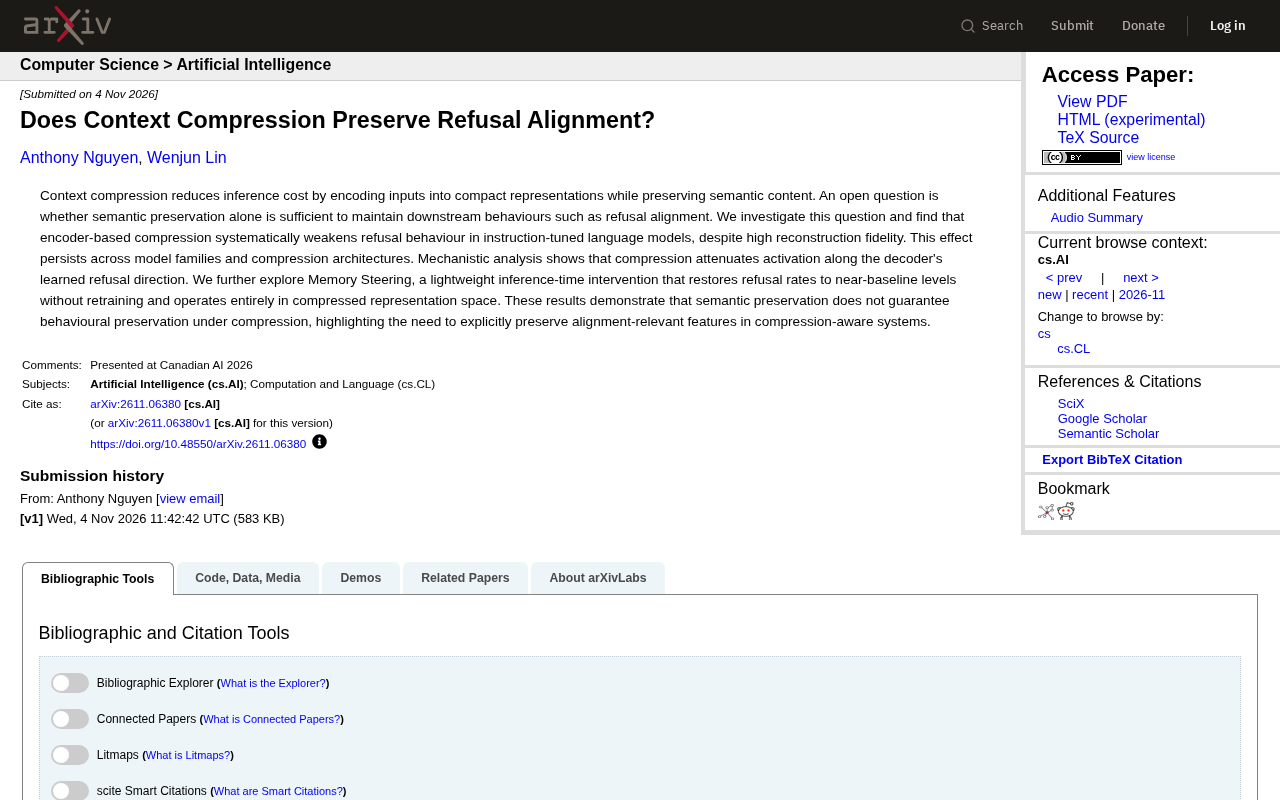
Does Context Compression Weaken Refusal Alignment? Study Reveals Semantic Fidelity Is Not Behavioral Alignment
Research finds encoder-based context compression systematically weakens LLM refusal alignment despite high semantic reconstruction fidelity. Mechanistic analysis shows compression attenuates refusal-direction activations; Memory Steering restores refusal rates near baseline without retraining.

Ruby-OPD: A Breakthrough in Pronunciation Controllability for Flow-Matching TTS
Ruby-OPD introduces a two-stage flow-matching TTS framework using Ruby text representation and orthography perturbation for pronunciation control, plus On-Policy distillation on plain-text corpora to boost Japanese polyphone accuracy to 97.13% on the Joyo-Kanji-Yomi benchmark.

Graph Memory Framework LExGraph: Solving the Memory Challenge in Long-Horizon Exploration Tasks
The MBZUAI team proposes the LExMem graph-guided benchmark and the LExGraph graph memory framework, modeling long-horizon exploration tasks as graph structures to evaluate and improve models' memory of trial-and-error trajectories. Code and dataset are open-sourced.