#AI Agent
1061 related articles

Long-Running AI Agents Require Multi-Layer Feedback Loops
The LangChain Deep Agents course proposes a loop engineering framework that breaks AI agent feedback into execution, verification, and cross-run improvement loops to build reliable long-running agents.
Anthropic Builds Claude with Claude: The Engineering Philosophy of Separating the Brain from the Hands
Anthropic engineers Katelyn Lesse and Angela Jiang share how to build Claude with Claude, explaining the design principle of separating the "brain" from the "hands" in Opus 5.5, Claude Platform, and AI Agent engineering.
Asana AI Product Lead Shares AI Agent Best Practices
Asana's AI product lead shares AI Agent best practices, covering responsibility boundaries, human-in-the-loop design, data model anchoring, and evaluation iteration methods for product teams deploying Agents.

NVIDIA Open-Sources OpenShell: Putting a Safety Cage Around AI Agents
NVIDIA open-sources OpenShell, a runtime security sandbox for AI agents with kernel-level isolation and formal verification of policy changes to prevent permission runaway.

MuleSoft Agent Fabric Local Deployment and Testing in Practice
MuleSoft Agent Fabric supports local deployment and testing of AI Agents: with Docker and Anypoint Code Builder, you can run gateways, policies, and Broker locally with one click and test A2A without publishing to Exchange or deploying to the cloud.
MCP Protocol Explained: The N×M to N+M AI Integration Revolution
What is MCP (Model Context Protocol)? This article uses a USB-C analogy to explain MCP principles, breaking down the Host/Client/Server architecture, Tools/Resources/Prompts building blocks, stdio and SSE transports, plus comparisons with Function Calling and LangChain Tool, with a Python implementation and production best practices.

What Is MCP? The Open Standard That Connects AI to Every Tool
MCP (Model Context Protocol) is the open standard that lets AI apps connect to tools uniformly. This article explains MCP's Host, Server, and Client roles, the Tools, Resources, and Prompts building blocks, the full path of a tool call, plus two-way use in n8n and security risks.
MCP Explained: How AI Agents Connect t…
MCP Explained: How AI Agents Connect to Your Apps
Using an e-commerce support bot scenario, this visual guide explains how MCP solves the M×N AI-tool integration problem, why raw REST calls fall short, the Tools/Resources/Prompts primitives, and Host-Client-Server security.
Amp Leans on OpenAI Models to Take AI Agents Beyond Code
Amp team reveals its AI Agent vision: beyond coding, covering the full workflow. OpenAI models handle most tokens, Sign in with ChatGPT boosts quota, and super-fast models plus email automation point toward general work agents.

Handing the Shop to an AI Agent for Seven Days: A Real Experiment with Zero Human Intervention
A creator hands his real shop to an AI Agent for seven days: automatic orders, customer replies, inventory and pricing, with only approvals over $50. Errors are preserved, and the ledger, guardrails and decision audit are fully shown.

ChatGPT vs. AI Agents: Choosing Between Conversation and Agentic Workflows
ChatGPT vs. AI Agent explained: the real difference between basic conversation and agentic workflows, the observe-choose-act-check loop, and when to use each.

AI Agent Calls Real SolidWorks: An Open-Source Modeling Assistant for STEM Students
An open-source GitHub project with 1.3k stars lets an AI Agent call real SolidWorks to create 3D models, assemblies, and drawings, with result validation built in.

Six Types of AI Agents Explained: A Guide to Deploying and Choosing Open-Source Agents
A systematic breakdown of six open-source AI agents—OpenClaw, Hermes, Agent Zero, OpenHands, Paperclip, and Buzz—covering their underlying architectures, pros and cons, plus VPS deployment and selection advice.

The Five Permission Levels of AI Agents: From ChatGPT Q&A to Fully Autonomous Agents
Break down AI agent permissions into five levels: from ChatGPT pure conversation, project documents, MCP connectors, Computer Use automated clicking, to unattended agents—analyzing capability boundaries, prompt injection risks, and approval fatigue level by level, with three practical rules: read-only by default, manual confirmation for irreversible operations, and per-project isolation.

How to Choose an AI Agent? Dots, Muse, Grok Bot, and Claude Duet Compared
Compare OpenAI Dots, Metamuse, Grok Bot, and Claude Duet AI Agents: Dots integrates with Slack/Teams, Muse has a free tier, Grok Bot suits cross-tool tasks, and Claude Duet is US waitlist-only.

How Is an AI Agent Different from a Chatbot? A Complete Explanation
What's the difference between an AI Agent and a chatbot? This article breaks down the Agent's work loop—receiving goals, autonomous planning, calling tools, and reporting results—clarifying the essential difference in how tasks are executed.

How Does ChatGPT Check the Weather? The AI Agent Tool-Calling Loop Explained
ChatGPT's training data is outdated—so how can it answer real-time weather queries? This article breaks down the AI Agent tool-calling loop: how models generate tool requests, how code executes and feeds back results, and the engineering logic behind the definition of an Agent as "model + tools + loop."
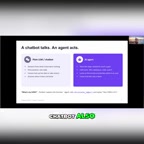
ChatGPT Isn't an Agent? A Clear Explanation of What AI Agents Really Are
Are ChatGPT, Gemini, and Claude really AI Agents? This article starts from the definition of an Agent, distinguishes Agentic AI from true Agents, and reviews the evolution from rule-based chatbots to autonomous agents to help clarify the concepts.
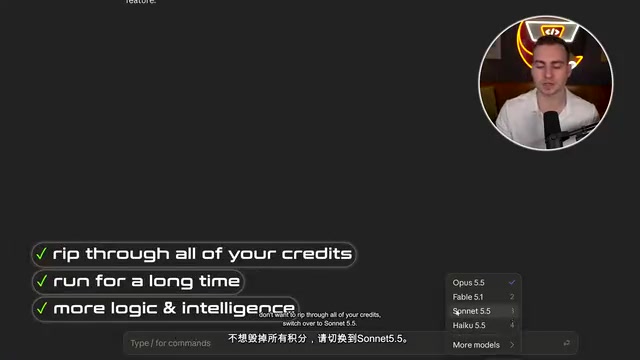
Claude Code Deep Configuration Guide: From Model Selection to Skills in Practice
Based on Tech With Tim's three-hour hands-on course, a systematic walkthrough of Claude Code's model and effort level choices, permission modes, CLAUDE.md conventions, Skills scoping, subagents and Hooks configuration, plus advanced usage like context compaction and parallel sessions—helping you turn a default install into a genuinely efficient workspace.
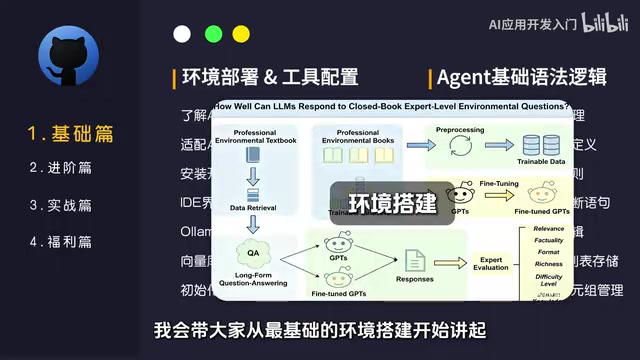
748-Episode AI Agent Development Course on Bilibili: A Complete Guide from Beginner to Enterprise-Level Practice
Breaking down the 748-episode AI Agent development course on Bilibili: Fundamentals covers LLM principles and API calls; Advanced covers RAG, Tool Use, memory management, and multi-agent collaboration; Practical covers intelligent customer service, office automation, and more—plus learning paths and pitfalls to avoid.