#AI编程
8444 related articles

Dual-AI Workflow That Prevents Ship Disasters: Cloud Planning + Local Execution Across 92 Projects
A Bilibili creator shares a dual-AI workflow: cloud brain plans and reviews, local Agent executes on real machines, GitHub task ledgers bridge them—92 projects shipped, catching false test passes and license packaging failures.

Grok Bot in Practice: Lauren Tan's Methodology for Autonomous AI Code Delivery
Cursor engineer Lauren Tan on letting AI agents deliver code autonomously: verification skills and feature maps build trust, evals test skills, hard CI constraints replace review, and agents auto-merge PRs.

Generative UI Comes to Android: A2UI Lets Agents Build Native Interfaces in Real Time
A2UI is Google's open protocol that lets AI Agents generate native Android UI from declarative JSON. Learn Catalog and Surface concepts, the three-step integration flow, two-way data binding, self-correction loops, and custom component extensions.

Jetpack Glance + Remote Compose: Wear OS Tiles Evolve into Widgets
Wear OS Tiles evolve into Wear Widgets built on Jetpack Glance and Remote Compose, sharing infrastructure with phone widgets. Migration strategies, code model, and AI tools explained.

Jetpack Navigation3 Type-Safe Deep Links in Practice
A deep dive into the Jetpack Navigation3 type-safe deep link API: from DeepLinkRequest and URIDeepLinkMatcher to Kotlin Serialization parsing, lazy synthetic back stacks, and KMP sharing.

Claude's Safety Classifier Is Hurting Developers: Why a Premium Subscription Can't Retain Users
Reddit user considers canceling $200/month Claude Max subscription due to frequent safety classifier false positives on legitimate development work. Analysis of impact on paying users and AI usability challenges.
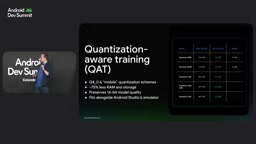
Agentic Coding with Small Models: 100x Lower Cost, Double the Success Rate
Explore how to build efficient agentic coding workflows with small language models, balancing cost, privacy, and latency. Learn about model types, local running advantages, evaluation methods, and practical tips to achieve 100x lower cost and double the success rate.
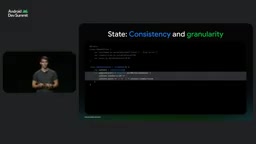
Jetpack AppState: Taking Compose State Beyond the UI Layer
Jetpack AppState extends Compose snapshot state into the data and domain layers: transform uses headless composition to derive state, and State Store enables cross-component sharing and persistence, solving Flow orchestration and process-death pain points.

Compose Performance Optimization: A Practical Guide to Outperforming Yourself
A deep dive into Jetpack Compose performance optimization: release-mode measurement, Baseline Profiles, Perfetto composition tracing, computed vs. derived state, effect API costs, and avoiding unnecessary recomposition.

Bitmap Memory Optimization in Practice: 5 Strategies to Reduce App Memory Usage
Based on Google I/O research across ~500 Android apps, this guide covers the Reduce, Reuse, Recycle Bitmap memory optimization strategies—CDN cropping, downsampling, Bitmap Region Decoder, cache deduplication, onTrimMemory handling, Play Console memory metrics, and local profiling toolchains.

TokenEconomizer: Microsoft's Open-Source Plugin Cuts Coding Agent Costs by 30.9%
Microsoft Research and UC Berkeley release TokenEconomizer, an open-source plugin that cuts coding agent token costs on SWE-Bench by 18.4% to 30.9% without modifying the agent.

Vercel Daemons Adds Service Bindings: Direct Access to Private Services
Vercel Daemons now supports service bindings: declare private service bindings in vercel.toml and call internal APIs with standard fetch. Vercel handles routing, auth, and TLS.

@ai-sdk/xai 2.0.101 Patch Release: The Maintenance Signal Behind a Dependency Chain Update
Analysis of @ai-sdk/xai 2.0.101 patch: only updates provider-utils and openai-compatible dependencies, no API changes. Examining Vercel AI SDK's provider abstraction maintenance logic, the dependency chain impact on the xai provider, and upgrade advice for developers.

AI SDK Vue 2.0.283 Patch Release: Dependency Chain Update Analysis
Analysis of the @ai-sdk/vue@2.0.283 patch release: updates to provider-utils and ai core dependencies, no new APIs. Monorepo release strategy and version alignment tips for Vue developers.

AI SDK Releases @ai-sdk/zai 1.0.9 Patch Update
AI SDK ecosystem package @ai-sdk/zai releases patch version 1.0.9, primarily a dependency sync involving provider-utils and openai-compatible, a maintenance release.

AI SDK Vue 3.0.320 Patch Released, ai 6.0.320 Updated in Sync
The AI SDK Vue adapter package @ai-sdk/vue@3.0.320 patch is released, with core package ai@6.0.320 updated in sync. This article explains the GitHub auto-release version info, multi-package version linkage strategy, and the significance of supply chain signature verification, along with upgrade recommendations for developers.

Type-Safe Keep Rules in R8 and DEX Optimization in Practice
Google Play requires over 25% DEX optimization. This article explains the R8 configuration analyzer, Jetpack Keep type-safe annotations, and the Android CLI validation tool to help Android developers narrow keep rules, improve shrinking/optimization/obfuscation, and reduce ANRs.

The Truth About AI Coding: Code Output Soars, So Why Is Delivery Still Hard to Speed Up?
Engineering leaders from Databricks, Uber, and Google Maps discuss AI coding's real impact: code output soars but delivery bottlenecks shift, code review faces rethinking, and enterprises begin fine-grained token governance.

A New Paradigm for Text Editing in Compose: TextFieldState Replaces the Old API
Jetpack Compose introduces the TextFieldState API to fix dropped characters and cursor jumps from async input. The old value/onValueChange callbacks will be deprecated in 1.13. This article covers InputTransformation, OutputTransformation, four state hoisting patterns, and new formatted text editing capabilities.

Googlebook's First Developer Case Studies: How Notability and Logitech Built Desktop-Class Android Experiences
Notability and Logitech share first-hand experience building for Googlebook: using Jetpack Compose, Navigation 3, and Jetpack Ink for desktop-class Android, plus how the peripheral customization API bridges hardware and OS.