#AI编程
9426 related articles

Selective Tie Learning: A New Solution to Spurious Correlations in Preference Optimization
This article introduces Selective Tie Learning: selecting the most impactful ties through theoretical analysis to reduce spurious correlations in preference optimization with less data. Experiments cover log-linear policies, neural networks, and large language models, and discuss practical applications and limitations.
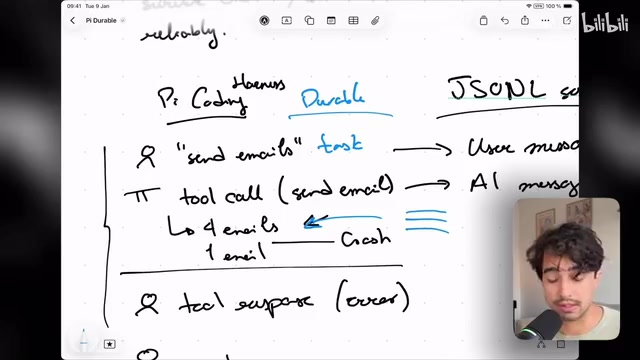
Pi Durable Explained: Building a Persistent Runtime Framework for Always-On Agents
An in-depth look at the Pi Durable agent runtime: how checkpoints and SQLite persistence enable automatic recovery after crashes, its key differences from Pi Coding Agent, its position in the Harness layer architecture, and a complete hands-on demo of building an always-on agent with a small local model.

Why Is GEPA Merge Unstable? Mechanism-Level Diagnosis Reveals Configuration Sensitivity and Behavioral Probes
GEPA merge operator unstable across models? Mechanism-level diagnosis finds configuration sensitivity is the main cause, static features cannot predict merge decisions, behavioral probes avoid high-risk failures but do not surpass NoMerge.

In the Agent Era, Why Is Rust the Go-To for AI Programming?
A Rust core team member explores what AI agents mean for Rust: why its high-performance defaults and type system suit agent coding, how formal proofs make Unsafe code safer, and how design languages may be key.

Pi Context View Plugin: Making Agent Context and Skills Visible at a Glance
Pi Context View is a practical tool for inspecting AI Agent context, Skills, and plugin configs. Learn installation, Usage and Injections features, and how to check system prompts and tool definitions.

Coze Agent Development Bootcamp: From Zero to Commercial Deployment
Coze 3.0 bootcamp tutorial: one-sentence agent and workflow generation, manual multi-branch workflow design, variable debugging and permissions, commercial cases across digital humans, e-commerce, education, and finance, plus local and cloud deployment—zero programming from scratch to one-click deployment.

Improving On-Policy Self-Distillation for Thinking Models with Activation Steering
ST-OPSD improves on-policy self-distillation via activation steering, addressing reference hallucination and reconsideration suppression, boosting accuracy on AIME and HMMT and restoring base model behavior.

OpenAI Turns Its Coding Tool Into dots: An Always-On Personal Assistant
OpenAI extends its coding tool into the always-on personal assistant dots. Executive Alexander Embiricos says he doesn't want to meet with someone else's AI agent. We analyze the product logic, why coding is the assistant's foundation, and open questions.

4B Model Fine-Tuning in Practice: Three.js 3D Scene Generation Keeps Improving
Developer shares Qwen3.5-4B fine-tuning progress: using Three.js scene generation as the test task, the latest checkpoint shows clear gains in scene quality and first-pass rate, with updated quantized versions and layer fixes. Training is expected to finish October 28, after which the full weights, dataset, and technical report will be open-sourced.

UTA Learning Rate Decay: Closed-Loop Adaptation Breaks Through Training Bottlenecks
UTA learning rate decay uses closed-loop adaptation to deliver consistent gains on LLaMA and ResNet, is plug-and-play, and adds negligible overhead.

A New Take on Grokking: Rank Compression Marks the Phase Transition, Not Its Cause
New research finds that rank compression in weight matrices occurs after grokking, with subspace crystallization shrinking from a quarter to a tenth; forcing low rank delays or prevents grokking, showing compression is a marker, not a cause.
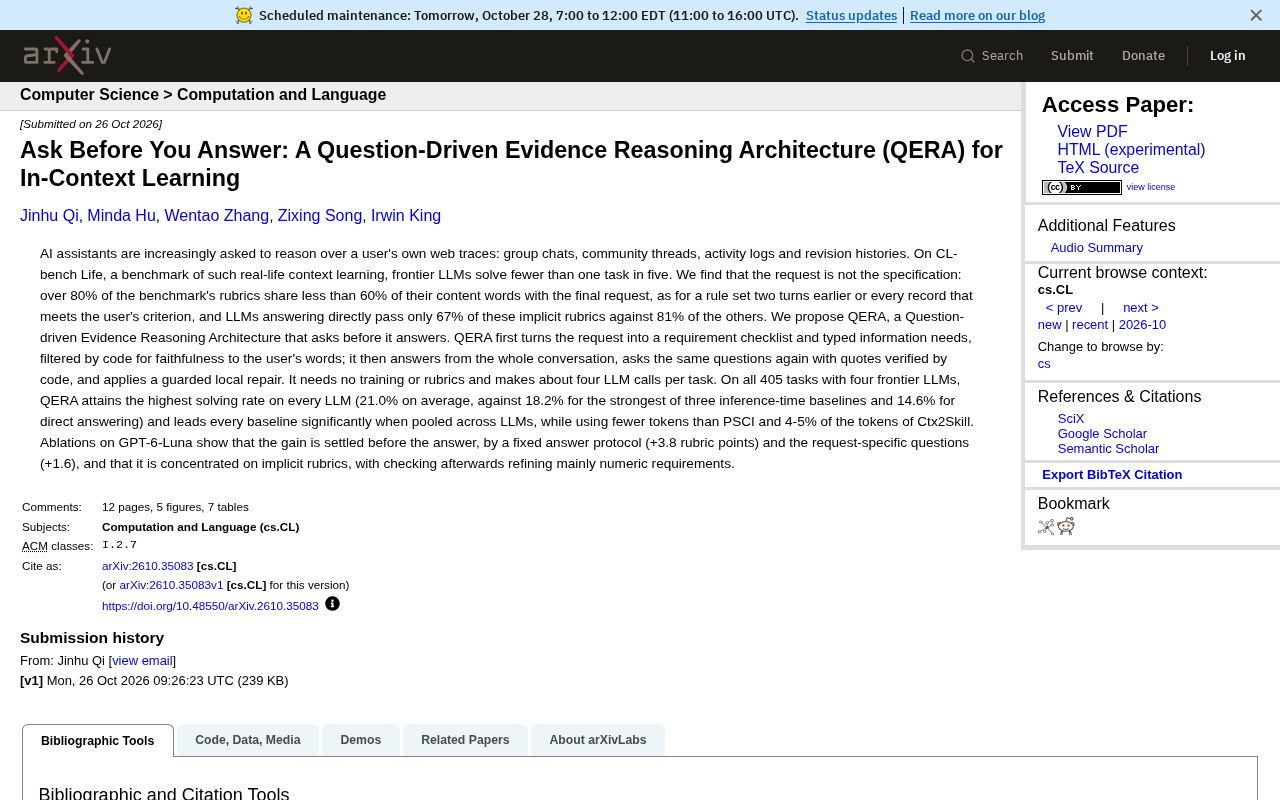
QERA: Ask First, Answer Later—Solving the Implicit Context Reasoning Challenge
QERA asks questions before answering to solve implicit requirement reasoning in LLM real-life in-context learning, reaching 21.0% on CL-bench Life and beating direct answering and inference-time baselines with fewer tokens.

Agent SDK Released: Define AI Agents with Markdown and TypeScript
Agent SDK released: write prompts in Markdown, build tools in TypeScript, define AI agents in code, choose hosted or self-hosted deployment, with built-in evaluations.

DeepSeek V4.1 Flash Lands on Cursor: Leading the Cost Frontier Across Every Tier
DeepSeek V4.1 Flash is now in Cursor, sitting on the cost frontier at every effort tier in CursorBench at $0.60–$0.98 per task, with no same-price model scoring higher. We break down its cost efficiency and what it means for developers.

Domestic AI Coding Plans Compared: How to Choose Between Zhipu, Kimi, and MiniMax
Compare Zhipu GLM Coding Plan, Kimi Code, and MiniMax M-Plan on pricing, points/quota rules, and model changes, plus scenario-based selection advice.

JetBrains Open-Sources AI IDE ThinkRail: Multi-Workspace Parallelism and Spec-Driven Development
ThinkRail is an open-source agentic IDE from the JetBrains Innovation Hub built on Pi, featuring multi-workspace parallelism, Git worktree isolation, spec-driven development, and diff review. Completely free under Apache 2.0.

Stack Overflow for Agents Triples Registrations via ChatGPT Plugin
Stack Overflow VP of Product Alex Lado reveals that Stack Overflow for Agents tripled registrations overnight after joining the ChatGPT plugin marketplace. This article breaks down its full path from knowledge intelligence layer positioning to building the product with Codex in two weeks and choosing plugin distribution, offering a reference for AI product growth.

Amp Leans on OpenAI Models to Take AI Agents Beyond Code
Amp team reveals its AI Agent vision: beyond coding, covering the full workflow. OpenAI models handle most tokens, Sign in with ChatGPT boosts quota, and super-fast models plus email automation point toward general work agents.

AI-Generated Pixel Character Animation: Frame Planning, Consistency Tips, and Godot Reskinning in Practice
This tutorial covers the complete workflow for AI-generated pixel character animation: frame planning, consistency tips, copyright notes, manual retouching, Godot import, state switching, and enemy asset creation. Learn to keep seven animations consistent with the same character, avoid common pitfalls, and verify in-game.

Multi-Agent Context Passing: The Lossy Compression Problem Every Interviewer Asks About
Multi-agent interview question: how is context passed? Bilibili creator Peng Yu breaks down four passing strategies, the four-word principle of externalize/curate/compress/isolate, a seven-field summary checklist, and three anti-patterns.