#AI编程
9421 related articles

CodeMode: Let AI Agents Write Code Instead of Calling Tools, Slashing Token Costs by 90%
Explore how CodeMode enables AI agents to execute code in a sandbox instead of calling tools one by one, reducing token consumption by up to 90%, and analyze its implementation key points and applicable scenarios.

Developer Builds Custom PyTorch Optimizer ApexW: Half the Memory, 1.5x Faster
Developer releases PyTorch optimizer ApexW with compact optimizer state and Triton execution path, about 1.5x faster than fused AdamW and roughly half the state memory in optimizer-only benchmarks, but small tensors and automatic mode still have clear weaknesses; the author openly seeks benchmark and implementation feedback.

How to Choose a PhD Research Direction in RL? A Deep Dive into Six Frontier Areas
How to choose a PhD research direction in RL? This article analyzes six frontier directions—RL for LLMs, offline RL, safe RL, world models, multi-agent RL, and robot RL—covering open problems, advantages, and risks, and offers four selection frameworks: interest matching, balancing industrial value, advisor fit, and skill transferability, to help PhD students make informed decisions.

The Most Comprehensive AI LLM Application Development Course on Bilibili: Cognition Determines Success
Bilibili's AI LLM Application Development course Lesson 1: Why changing cognition comes first—AGI timeline, AI maker capability model, adoption status, and the core mindset of 'treat AI as a person.'

Gemini API CLI: A Multimodal Tool for AI Agents—But Watch Your Bill
Gemini API CLI is Google's command-line tool for coding agents, supporting image, video, music, and subtitle generation. The tool is free but the models are not—video costs about 10 cents per second, and agents can spend on their own, so developers need to design budget controls.

CrewAI Multi-Agent Development in Practice: From Getting Started to API Service Wrapping
A complete CrewAI multi-agent tutorial: core Agent/Task/Process concepts, Anaconda and One API/Ollama setup, running the official example, FastAPI API wrapping, and a GPT-4o mini, Qianwen Max, and Llama 3.1 comparison.
 Tech Frontiers
6.5B-Parameter Coding Model Ripple-65B Goes Open Source, Beating 50B+ Parameter Rivals in Tests
Ripple-65B open-sourced: a 6.5B dense model scoring 80.52 on terminal coding tests, beating 50B+ rivals, trained for $32M under Apache 2.0 with a 4-bit local version.
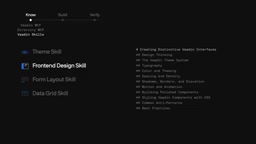
Hands-On with Free Agentic Coding Tools: Doubling Java Web Development Efficiency
The free Vodden agentic coding toolkit includes a version-aware MCP docs server, Skills, deterministic Agent Tools, and a DevLoop build-verify loop. Tests show ~30% less time and ~20% fewer tokens.

REVA: Real-Time Vulnerability Detection in a Single Forward Pass, 250× Faster
REVA introduces a real-time vulnerability detection method: precomputed threat models, static analysis, and call graph context injection, with a probe reading LLM internal representations. It achieves 60.0% accuracy on PrimeVul, matching agent-based detector VulTriage while being over 250× faster.

If AI Can Produce Results Directly, Is Learning Still Worth It?
A Reddit debate: if AI produces results, is learning still worth it? This article analyzes judgment, question quality, and error correction, arguing learning is shifting from memorizing techniques to understanding principles—AI users fall into two types: those who treat AI as an answer machine and those who treat it as a sparring partner.

The Mythical Man-Month in the AI Era: Does Brooks' Law Still Hold?
Does Brooks' Law still hold in the age of AI coding assistants? A Hacker News discussion reveals that AI boosts individual output, but team communication costs and code review bottlenecks persist. This article analyzes what changes and what doesn't under Brooks' Law in the AI era and offers team management advice.

Does RAG Still Have a Future? A 5-Year Skill Plan for AI Engineers
Starting from a Reddit community discussion, this article analyzes the future direction of RAG technology, the positioning of frameworks like LangChain, and the durable skills AI engineers should focus on building over the next 5-6 years—retrieval, evaluation, system design—offering practical career planning reference for beginners.
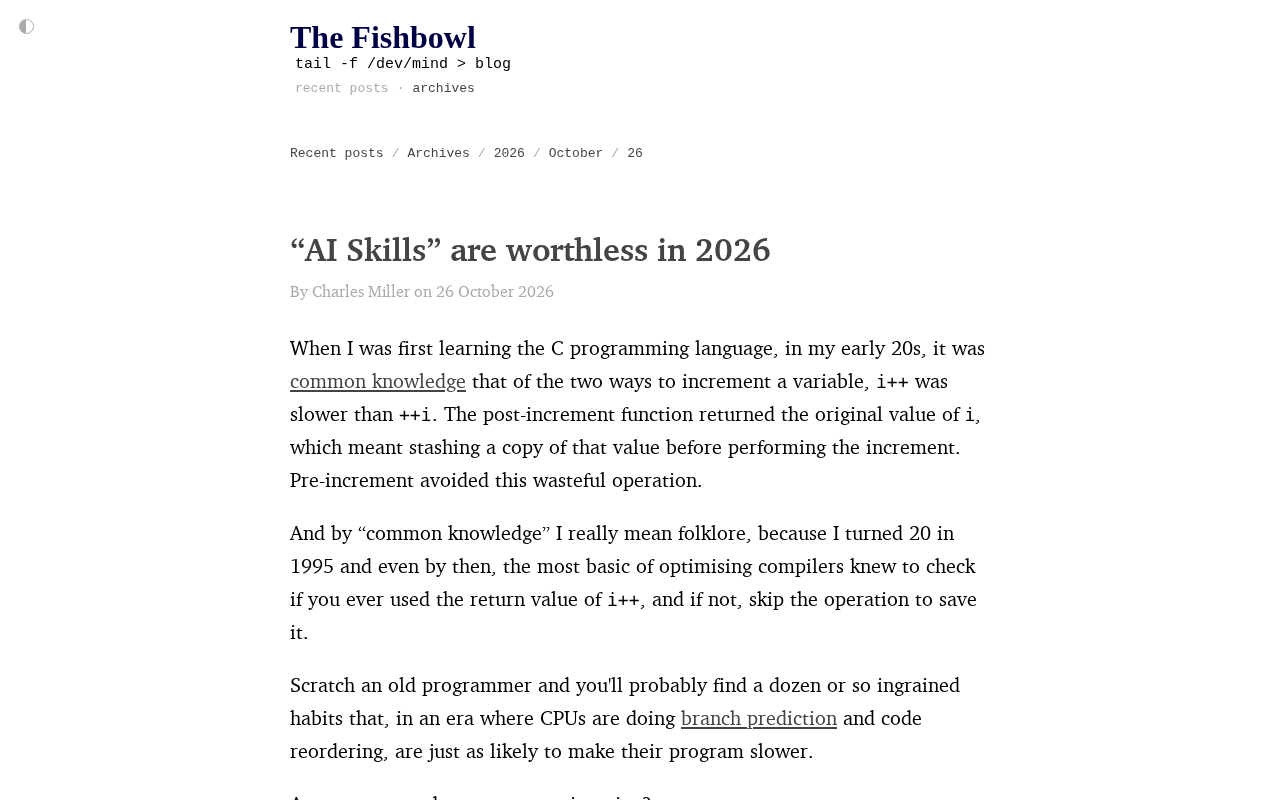
Are "AI Skills" Really Worthless in 2026?
A Hacker News post claims "AI skills are worthless in 2026." This article breaks down the proposition: operational skills are being flattened by tool iteration, but systems integration and judgment are becoming scarcer—sweeping dismissals lack explanatory power.

Learning RL from Scratch: A Practical Notes Series and Open-Source Implementation
A developer shares a short-notes series on learning reinforcement learning from scratch. The first "1-page RL basics" covers core terms and math intuition, with implementations to follow.

Building a Lights-Out Factory with a Dozen Agents: Lauren Tan's Trust Ladder and the Michelin Kitchen
Lauren Tan shares how a dozen coordinated agents merge 2,500+ PRs monthly: the trust ladder, Michelin kitchen metaphor, verification skills, and inner/outer loop connections reveal the environment engineering philosophy behind the lights-out factory.

Selective Tie Learning: A New Solution to Spurious Correlations in Preference Optimization
This article introduces Selective Tie Learning: selecting the most impactful ties through theoretical analysis to reduce spurious correlations in preference optimization with less data. Experiments cover log-linear policies, neural networks, and large language models, and discuss practical applications and limitations.
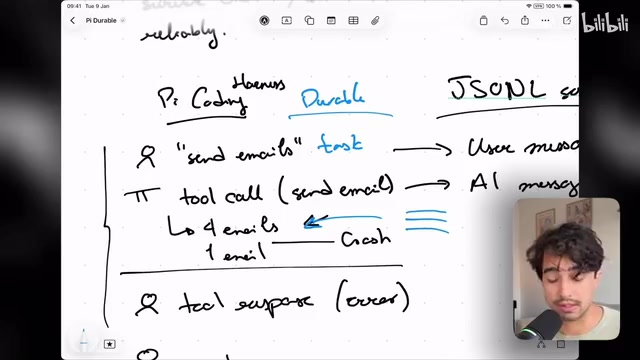
Pi Durable Explained: Building a Persistent Runtime Framework for Always-On Agents
An in-depth look at the Pi Durable agent runtime: how checkpoints and SQLite persistence enable automatic recovery after crashes, its key differences from Pi Coding Agent, its position in the Harness layer architecture, and a complete hands-on demo of building an always-on agent with a small local model.

Why Is GEPA Merge Unstable? Mechanism-Level Diagnosis Reveals Configuration Sensitivity and Behavioral Probes
GEPA merge operator unstable across models? Mechanism-level diagnosis finds configuration sensitivity is the main cause, static features cannot predict merge decisions, behavioral probes avoid high-risk failures but do not surpass NoMerge.

In the Agent Era, Why Is Rust the Go-To for AI Programming?
A Rust core team member explores what AI agents mean for Rust: why its high-performance defaults and type system suit agent coding, how formal proofs make Unsafe code safer, and how design languages may be key.

Pi Context View Plugin: Making Agent Context and Skills Visible at a Glance
Pi Context View is a practical tool for inspecting AI Agent context, Skills, and plugin configs. Learn installation, Usage and Injections features, and how to check system prompts and tool definitions.