#AI编程
9416 related articles

The Trust Ladder for AI Coding Agents: Install the Brakes Before Building the Software Factory
How do AI coding agents move from assistants to software factories? A developer deep-dive into the trust ladder, verification-first brakes, three-layer anti-cheating, and why human taste remains irreplaceable.

NVIDIA OpenShell Tutorial: Free Sandbox Isolation for AI Agents, Protecting API Keys
NVIDIA OpenShell free open-source sandbox tutorial: a Rust-based Agent runtime that enforces file, syscall, and network policies via an out-of-sandbox supervisor, keeping API keys hidden from Agents. Includes WSL2 installation pitfalls and hands-on policy configuration.

MuleSoft Agent Fabric Local Deployment and Testing in Practice
MuleSoft Agent Fabric supports local deployment and testing of AI Agents: with Docker and Anypoint Code Builder, you can run gateways, policies, and Broker locally with one click and test A2A without publishing to Exchange or deploying to the cloud.
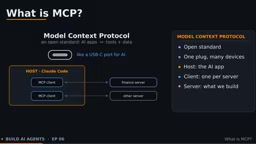
Build an MCP Server in 30 Lines of Python and Connect It to Claude Code
Package finance tools into an MCP server in about 30 lines of Python and connect it to Claude Code via stdio. This article breaks down MCP's three roles and its Tools, Resources, and Prompts capabilities, explains decorators and type hints, the MCP Inspector self-test workflow, and the claude mcp add command format and scope settings.

Claude Agent SDK in Practice: Building Your First AI Agent Step by Step
A complete hands-on tutorial for the Claude Agent SDK: from environment setup, the agent loop, and permission modes to custom tools and MCP integration—plus three layers of defense (least privilege, deny rules, pre-tool-use hook) against prompt injection, and turn/budget caps to control costs.
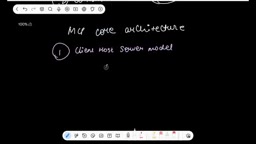
MCP Protocol Explained: The N×M to N+M AI Integration Revolution
What is MCP (Model Context Protocol)? This article uses a USB-C analogy to explain MCP principles, breaking down the Host/Client/Server architecture, Tools/Resources/Prompts building blocks, stdio and SSE transports, plus comparisons with Function Calling and LangChain Tool, with a Python implementation and production best practices.

PulseDev: Click Local UI Elements and Let AI Agents Edit Code Directly
PulseDev is a Mac developer tool that lets you click UI elements on localhost pages, describe the issue, and have AI Agents like Claude Code, Codex, Gemini, or OpenCode locate and edit the code—with diffs approved on the page before writing to files.
Revix AI: Teaching AI Code Review to Learn Your Repository's Rules
Revix AI is an AI code review tool on Product Hunt that scans repositories to generate custom rules and keeps learning. Each comment tags rule, intent, and severity. Free for public repositories.

Paddock: Purpose-Built Linux and Sandboxes for AI Agents
Paddock is an open-source MIT-licensed tool that gives each AI agent its own Linux computer or locked sandbox, all running on your own VPS. This article analyzes its architecture, use cases, and value as multi-agent infrastructure.

Hands-On GPU Kernel Development Environment Setup: CUDA 13 Thresholds and Performance Analysis Pitfalls
Based on a Reddit developer's notes, this article covers three traps in GPU kernel dev environment setup: CUDA 13 GPU architecture support thresholds, timing errors under asynchronous execution, and profiler counter permission issues, with engineering advice for troubleshooting and avoidance.
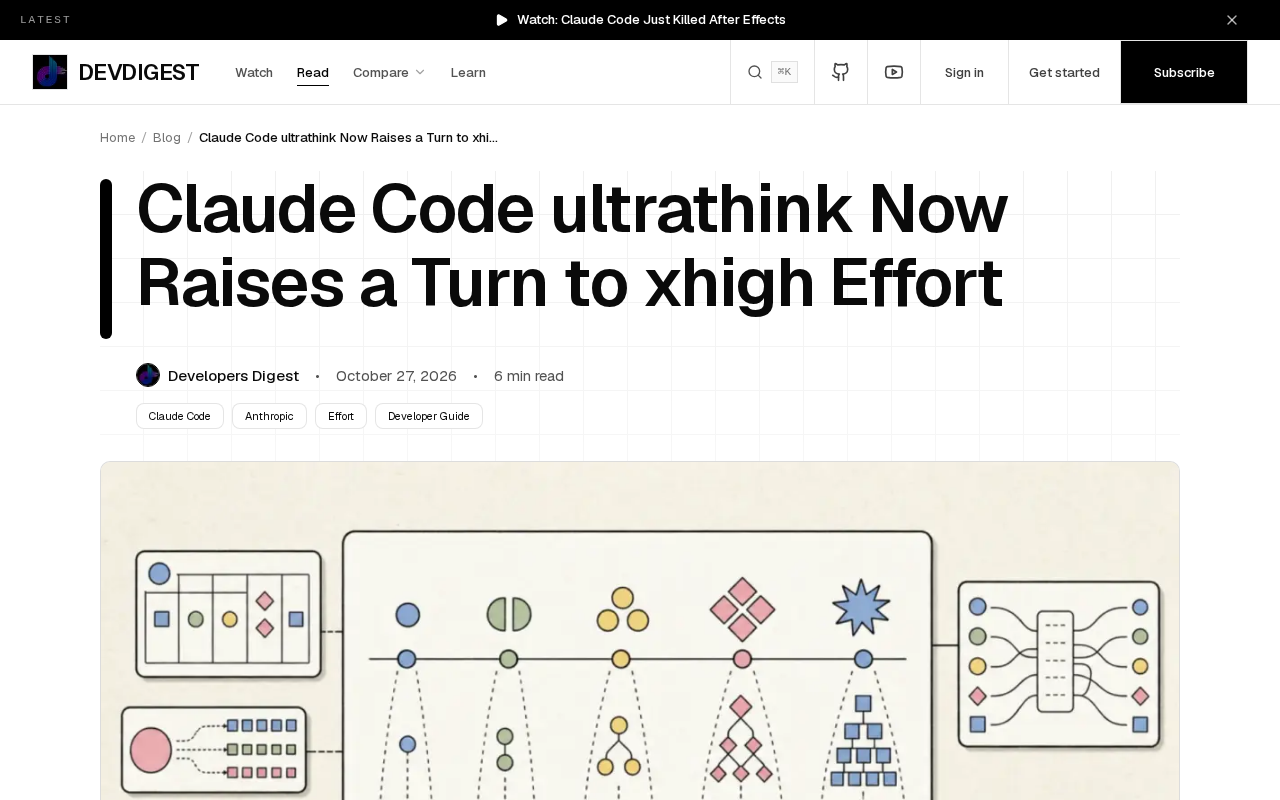
Claude Code ultrathink Upgrade: Maxing Out Per-Turn Reasoning Effort at xhigh
Starting with Claude Code 2.1.311, typing ultrathink raises a single turn's reasoning effort to xhigh, covering Opus 5.5, Sonnet 5.5, Haiku 5.5, and Fable 5.1. This article explains when it takes effect, its caps, and the impact on development workflows.

Kauldron: A Modular and Extensible ML Model Training Library
Kauldron is a modular, extensible machine learning model training library recently mentioned on Hacker News. This article analyzes its design philosophy, the value of modular training code, and the dimensions to consider when evaluating new training frameworks.

AI Promised Less Work—So Why Are Developers Busier Than Ever?
Hacker News buzz: AI coding tools promise less work, yet developers feel busier. We analyze the efficiency trap, review costs, and the management expectation gap.

What Is MCP? The Open Standard That Connects AI to Every Tool
MCP (Model Context Protocol) is the open standard that lets AI apps connect to tools uniformly. This article explains MCP's Host, Server, and Client roles, the Tools, Resources, and Prompts building blocks, the full path of a tool call, plus two-way use in n8n and security risks.
MCP Explained: How AI Agents Connect t…
MCP Explained: How AI Agents Connect to Your Apps
Using an e-commerce support bot scenario, this visual guide explains how MCP solves the M×N AI-tool integration problem, why raw REST calls fall short, the Tools/Resources/Prompts primitives, and Host-Client-Server security.

CodeMode: Let AI Agents Write Code Instead of Calling Tools, Slashing Token Costs by 90%
Explore how CodeMode enables AI agents to execute code in a sandbox instead of calling tools one by one, reducing token consumption by up to 90%, and analyze its implementation key points and applicable scenarios.

Developer Builds Custom PyTorch Optimizer ApexW: Half the Memory, 1.5x Faster
Developer releases PyTorch optimizer ApexW with compact optimizer state and Triton execution path, about 1.5x faster than fused AdamW and roughly half the state memory in optimizer-only benchmarks, but small tensors and automatic mode still have clear weaknesses; the author openly seeks benchmark and implementation feedback.

How to Choose a PhD Research Direction in RL? A Deep Dive into Six Frontier Areas
How to choose a PhD research direction in RL? This article analyzes six frontier directions—RL for LLMs, offline RL, safe RL, world models, multi-agent RL, and robot RL—covering open problems, advantages, and risks, and offers four selection frameworks: interest matching, balancing industrial value, advisor fit, and skill transferability, to help PhD students make informed decisions.

The Most Comprehensive AI LLM Application Development Course on Bilibili: Cognition Determines Success
Bilibili's AI LLM Application Development course Lesson 1: Why changing cognition comes first—AGI timeline, AI maker capability model, adoption status, and the core mindset of 'treat AI as a person.'

Gemini API CLI: A Multimodal Tool for AI Agents—But Watch Your Bill
Gemini API CLI is Google's command-line tool for coding agents, supporting image, video, music, and subtitle generation. The tool is free but the models are not—video costs about 10 cents per second, and agents can spend on their own, so developers need to design budget controls.