#multi-hop reasoning
8 related articles
·2 min
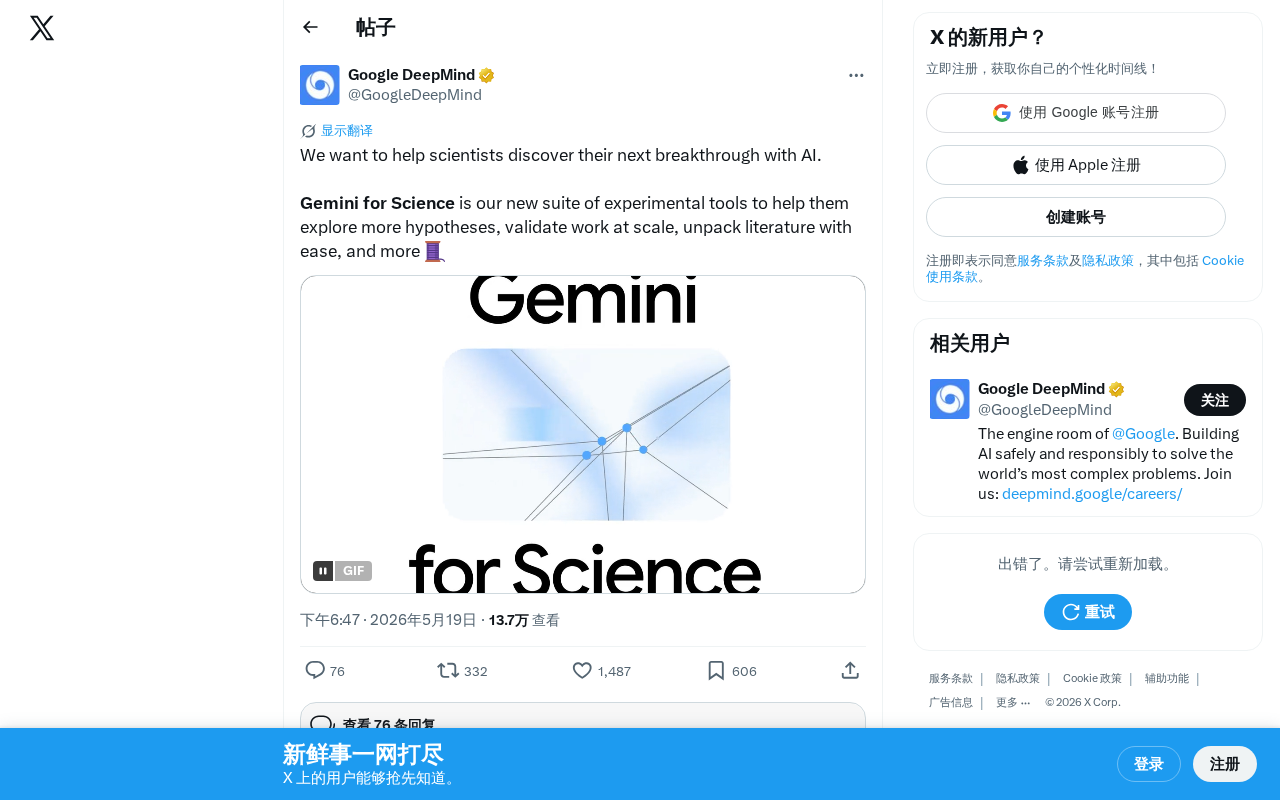
Google Gemini for Science: A Detailed Look at the Experimental AI Toolkit Empowering Scientific Research
Google officially releases Gemini for Science, an experimental AI toolkit for researchers covering hypothesis exploration, large-scale validation, and literature interpretation to accelerate scientific discovery.
Read more →
 Tutorials
·2 min
Getting Started with RAG: What Is Retrieval-Augmented Generation and How Does It Solve LLM Hallucination?
RAG (Retrieval-Augmented Generation) is the core solution for LLM hallucination. Learn RAG concepts, how it works, three causes of hallucination, and the complete learning path from basics to Knowledge Graph RAG.
Read more →
 Tutorials
·2 min
Building a Local Knowledge Graph RAG System with Dify + Neo4j: A Hands-On Guide
A hands-on guide to building a local knowledge graph RAG system using Dify, Neo4j, and Docker for multi-hop reasoning and secure local deployment.
Read more →
Deep Dives
memU Memory Framework Explained: Unify…
·3 min
memU Memory Framework Explained: Unifying Multi-Modal Agent Memory with a File System
Deep dive into the memU open-source memory framework: how it organizes Agent memory as a file system with three-layer semantic abstraction, dual-loop collaboration, and two retrieval modes.
Read more →
 Tutorials
·3 min
RAG Technology Full-Stack Analysis: Core Principles, Enterprise Implementation & Learning Path
Deep analysis of RAG technology's core principles, three key values, enterprise implementation cases, common pitfalls, and a systematic learning roadmap covering vector databases, retrieval optimization, and Knowledge Graph fusion.
Read more →
 Tutorials
·3 min
Enterprise RAG Implementation: Architecture Principles and Production-Grade Optimization Guide
Complete guide to enterprise RAG architecture covering data indexing, vectorization, and retrieval optimization. Practical insights on chunking strategies, hybrid retrieval, and hallucination control for production-grade LLM applications.
Read more →
Deep Dives
Getting Started with RAG: A Complete G…
·3 min
Getting Started with RAG: A Complete Guide from LLM Hallucinations to Retrieval-Augmented Generation
A deep dive into RAG (Retrieval-Augmented Generation) technology, covering LLM hallucinations, data staleness, and limited expertise, plus RAG workflows, core components, and LangChain learning paths.
Read more →
 Deep Dives
·4 min
The Complete Guide to Agentic RAG: Principles and Code Implementation
Deep dive into Agentic RAG vs traditional RAG, covering tool calling, multi-step iteration, query rewriting, with LangChain and LangGraph code examples for building intelligent retrieval systems.
Read more →