Deep Dives
In-depth AI analysis, industry observations, and technical insights — slow down and read.

Big Fat Fish QQ Plugin Update: Listen More, Talk Less, and Cross-Machine Collaboration
Big Fat Fish QQ plugin update: OneBot-based private and group chat access, independent personas, context enrichment, At completion, cross-drawing references, plus a multi-device collaboration plugin for encrypted cross-computer connections, remote drawing, and file transfer.

Jensen Huang: China's Open-Source AI and Talent Scaling Are Formidable
Jensen Huang at GTC Berlin discusses China's open-source AI and talent scaling, DeepSeek's $38 per GPU-hour compute economics, open-source post-training and hybrid AI, plus the AI jobs narrative and data center community relations.

DeepSeek Extends Long Conversations to 7 Days, Gemini 4 Free API and Qwen 4 Song Painting Interaction
DeepSeek extends long-conversation inactivity from 72 hours to 7 days; Gemini 4 Hydrogen opens a free API with million-level context; Qwen 4 turns a Southern Song painting into an interactive scroll; Claude Haiku 5.5 pushes low pricing; Tencent open-sources LoopForge; OpenCut surpasses 98,000 stars.

8 AI Models Debate Open vs. Closed Source: Consensus and Divergence on the AGI Path
Eight AIs debate open vs. closed source for AGI, agreeing openness is the foundation and four danger conditions trigger exceptions, differing only on the default for the strongest capability layer.

DeepSeek's Continuous Open Sourcing: How Liang Wenfeng's Ecosystem Strategy Is Driving Closed-Source Giants Crazy
DeepSeek continues open-sourcing and opens its APP API; a Bilibili video analyzes how Liang Wenfeng's open-source path uses community co-building to counter closed-source giants' product packaging and subscription models, and explores the real boundaries of this ecosystem competition.

Agentic AI Takes On Analog Synthesizer Design: A New Frontier in Autonomous Agent Hardware Design
A Hacker News discussion on Agentic AI designing an analog synthesizer. We analyze agents' task decomposition in hardware design, real-world constraints of analog circuits, and what this exploration means for putting AI into practice.
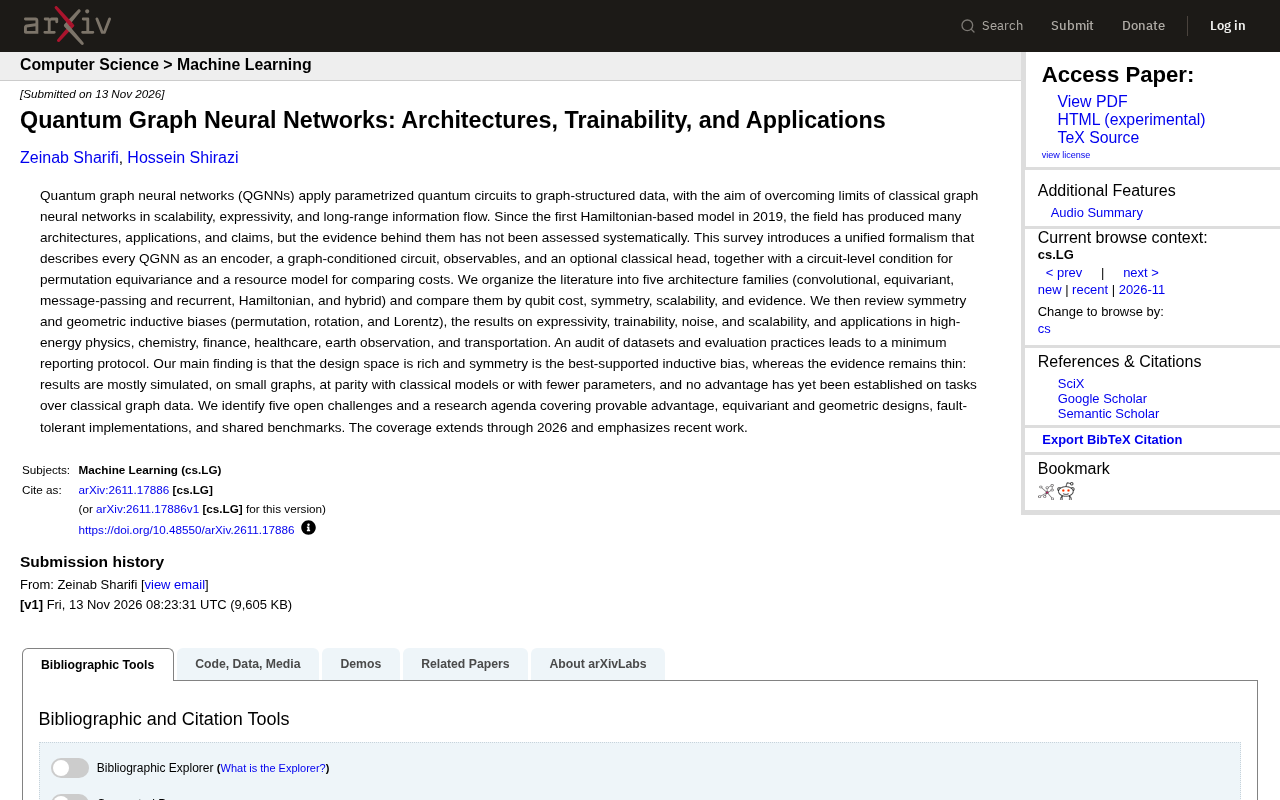
A Survey of Quantum Graph Neural Networks: Architectures, Trainability, and Applications
This QGNN survey unifies formalization, classifies five architecture families, assesses symmetry, expressiveness, trainability, and noise, audits application evidence, and notes that quantum advantage on classical graph data tasks is not yet established.

Theory of Expert Sharing: Local Error Reduction ≠ Final Output Improvement, MoE Multi-Step Reasoning Risk Reversal
MoE shared experts can reduce local prediction error, but new research reveals local gains may not translate to final output improvement, and risk reversal can occur. The article analyzes expert sharing theory, end-to-end error bounds, and experimental evidence, offering an evaluation framework for multi-step reasoning system design.

Machine Learning Relay Protection Assessment: Misoperation and Failure-to-Trip Risks Behind High AUC
PROTECT-90 dataset evaluates three ML fault detectors: AUC above 0.999 but failure-to-trip rates differ by two orders of magnitude; false-trip rates 0.12-0.16% per window; high fault resistance correlated with failure-to-trip.
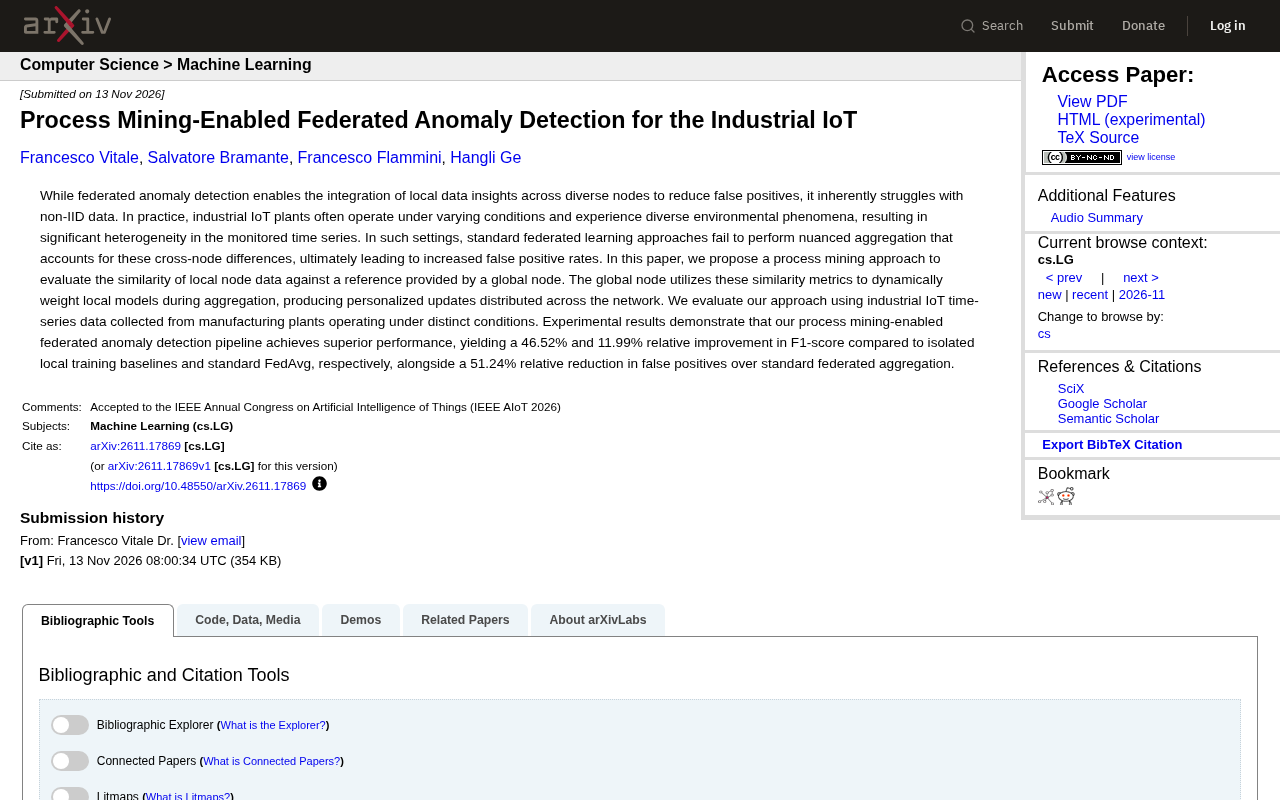
Process Mining + Federated Learning: A New Breakthrough in Industrial IoT Anomaly Detection
This article interprets a recent paper: using process mining to assess industrial IoT node data similarity and dynamically weighted federated aggregation, improving F1 by 11.99% over FedAvg and reducing false positives by 51.24% in non-IID settings.

Multimodal Person Concept Model: Robust Identity Recognition with Few-Shot Data
This paper introduces a multimodal person concept model using nonparametric Bayesian generative models and CLIP/CLAP features to learn person concepts from few unlabeled observations, achieving 0.89 average recognition accuracy across eight varying conditions, offering new ideas for robust identity recognition in service robots.

Are New Models Increasingly Hard to Jailbreak? Abliteration Effectiveness Does Not Uniformly Decline
A systematic study of five open-source model pairs finds that Abliteration effectiveness on newer models does not uniformly decline, but depends on model family, method, and search budget. Direction-based methods and ARA diverge markedly, and a single audit may yield opposite conclusions.

AmbiSteer: Teaching Vision-Language Models to Ask When Uncertain
AmbiSteer proposes a lightweight framework that predicts input ambiguity via a linear classifier and conditions activation steering, combining prompting strategies to selectively elicit ambiguity-aware behaviors in VLMs, raising the proportion handled appropriately from 59.0% to 77.0% and mitigating overconfidence in multimodal scenarios.

AI Review Bias: Why LLMs Always Zoom In on Paper Appendices
A study finds that GPT and Claude draw about 50% of review weaknesses from paper appendices, versus only 8.4% for humans. This article analyzes AI review bias and its impact on academic evaluation.

CarryOn: Teaching Long-Horizon LLM Agents to Retain Critical Context
CarryOn introduces a lightweight context manager using compact execution state plus source-linked evidence, hitting 75.7% task success—6.7 points above the strongest baseline—while balancing success and cost.

Soteria: Formal Verification + Runtime Enforcement for Both Safety and Utility in LLM Agents
Soteria combines formally verified hierarchical planning with runtime specification enforcement, enabling LLM agents to maintain task utility while complying with safety policies. Experiments show 1.7x the best baseline's success rate with zero violations, offering new ideas for deploying agents in high-risk scenarios.
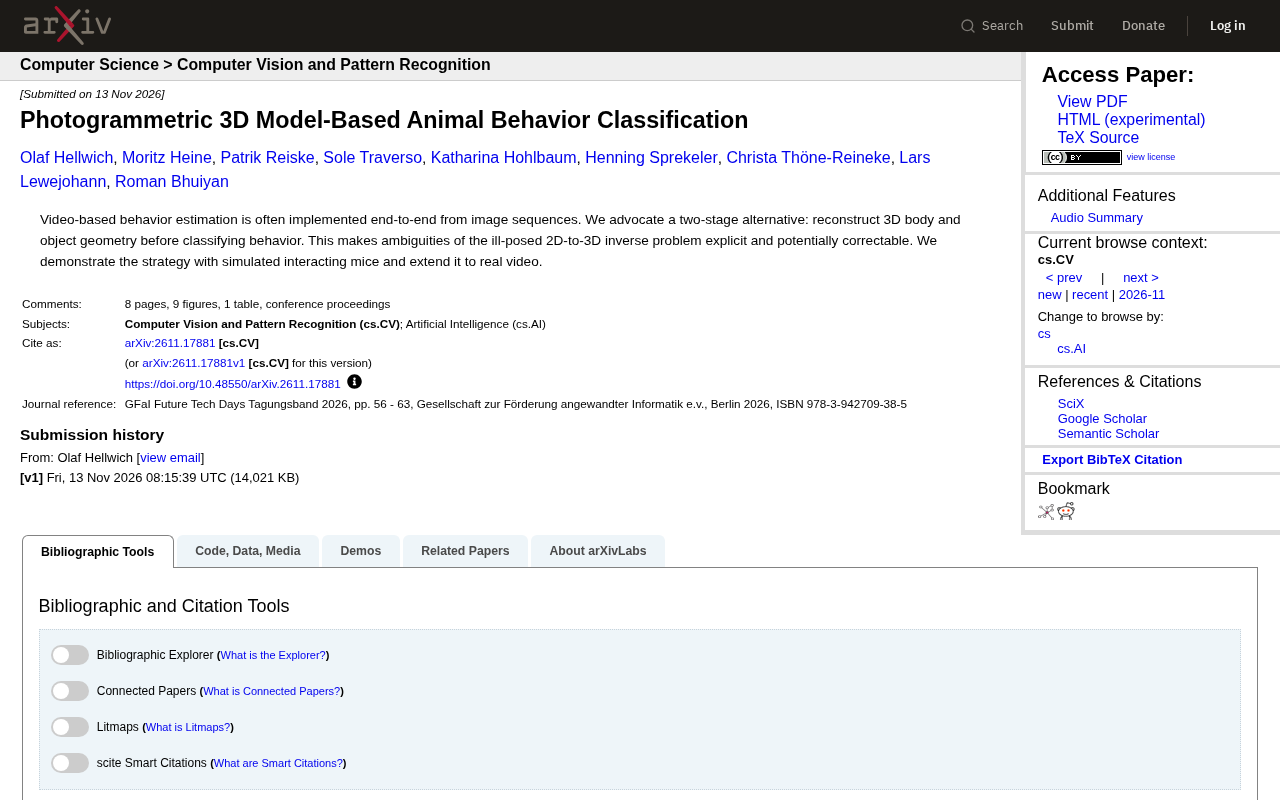
Reconstruct 3D First, Then Classify: Photogrammetric Models Revolutionize Animal Behavior Recognition
New approach to animal behavior recognition: first reconstruct 3D body and object geometry via photogrammetry, then classify behavior. The two-stage strategy makes 2D-to-3D ambiguity explicit and correctable, validated on simulated interacting mice and real videos, improving interpretability and data efficiency.

GeneFlow: A New Breakthrough in Thousand-Gene Spatial Transcriptomics Prediction
The GeneFlow framework enables efficient large-scale spatial transcriptomics prediction, improving performance by 56.8% on a 1000-gene panel while cutting compute cost by orders of magnitude. Code is open-sourced.
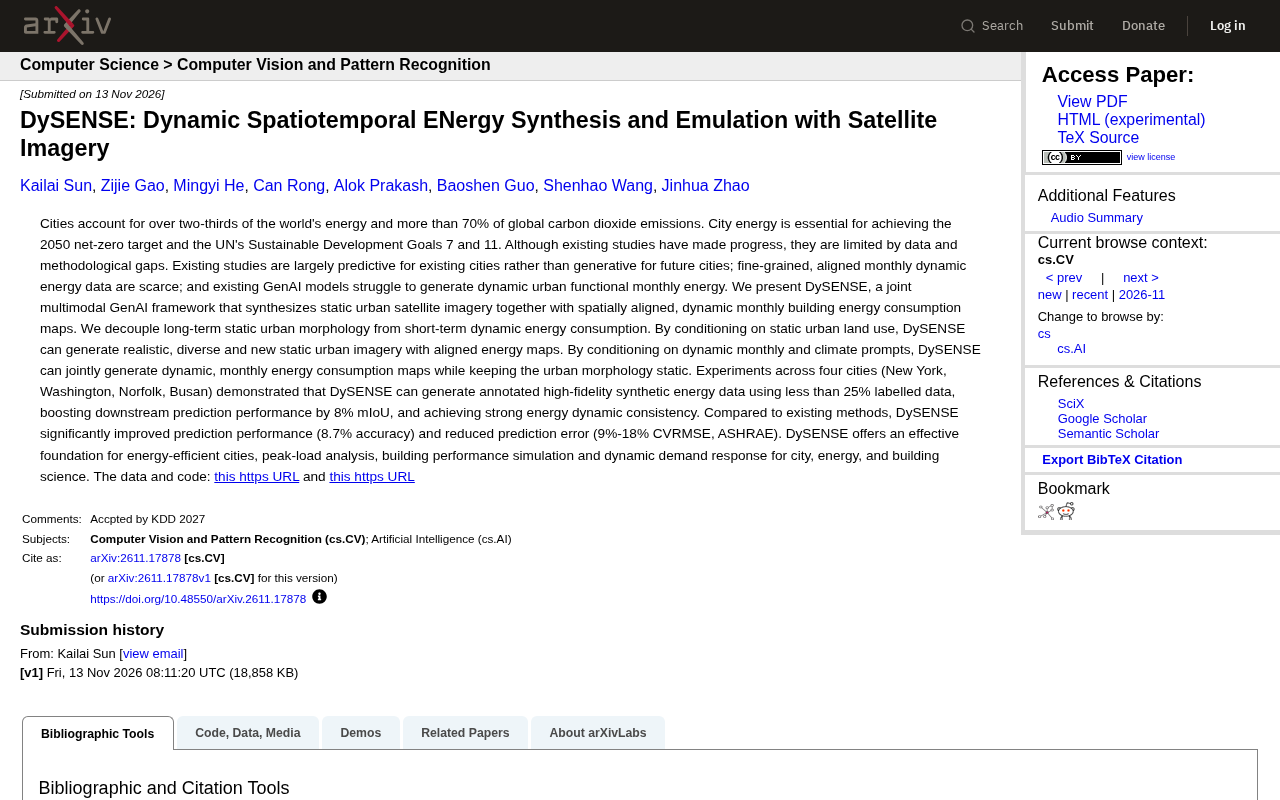
DySENSE: Generating Urban Dynamic Energy Consumption Maps from Satellite Imagery
DySENSE proposes a multimodal generative AI framework that jointly generates spatially aligned dynamic monthly building energy maps from static satellite imagery, validated in four cities including New York and Washington, improving downstream prediction with less than 25% annotated data.

OmniScore-Bench: A Comprehensive Evaluation of VLMs' Sheet Music Reading Capabilities
OmniScore-Bench is the first benchmark to systematically evaluate VLMs' sheet music reading, with 3000 questions across six aspects and 24 sub-tasks, revealing operational capability profiles of 12 VLMs and analyzing visual reliance and format errors.