Deep Dives
In-depth AI analysis, industry observations, and technical insights — slow down and read.

AgentScope 2.0 Hands-On Tutorial: Master Agent Orchestration and Security from Zero
A step-by-step AgentScope 2.0 tutorial: from environment setup to production deployment, covering the ReAct agent loop, three-dimensional security with tool review and human-in-the-loop, sandbox isolation, and context management—master agent orchestration and distributed collaboration from zero.
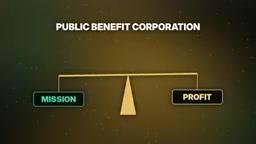
Anthropic's Trillion-Dollar IPO: Explosive Revenue Growth Amid Looming Risks
Anthropic is set to list on Nasdaq at over $1 trillion valuation, with a 93-page risk warning in its prospectus. We break down 40x revenue growth, margin improvement, moat depth, and three cracks—plus the key variable for trillion-dollar pricing.
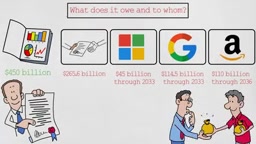
Anthropic on the Eve of Its IPO: A Valuation Game Under $834 Billion in Payment Obligations
A former institutional bond trader breaks down Anthropic's S-1: Q2 revenue doubled to $11.6B with first operating profit, but $834B in minimum payment obligations loom. 2028 peak payments of $163B mean the stock is essentially a call option with an $834B strike price.
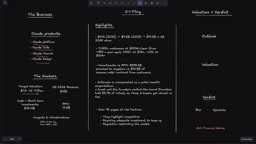
Is Anthropic's IPO Worth Buying? The Wild Numbers in the S-1 Filing
Breaking down Anthropic's IPO S-1 filing: $17B quarterly revenue, $895B supplier commitments vs. $13.8B locked-in revenue, 90+ pages of risk factors, and a $1.5T valuation — why analysts say spectate, not buy.
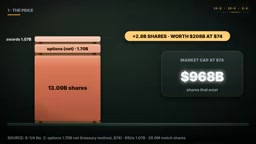
Anthropic IPO Pricing Breakdown: What You're Paying for at $1.18 Trillion
Anthropic IPO pricing breakdown: 82.5M shares at $70–78, three market caps—which is honest? $58 of every $100 in revenue goes to compute, and run rate diverges sharply from booked revenue. To justify $74, 2030 sales must exceed NVIDIA's today.
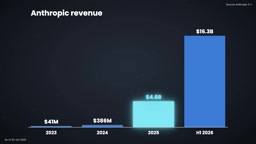
Is Anthropic's IPO Worth Buying? Three Alternatives Explained
Anthropic's IPO may be valued at $1.5T—is a 22x P/S worth buying? We break down its revenue structure, the truth behind losses, compute commitment risks, and compare three alternatives: indirect stakes via Amazon, Alphabet, or passive ETF inclusion.

On the Eve of Anthropic's IPO: The Token-Selling Business and the Battle for Pricing Power
Tech analyst Raphaëlle d'Ornano breaks down Anthropic's IPO logic: revenue is essentially API token sales, cloud distribution fees erode margins, tokens deflated 754x in a year, and only selling frontier tokens at frontier prices preserves pricing power.
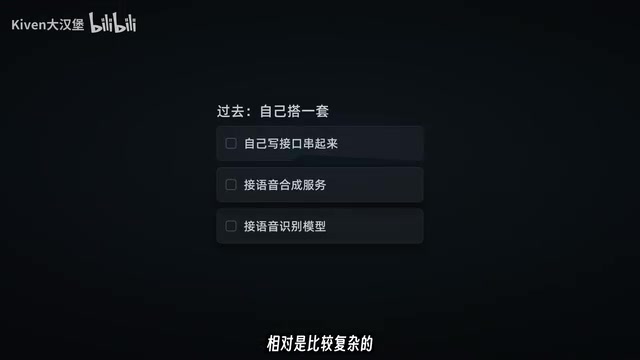
DeepSeek Full-Stack API Integrates with Obsidian: Open-Source Plugin Hands-On Test!
DeepSeek full-stack API integrates with Obsidian via an open-source plugin offering voice input, note chat, web search, and multi-file parsing, with transparent pay-as-you-go billing.
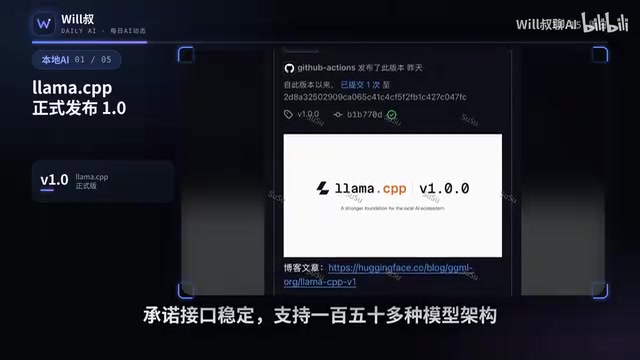
Huawei Open-Sources MACaQ: Quantizing 100B-Parameter Models in 64 Minutes; llama.cpp 1.0 Released
Huawei open-sources MACaQ, quantizing 100B models to 4-bit in 64 minutes with 32.5GB peak VRAM; llama.cpp releases 1.0 with stable interfaces and 150+ model architectures; MiniMax H3 Image's smallest quantized version runs on 8GB GPUs; coding agent leaderboards shift to cost per problem.

DeepSeek Harness + 4K Image Generation Model: 3 Advanced Techniques
Bilibili creator Shanke shares 3 advanced ways to connect MiniMax's open-source H3 Image model to DeepSeek Harness: cinematic science videos, illustrated websites, and full game art from one sentence, plus API setup and consistency tips.
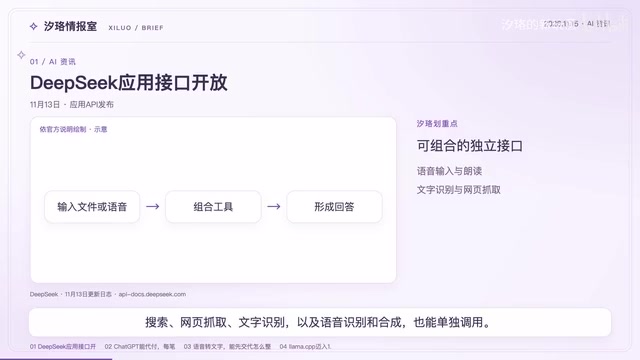
DeepSeek Completes Its Toolchain, ChatGPT Payment Still Requires Human Confirmation
Xiluo rounds up Nov 12–13 AI news: DeepSeek opens application APIs to complete its toolchain, ChatGPT wallet payments still require face verification, Salesforce open-sources a speech transcription model without Chinese, and llama.cpp releases 1.0 with stable interfaces.

Zero-Code Modding of a Naruto Minecraft Mod: A DeepSeek Hands-On Experience
A Bilibili creator uses DeepSeek Harness to zero-code mod an open-source Naruto Minecraft mod—adding Raikiri, Kamui, and Amaterasu, fixing NPC models and phasing bugs—and reveals the real limits and debugging costs of AI-assisted modding.
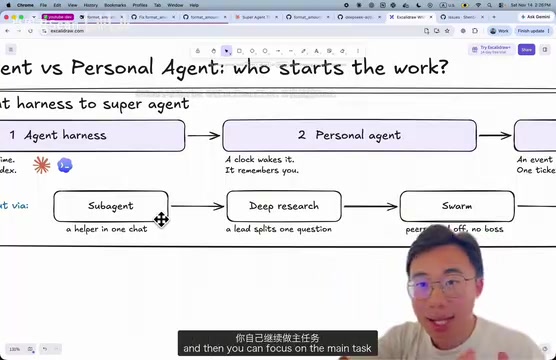
DeepSeek Super Agent Prototype Hands-On: The Core Differences Between Personal Agents and Super Agents
DeepSeek's open-source Super Agent prototype hands-on: using a GitHub issue-fixing case, we compare personal vs. super agents in triggering, ticket routing, and session lifecycle, and trace the path from Agent Harness to Super Agent.
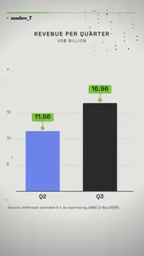
Anthropic IPO Prospectus: The Profitability Paradox Behind 47% Revenue Growth
Anthropic's IPO filing reveals contradictory signals: quarterly revenue growth of 47%, yet operating profit swung from positive to negative; of nearly $900 billion in long-term commitments, some will only be spent once data centers are built. This article breaks down AI commercialization's cost structure and triple bottleneck.
Gemini 4 Hydrogen Lands on Antigravity: A New AI Powerhouse for Code Maintenance
Google launches Gemini 4 Hydrogen, integrated into Antigravity for code refactoring, dependency upgrades, and accessibility—fixing builds in minutes.

Anthropic Files ANT IPO Documents: $33.2 Billion Revenue and $89.5 Billion Compute Commitments
Anthropic files amended ANT IPO documents: $33.2B revenue over nine months, up ~1,200% YoY, $80.7B net loss due to convertible obligation adjustments, $89.5B future compute commitments, and $131.7B cash reserve.

Gemini 4 Hydrogen Review: A New Programming Paradigm Under the Orchestrator Model
Google Gemini 4 Hydrogen arrives faster and cheaper, surpassing Argon on some benchmarks, and pairs with Anti-Gravity's Orchestrator mode for multi-model collaboration. This article combines hands-on testing and official data to analyze its programming performance, search scenario improvements, and cost-effectiveness trade-offs.
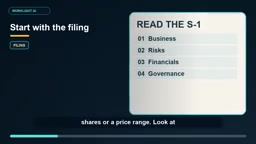
Anthropic Quietly Files S-1: Don't Guess the IPO Price—Read the Risk Factors First
Anthropic's S-1 filing doesn't mean the stock can trade. Learn to read SEC risk factors and business descriptions, separate filing, effectiveness, pricing, and first-day trading, and avoid valuation guesswork.
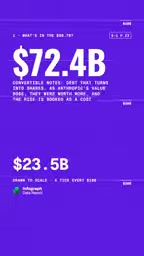
Anthropic Lost $80.7B in Six Months: Burning Cash or Making Money?
Anthropic's $80.7B six-month loss is mostly a paper loss from debt-to-equity conversion. Excluding it, operating loss is $693M, customers paying $100K+ grew from 400 to nearly 12,000, and unit cost fell from $2.50 to $0.48.
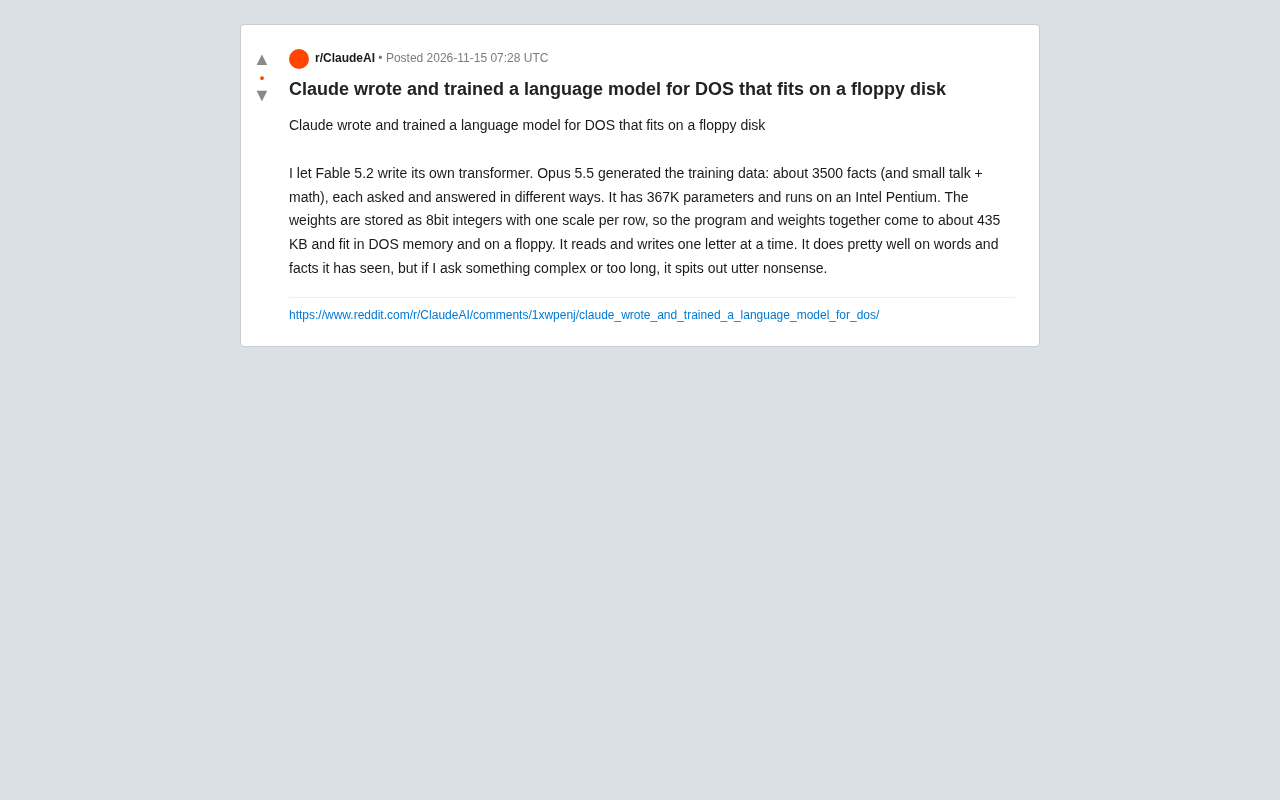
AI-Written Model Runs on DOS: 367K Parameters Fit on a Floppy Disk
Claude writes the Transformer, Opus generates training data, producing a 367K-parameter language model quantized to 8-bit and compressed to 435 KB, running on Intel Pentium in DOS and fitting on a floppy disk — showcasing model deployment under extreme constraints.