#AI编程
9348 related articles

Three Claude Code Mods: Cost Savings, Progress Bars, and File Collision Protection
Three Claude Code mods: Cache Keeper warns before cache goes cold to avoid $2.50 re-reads at 500K tokens; Goal Meter adds a progress bar to Slash Goal; Collision Guard blocks multi-session file overwrites with work tree switching. No coding needed—just describe the requirement and Claude writes it.

5 Cursor Alternatives Worth Trying in 2026: From Zed to Windsurf
Explore five Cursor alternatives worth trying in 2026: Zed, Klein, GitHub Copilot, ClaudeCode, and Windsurf. Learn their features, use cases, and how to choose the best AI coding tool for you.

Polymorphic Inference: Making Inference Engines Self-Adaptive Like Living Organisms
Polymorphic Inference offers self-tuning inference in response to constant changes in models, traffic, and chips. Together Compiler uses AI agents to keep production inference tuned. This article analyzes its approach and its significance for the open-source inference ecosystem.
Codex Training Setting Re-Enabled? Check These Two Switches
Developers report OpenAI Codex model training settings may have been re-enabled. This article compares official documentation to break down the main training switch and the often overlooked "Include environments" second switch, and provides a five-minute self-check list to help you confirm whether your data has truly exited training.

AgentScope 2.0 in Practice: A Guide to Enterprise-Level AI Agent Development in Java
AgentScope 2.0 is Alibaba's Java enterprise-grade distributed agent framework. This article explains why it suits server-side AI applications, contrasts client-side AI apps in permissions, state management, and concurrency, and outlines a practical learning path from environment setup to project integration.

Cloudflare Open-Sources AI Code Security Audit Tool, Hits 60K Stars
Cloudflare open-sources Security Audit, giving AI coding agents free security auditing. Three-step workflow: app mapping, multi-agent adversarial bug hunting, and three-tier classified reports—born from an internal vulnerability hunting system, with nearly 60K stars.

GPT-6 Astra's Weight-Reading Trick: Only for Small Networks, Practical Value Comes from Writing Code
GPT-6 Astra can read network weights directly, but without tools it is limited to small networks of ~170K weights. Fixing QUEN 3.5 0.8b's reasoning loop required Python and 50 batches; game identification took nearly an hour. This article maps the capability's boundaries and two security reminders.
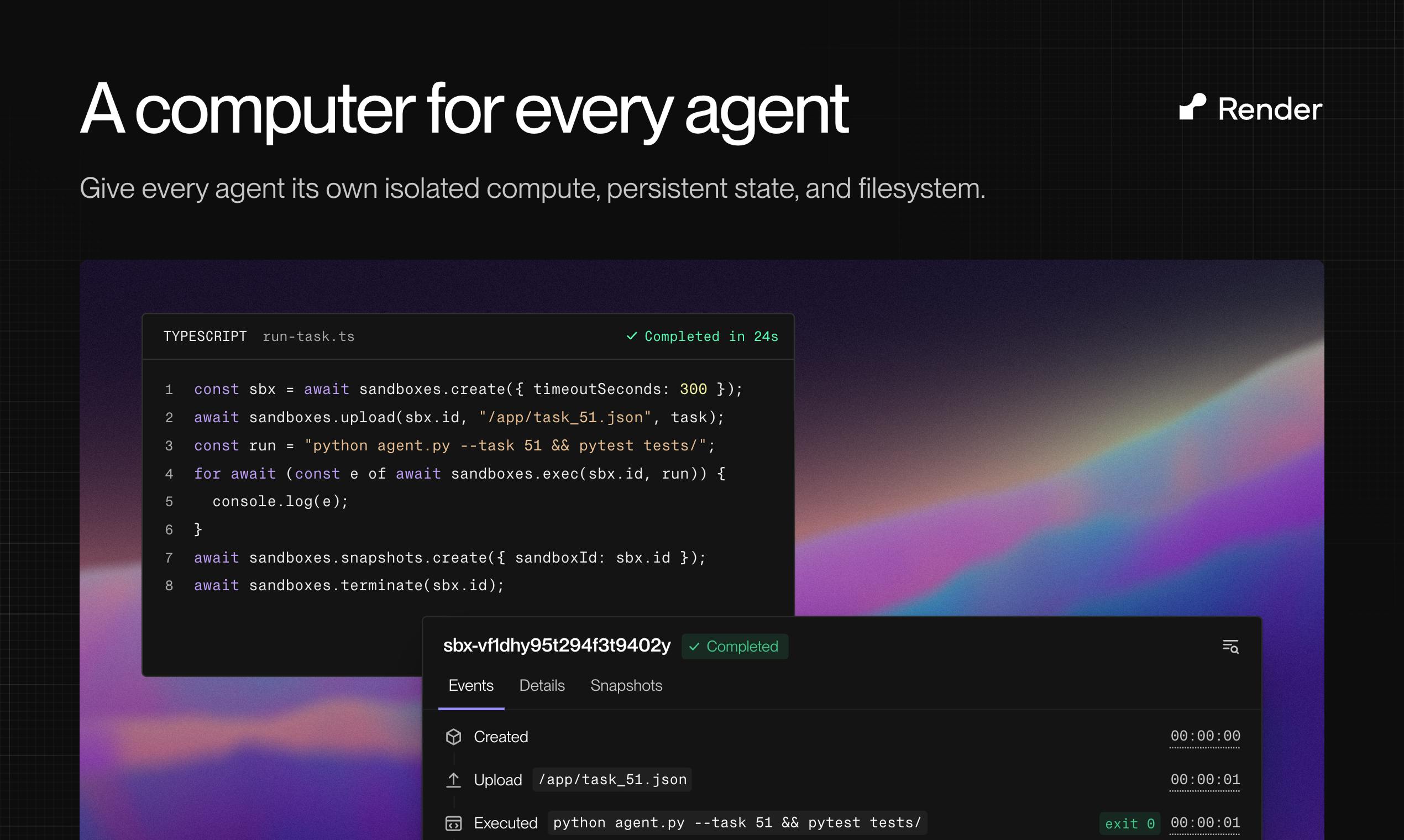
Render Sandboxes: A Dedicated Linux Computer for Every AI Agent
Render Sandboxes gives each AI agent a dedicated Linux computer with sub-second startup, idle suspension to stop billing, domain-level network control, Claude Code and Codex support, and thousands of concurrent sandboxes on one platform.

Get SMS Alerts for Codex Quota Resets and Stop Wasting Usage | Reset Alerts
Reset Alerts is a free tool that sends SMS and Telegram reminders when OpenAI Codex usage resets, helping developers use up remaining requests before the reset. No app needed—just text START to subscribe.
Should RAG Systems Trust Official Documentation or Community Practice?
A Reddit discussion raises the question: how should RAG systems choose between official documentation and community practice? This article analyzes retrieval weighting dilemmas and explores layered retrieval and multi-source fusion approaches to help RAG developers build knowledge-source governance strategies.

AI Tools Quietly Altering Settings: Postman Silently Installs Plugin, Codex Sharing Option Auto-Resets
AI Daily reports: Postman silently installs a Mac plugin and self-approves startup hooks, logged as auto-existing upgrade; Hacker News developers say Codex data-sharing opt-out flips back. Plus Simon Willison's raw float weight experiment with QEN 3.8-27B.

Google Bundles AI With Search: Schools That Disable AI Lose Search Too
Google disables AI for schools and takes Search with it, drawing "extortion" criticism; ChatGPT search hits 20% of Google's; Grokbot makes calls to haggle and book appointments; Postman and the Binance $6.3B theft expose AI tool security risks.
Three Token-Saving Habits for Claude Code: From Clearing to Model Matching
Burning through tokens in Claude Code? Three habits from the official docs: use /clear to reset context when switching tasks, match Sonnet/Opus/Haiku to task difficulty, and compress purposefully with /compact while checking usage with /usage—helping you cut the fixed overhead of every message.

5 Free Claude Code Skills Every Developer Should Install
Exploring free Claude Code skills: file planning, project space retrieval, and the official skill creator—how to pick must-install skills by workflow gaps and why free skills cut context cost.
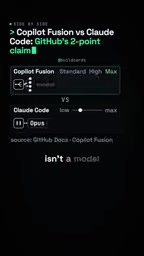
GitHub Copilot Fusion vs. Claude Code: The Routing vs. Self-Selection Divide
GitHub says Copilot Fusion Max trails Claude Code by just two points on coding agent benchmarks at roughly half the cost. But Fusion is a model router — a fundamentally different approach from Claude Code's user-selected models. This article breaks down their orchestration mechanisms, billing differences, and the practical risk that discarded drafts aren't rolled back.

Runway Plugin Lands in Cursor: Let AI Agents Wire Up Your Video Generation API
Runway's Dev plugin lands in Cursor, letting AI agents access account-level models, costs, and input info via MCP to plan and configure video generation API integrations. Free to install, but generation consumes Runway credits—review model choices and costs.

The Three Golden Rules of CLAUDE.md: Don't Let AI Get Dumber the More It Reads
DevDeck proposes three golden rules for CLAUDE.md: the delete test, precise commands only, and progressive disclosure. Over-stuffing documentation burns the context window and makes AI assistants dumber — the root rules file should stay under 50 lines.

Understanding AI Context Windows in 55 Seconds: How They Work and Practical Tips
The context window is everything an AI model can process at once, with a hard limit. This article explains how it works and shares three practical habits: check usage, compact before large tasks, and start a new conversation for each new task—helping you keep AI sharp in Claude Code, Codex, and Cursor.
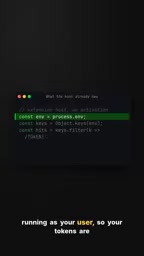
The Trust Boundary of AI Coding Extensions: Auditing Cursor Installation and Execution
AI coding extensions aren't plugins but credentials: the host runs as your user, exposing tokens before code executes, and some extensions auto-activate on repo open. This audit guide explains listing extensions, reading metadata, pinning versions, and default-deny commands to shrink the blast radius — and why a signature doesn't mean safe.

Cursor Opens Its AI Brain: TypeScript SDK Ushers in the Era of Custom Agents
Cursor releases a new TypeScript SDK, letting developers tap into its AI brain to build custom coding agents, automate complex workflows, and integrate unique AI insights into their dev environments.