#AI编程
9359 related articles

Coding Wrapped: Review Your AI Coding Habits in Pixel Art
Coding Wrapped is an open-source tool that turns your local Claude Code and Codex history into a pixel-art annual review, showing your coding rhythm, favorite words, and tasks AI took over. 100% local, one command.
AC Bridge: Track Claude Code and Codex Status with Smart Lights
AC Bridge is a new Product Hunt tool that turns Hue, Govee, WLED, LIFX, Nanoleaf and other smart lights into status indicators for Claude Code and Codex, visually showing whether an AI coding agent is working, blocked, or done.

JetBrains Open-Sources ThinkRail: A Visual AI Coding Workbench
JetBrains' open-source ThinkRail embeds an AI coding assistant into a visual dev environment with isolated workspaces, side-by-side chat and code diffs, and requirements docs alongside code.

JetBrains Open-Sources ThinkRail: A Hands-On Review of the Pi-Based Agentic IDE
ThinkRail is an open-source agentic IDE from a JetBrains Innovation Hub collaboration, built on Pi with spec-driven development and parallel multi-branch workspaces.

No Write Access? No Problem: Understand the Fork-to-PR Open Source Contribution Workflow in 5 Minutes
No write access? Learn the full open source contribution flow from Fork to PR in 5 minutes: read the license, find a good first issue, fork, add upstream, and submit your PR.
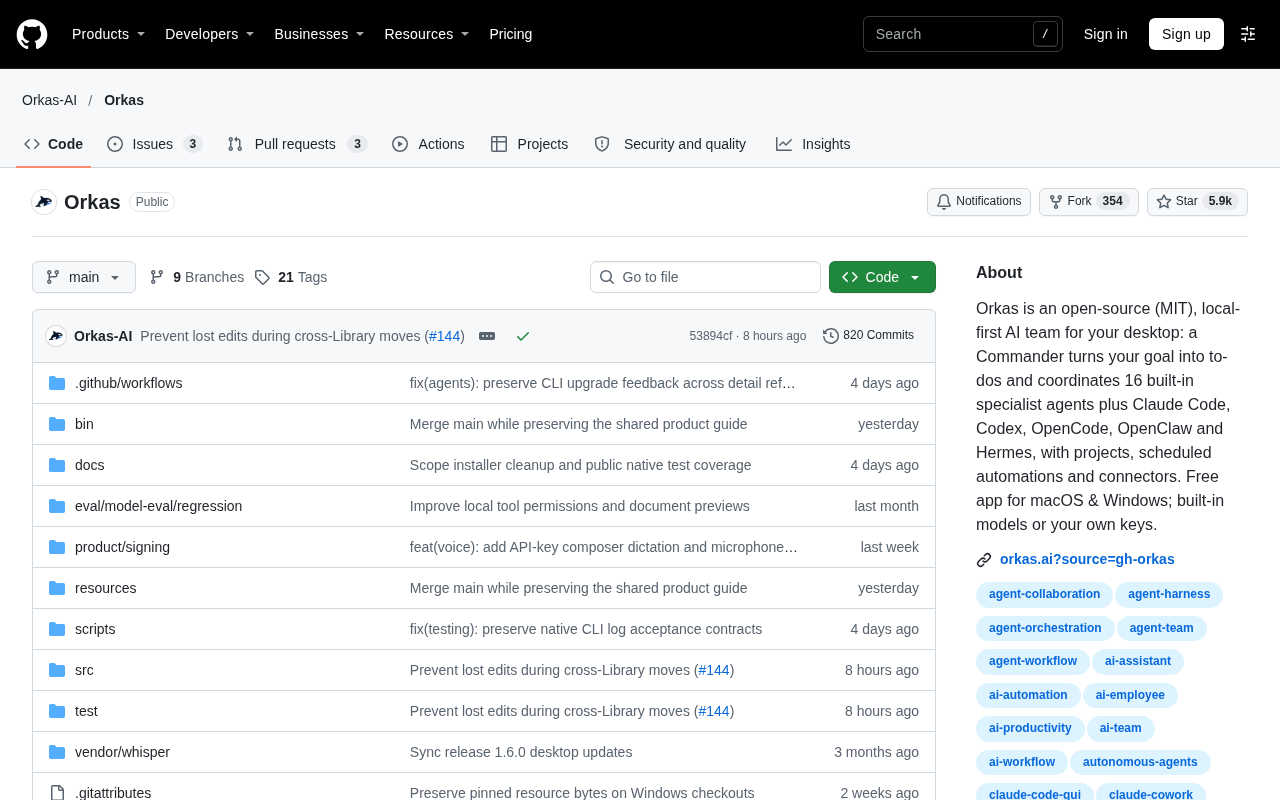
Orkas: The Local-First Open-Source AI Team on Your Desktop, with a Commander Orchestrating 16 Expert Agents
Orkas is an open-source MIT, local-first desktop AI team app: a Commander breaks goals into to-dos and coordinates 16 built-in expert agents plus external coding agents like Claude Code and Codex, with projects, scheduled automation, and connectors, compatible with macOS and Windows.
Factory Droid 1.0: A Script-Mode Breakthrough for Model-Agnostic Coding Agents
Factory releases Droid 1.0, a model-agnostic coding agent framework using script-mode programmatic tool calling by default, scoring 65.2% on Terminal-Bench 4 with Claude Opus 5.5 at $4.73 per task.

Three Key Takeaways from Hex 4.0: Code as the Backbone, Review-First UX, and Infrastructure Reborn
Hex 4.0 sparks discussion on agent building: code-driven UI over YAML, review-first UX, and rebuilt execution engines and storage for agent workloads—three lessons that echo LangChain's practices and point to a shared direction for agent products.

New Trends in Harness Engineering: Deep Integration with Infrastructure
Explore the trend of integrating Harness engineering with infrastructure, and see how async subagents and browser use enable tighter integration via MDA 0.10 to boost AI agent development.
 Tech Frontiers
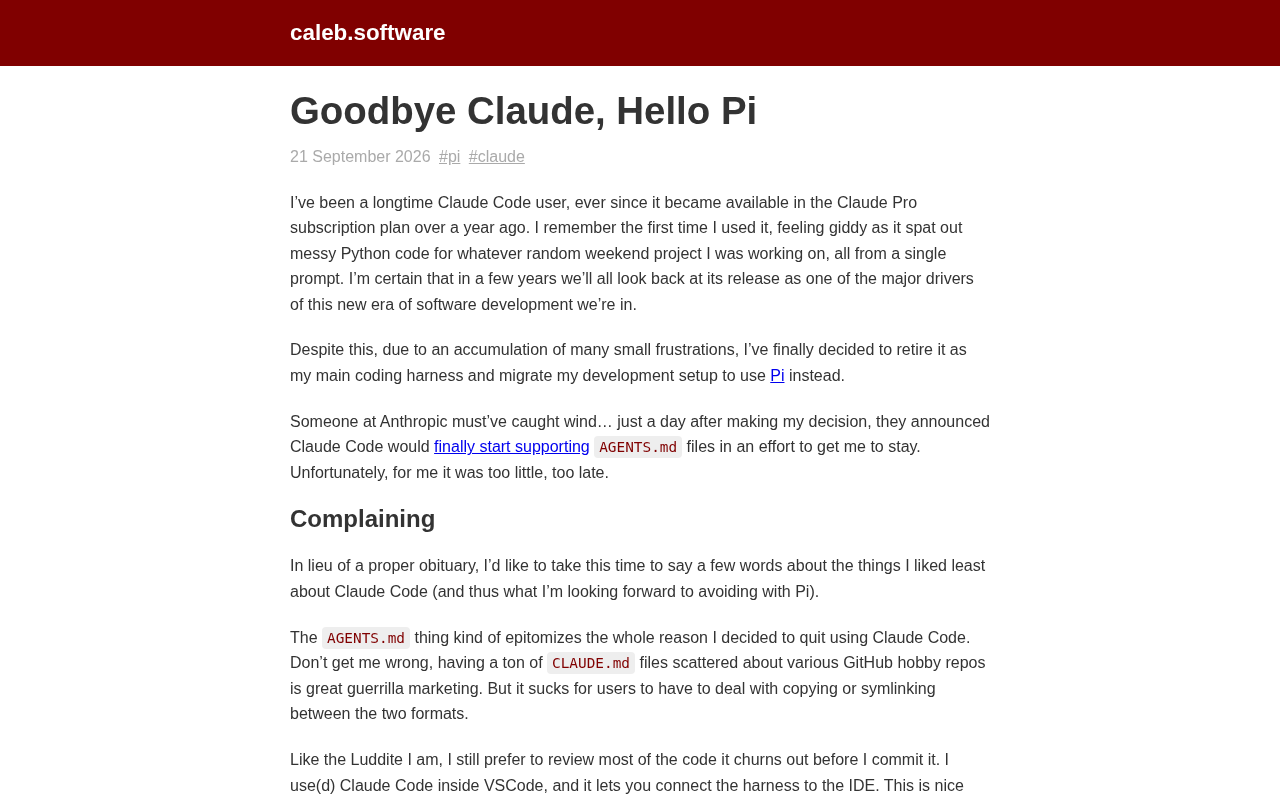
Goodbye Claude, Hello Pi: The Real Considerations Behind a Developer's Migration
Developer Caleb's migration from Claude to Pi sparked heated discussion on Hacker News. This article analyzes the real considerations behind this tool migration and the selection anxiety in community discussions.

Vibe Coding Practical Guide: From Zero to AI Programming Mastery
Explore this Vibe Coding tutorial — from zero to AI programming mastery. Learn the paradigm shift from builder to owner, master Codex and Claude Code, model selection, and prompt engineering to complete a full web project loop independently.

OpenCode Gives Away $100 DeepSeek Credits: Subscription Arbitrage and Security Alerts Run Rampant
AI Daily Brief: OpenCode gives Go subscribers large DeepSeek V4.1 Flash quotas with throttling and peak pricing; a tampered Claude Code version appears in the VS Code marketplace affecting ~5,000 users; SenseTime open-sources a 9B multimodal model; Google's satellite TPU returns its first AI reply; AI capex exceeding $740B triggers a sentiment inflection point.

Fake Claude Plugin Slips into Cursor Store: 11-Hour Window Requires Urgent Self-Check
A fake Claude Code plugin impersonating Anthropic appeared in the Cursor extension store, with an attack window of about 11 hours. This article covers the timeline, SVC telemetry checks in SSH config, official cleanup steps, and key rotation to help developers quickly assess supply chain security risks.

Java to AI: A Full-Cycle, Production-Grade Agent Development Bootcamp
How can Java developers transition to AI? This article introduces a production-grade Agent development bootcamp covering industry trends, job market demand, target audience, and two enterprise Agent project demos to help Java developers seamlessly transition to AI Agent development.
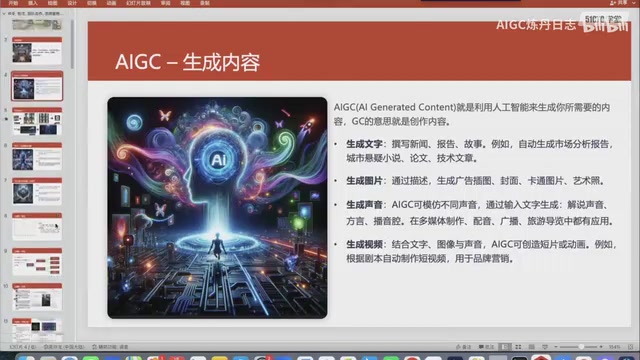
AIGC Large Model Primer: From Prompts to Agent Practice, Fully Explained
Based on a Bilibili beginner course, this article systematically maps the AIGC large model learning path: text generation and workplace efficiency, prompt engineering essentials, multimodal practice for image, speech, and video, RAG knowledge bases to suppress hallucinations, AI Agents for complex tasks and enterprise system integration, plus side-hustle cases and learning advice.
Building an Agent Skills System from 0 to 1: Five Steps to Reusable AI Capability Modules
Break down the five key steps to develop an Agent Skills system from 0 to 1: design the Skills standard, develop the loading mechanism, build the execution engine, implement multi-Skill collaboration, and establish an evaluation mechanism. A guide for beginners to build reusable AI agent capability modules.

Hands-On: Gemini 4 Argon vs Claude Opus 5.5 and GPT 6.1 — Similar Pricing, But Falls Behind Across the Board
Hands-on test of Google Gemini 4 Argon vs Claude Opus 5.5 and GPT 6.1 Sol: in pixel art generation, 3D flight simulator, and music visualization tasks, Gemini falls behind cheaper competitors, yet its pricing will match Claude Opus.

Mistral Large 4 Open Weights: Trillion-Parameter MoE, Sharp Gains in Terminal Coding
Mistral releases full weights for Large 4: a 1T-parameter MoE activating 49B per pass, terminal coding up from 28% to 41%, 1M-token context, three reasoning tiers, $0.7 per million input tokens, and a modified MIT license for commercial fine-tuning.

Vibe Coding in Practice: How a Finance Graduate Built a $1K/Month Interview Assistant with Zero Code and AI
A real livestream with a finance-to-dev creator breaks down how Vibe Coding uses ChatGPT for planning, Claude for coding, and Firebase for backend to build an AI interview assistant with zero handwritten code, plus its pricing, security checks, and real barriers.

DebugSlicer: Visualizing Tensors and Volumetric Data in VS Code
DebugSlicer is a VS Code extension that lets you right-click to visualize PyTorch tensors, MONAI MetaTensor, NumPy, and PIL data in the debugger with three linked views, segmentation label color mapping, and chunked loading for multi-GB arrays—helping quickly diagnose data issues in 3D segmentation models.