#AI编程
9359 related articles

Java Engineers Transitioning to Agent Development: A Complete Four-Week Learning Roadmap
A roadmap for Java engineers transitioning to AI Agent development: a four-week learning plan from core theory, the ReAct paradigm, and multi-agent collaboration to hands-on projects, analyzing the strengths, gaps, and job-market realities of a career change.

LangGraph Multi-Agent in Practice: Key Takeaways from a Bilibili Tutorial
A breakdown of a Bilibili LangGraph multi-agent tutorial covering architecture choices, core LangGraph components, and three hands-on projects: a code assistant, a prompt generation assistant, and a WebRTC digital human.

Backend to AI Agent Engineer: What Are P7 Interviewers Really Testing?
Based on a popular Bilibili AI Agent course, this analyzes backend developers' real path to Agent engineer: P7 interviews test engineering stability like strong validation, fallback degradation, and Semantic Cache—not Prompt tricks.

Switching to AI Agent Development in Three Months: Is the ByteDance Expert's Learning Path Reliable?
Breaking down the viral Bilibili three-month AI Agent development learning path: from large model basics, prompting, and function calling to single-Agent practice, RAG and memory, and multi-agent projects. An analysis of its reasonableness, target audience, and the gap between crash-course promises and reality.

LangChain Enterprise Development in Practice: A Complete Path from Zero to Agent Deployment
Analysis of the Bilibili LangChain enterprise development tutorial: environment setup, model invocation, Prompt management, Output Parser, LCEL, RAG, and enterprise Agent deployment, with a zero-foundation learning path and key knowledge points.
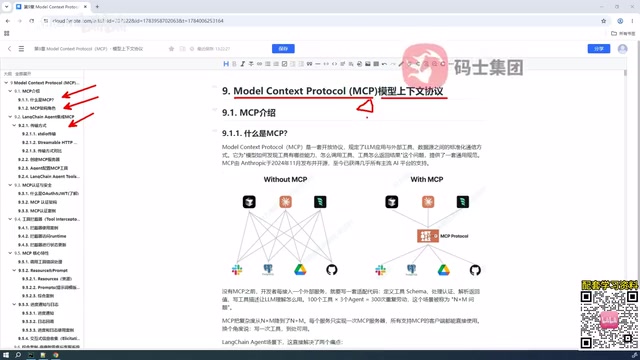
Bilibili MCP Tutorial in Practice: From Fundamentals to LangChain Integration
A breakdown of the knowledge framework in a Bilibili MCP tutorial: MCP architecture roles, LangChain Agent integration, authentication and security, tool interceptors, and interactive information gathering—helping you decide which chapters are worth your time.

5 Hands-On AI Projects to Build a Job-Ready AI Engineer Portfolio
Tired of generic chatbot projects? Here are 5 hands-on AI projects that stand out: a RAG system with a fixed test set, a local small-model benchmark comparison, an MCP server, careful fine-tuning, and a cost & latency dashboard. Each stresses proper testing and honest documentation to build a job-ready AI engineer portfolio.

Hermes Agent Free Deployment Tutorial: Build a Full-Featured AI Agent with Zero-Cost Models
Complete Hermes Agent installation tutorial: from GUI deployment and OpenRouter free model access to skill marketplace and MCP connector configuration, with a real test generating a professional food delivery website using free models — all at zero cost.
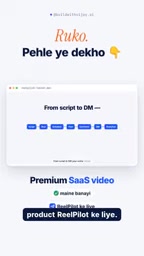
Building a SaaS-Grade Product Video with Claude Code Alone, No Editing Software
A creator used only Claude Code—no After Effects or Premiere—to generate a SaaS product video with 3D windows, cursor clicks, word-synced animations, and subtitles. We analyze this code-based "speech-as-timeline" workflow.

Self-Built Agent Environment Tested: Why Terra Falls Short of DeepSeek in Video Editing
Developer livestreams a test of self-built agent environment SICA, comparing 6.1 Terra, DeepSeek B4.1, and Gemini on video editing—DeepSeek proves more creative and token-efficient, while Terra is fast but lacks aesthetic sense.

CleanWeb MCP Server: Cuts Web Scraping Token Noise by 87% and Blocks Prompt Injection
Reddit developer showcases CleanWeb MCP server that cuts web scraping token noise by 87% and provides prompt injection protection for Claude Desktop and Cursor. This article analyzes its mechanisms, integration, and unverified limitations.

Building SaaS with Claude Code? Avoid This #1 Mistake First
You don't need to code to build SaaS with Claude Code — the key is establishing a "source of truth" before AI writes code. This article explains the #1 mistake non-technical founders make and its fix: define requirement boundaries first, let AI ask questions back, and use spec-driven development to avoid inconsistent AI output.
Building SaaS with AI? These 5 Architecture Decisions Can't Be Made by AI
AI coding agents can help you build a SaaS over the weekend, but tenant model, data isolation, scaling, control plane, and metering are five architecture decisions AI can't make for you. Using a B2B invoicing SaaS as an example, this article breaks down the trade-offs and costs of each decision.

A Senior Developer's AI Full-Stack SaaS Workflow: From Planning to Deployment
A senior developer demonstrates a complete AI full-stack SaaS workflow: Plan Mode planning, Pinterest-referenced UI design, Neon backend, Stream chat and video, ImageKit media, Sentry Seer auto-fix, and one-click Cloudways deployment.

Codex Extension Won't Start? VS Code Error Fix Guide
Codex extension shows "The extension could not start its user interface" in VS Code? Learn what the error means, common causes in Remote SSH, Dev Containers, and Cursor, and a log-driven fix workflow.
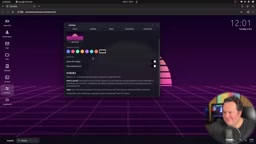
Mistral Large 4 Hands-On: Can a Trillion-Parameter Open-Source Model Pull Off an Upset?
Mistral Large 4 (Le Chonk) hands-on: a 1.05T-parameter open-source MoE that matches top open models on cybersecurity benchmarks, with a browser-OS app editor as the biggest surprise — though vision integration and 3D detail still lag.
Vibe Coding Beginner's Tutorial: Building Real Apps with a Four-Step Loop
A Vibe Coding beginner's tutorial: use the four-step loop of describe, review, refine, repeat to build a habit tracker from scratch on Base44—no coding required.

Breaking Down Lovable's Credit System: The Real Cost of Building Apps with AI
A creator's reverse-engineering of Lovable's credit system reveals the real cost of AI app-building: credits cover code generation, hosting, backend, and in-app AI, with wildly different consumption per task and some credits expiring daily.
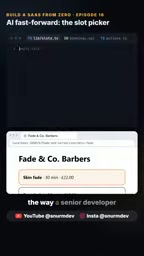
Let AI Write the Booking Logic, Then Review It Like a Senior Developer
Hand the booking system's time slot logic to AI, then verify it like a senior developer: check time zone attribution, overlap boundary operators, and database constraint backstops—revealing key methods for prompt design and code review in AI programming.

Build Apps Without Writing Code? The Right Way to Do Vibe Coding
Explore Vibe Coding: use natural language to let AI generate app prototypes and quickly validate ideas. Learn about AI-generated code's flaws and security risks, and master a smart workflow of "one feature at a time, test as you generate" to ensure the journey from demo to reliable product.