#AI编程
9359 related articles

Build Apps Without Writing Code? The Right Way to Do Vibe Coding
Vibe coding lets you describe apps in natural language and have AI generate landing pages, dashboards, or prototypes. But demos differ sharply from reliable products.

Building Apps Without Writing Code: The Promise and Pitfalls of Vibe Coding
Vibe Coding lets you describe apps in natural language and have AI generate code. This article analyzes its potential and limits, introduces the generate-test-review workflow, and stresses that AI cannot replace testing and security responsibility.

Mistral Large 4 Hands-On: How Good Is This Trillion-Parameter MoE Model at Coding?
Mistral Large 4 hands-on: 1T-parameter MoE, 49B active, 1M-token context, text+image input. Beats GLM 5.3 and Kimi K3 on benchmarks; generates 3D games and websites.

Google AI Studio vs Firebase Studio: Differences and How to Choose
What's the difference between Google AI Studio and Firebase Studio? The former is a prompt-driven tool for quickly generating websites, Android apps, and configuring Firestore and user login; the latter is a full-stack cloud development workspace covering coding, AI building, and testing. This article clarifies their positioning differences and selection guidance.

Building a Professional Website with AI: A Hands-On Guide to Firebase Google Login
Follow this hands-on tutorial to use ChatGPT to generate HTML/CSS/JS code, configure Firebase Google login, email auth, and Firestore, and fix the domain authorization error in local development.
How Students and Researchers Can Train and Fine-Tune ML Models at Low Cost
Starting from a Reddit community discussion, this article explores how students and researchers can train and fine-tune ML models at low cost, covering PEFT parameter-efficient fine-tuning, lightweight computer vision solutions, and deep learning engineering practices, while honestly noting the information gaps in the original material.
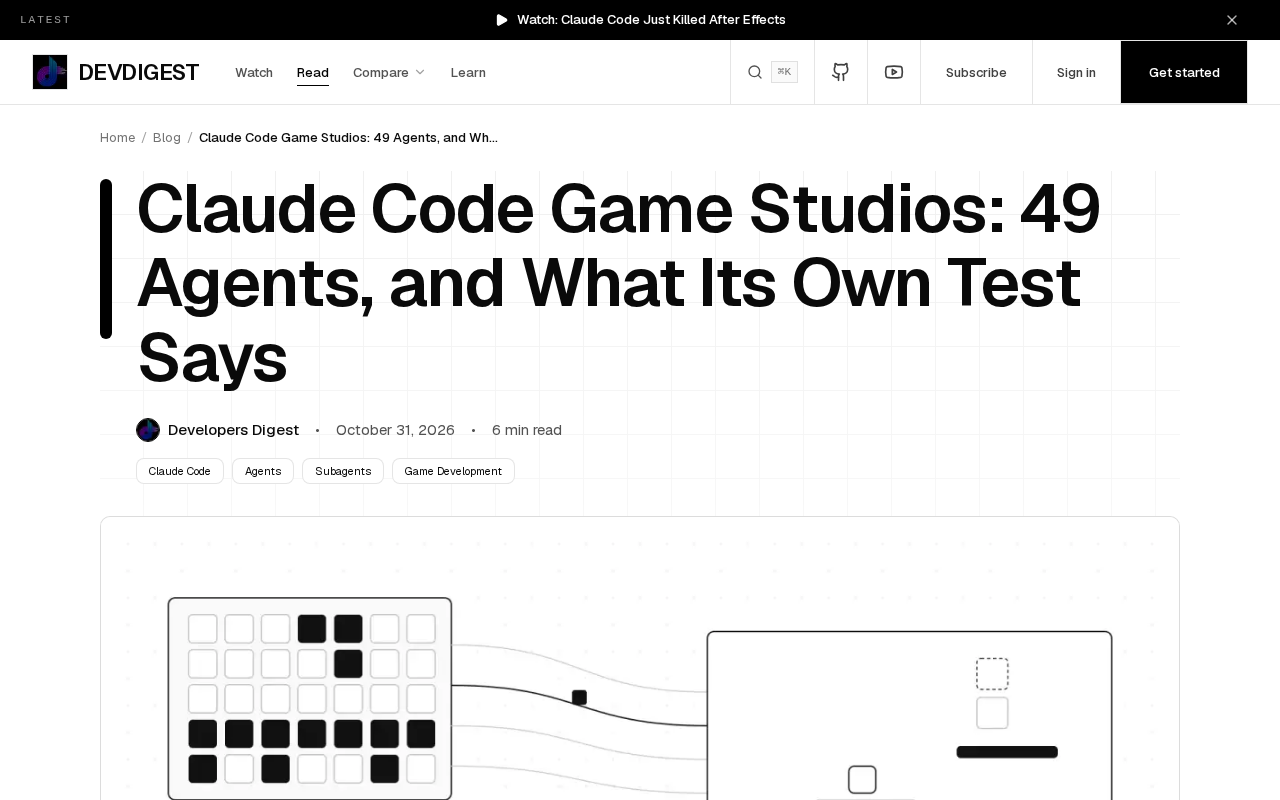
Claude Code Game Studios: The Truth Behind 49 Agents
Claude Code Game Studios packs 49 agents and 74 skills into one template, yet its README shows the heaviest build ranks last. We explain modes.rigor and what to skip.

AI Automated Vulnerability Discovery Tutorial: A Beginner's Path from Agent Building to SRC Practice
A beginner-friendly breakdown of an AI automated vulnerability discovery course: from Agent building and vulnerability principles to CVE reproduction and SRC hunting practice, with a four-stage learning path.

WorkBuddy in Practice: Your Advancement Map from AI Agents to FDE
What is WorkBuddy? Based on the first lesson of a 256-episode Bilibili tutorial, this article breaks down the four-layer relationship among large models, Harness, agents, and WorkBuddy, outlines the path from basic operations to FDE engineer, and analyzes monetization logic and learning resources.

Breaking into AI Agents Without a CS Degree: Three Paths to Overcome the Experience Barrier
AI Agent jobs are hot, but most don't require an algorithms background. See how non-CS, beginner, and new grad candidates can break in via task decomposition and projects.
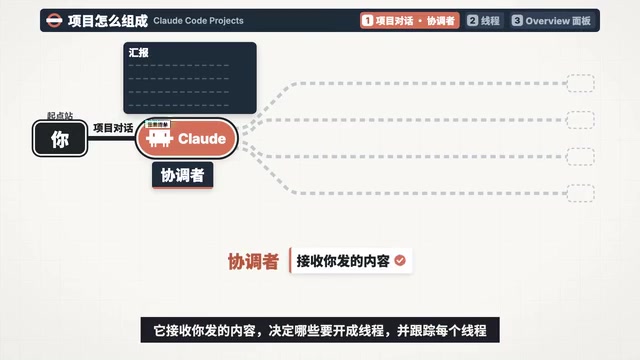
Claude Code Launches Projects: Claude as Coordinator for Parallel Multi-Task Development
Claude Code launches Projects, defining a project as an ongoing conversation where Claude coordinates tasks in threads, with cloud/local runs, an Overview panel, and usage tips.

Claude Code Launches Multi-Session Hub as Agents Surpass Half of EU Enterprise AI Usage
Claude Code desktop becomes a multi-session hub with BTW side questions; OpenTelemetry Traces public beta enables self-hosted observability. OpenAI EU enterprise data shows Codex and ChatGPT Work exceed half of Output Tokens.

Claude Code Multi-Session Upgrade, Copilot Multi-Model Collaboration, Step 5 Weights Released
Today's AI Daily: Claude Code desktop adds multi-session interface, GitHub Copilot Hydra Fusion enables multi-model collaboration, Google Deep Review verifies complex documents, OpenAI announces GPT-4 series API retirement timeline, StepFun Step 5 Preview and Ant Link 3.1 Flash open weights, Skywork Matrix Game 4.0 separates rules from visuals.
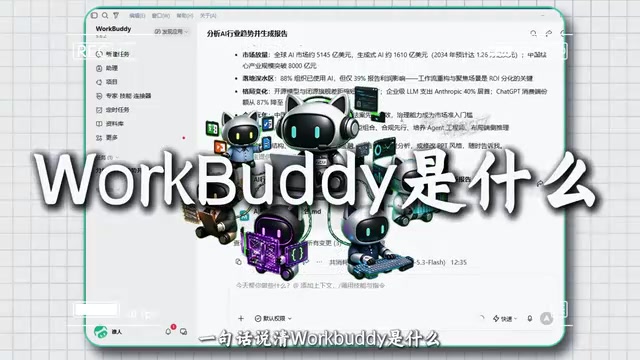
WorkBuddy for Beginners: Complete Guide from Installation to Hands-On Practice
Complete WorkBuddy tutorial for beginners: installation, core operations, 28 real-world case exercises, plus how to get the blue book materials. Learn how this Chinese-speaking AI assistant that takes action helps you organize materials, calculate spreadsheets, and write documents.

Agent Development Learning Path: A Complete Guide to LangChain and LangGraph in Practice
Confused by LangChain, LangGraph, and MCP? This article distills a Bilibili hands-on course, covering environment setup, the create_agent core API, Agent Loop principles, and tool-calling demos to provide a complete Agent development learning path from model integration to multi-agent collaboration.

Bilibili's Most Complete AI Agent Tutorial: From Zero to Advanced in Seven Days
Bilibili creator launches a 748-episode AI Agent course with Fundamentals, Advanced, and Practice modules covering Prompt engineering, RAG, multi-Agent collaboration, and hands-on projects. This article outlines its structure, resources, and target audience to help beginners plan a rational learning path.
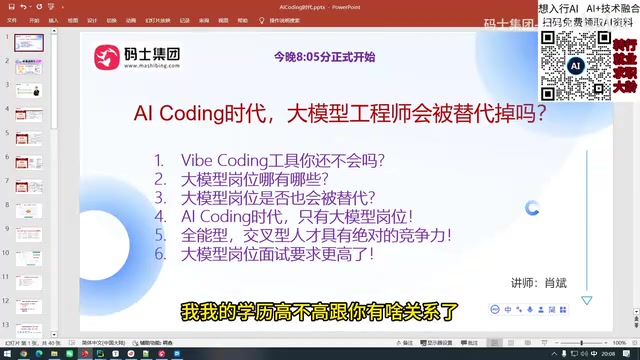
Will AI Large Model Engineers Be Replaced? A Frontline Developer's Hands-On Breakdown
A frontline developer's Bilibili livestream recap: could AI large model engineers be replaced within three years? Breaking down how webcoding tools Superpowers and Gstack divide labor, and what capabilities developers need beyond Codex and Claude Code.
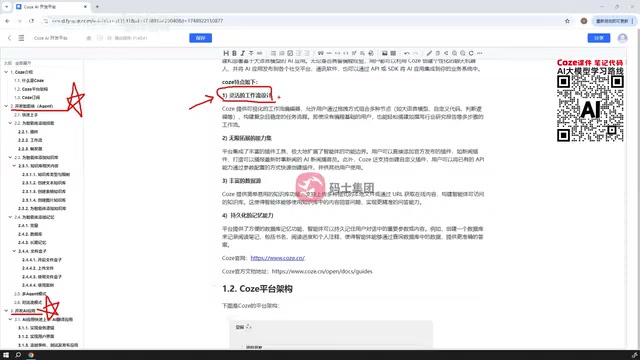
Coze vs. Dify in Practice: Building AI Agents from Zero
Based on a Bilibili tutorial, this article breaks down ByteDance Coze's four core capabilities—workflows, plugins, knowledge base, and persistent memory—and compares its local-deployment differences with Dify, offering a beginner's path to building AI agents.

Algorithm Role or Application Role? Breaking Down Large Model Job Directions
Should you choose an algorithm role or an application deployment role for large model jobs? This article breaks down the capability differences between the two paths, the preparation focus for new graduates and career changers, and how to write resumes and prepare for interviews with RAG and agent projects.
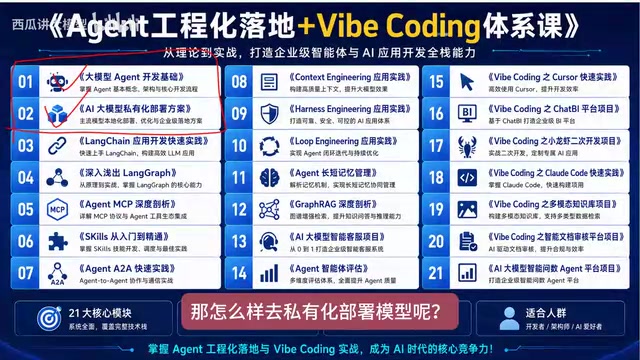
AI Application Developer Learning Path: Agent Engineering and Vibe Coding in Practice
A learning path for AI application developers from zero基础 to enterprise-grade agents: LLM APIs and private deployment, LangChain/LangGraph, MCP/Skills/A2A, context/harness/loop engineering, GraphRAG, and Vibe Coding with Cursor and Claude Code.