#AI编程
9429 related articles

Cline v4.1.26 Update Analysis: Cloud Tasks and Model Options Get a Full Upgrade
Cline v4.1.26 detailed update: new Local/Cloud model switching for cloud tasks, sandbox startup progress card, refreshed model catalog, fixes for GPT-6 compatibility, Gemini free-tier 429 errors, and various interaction issues.
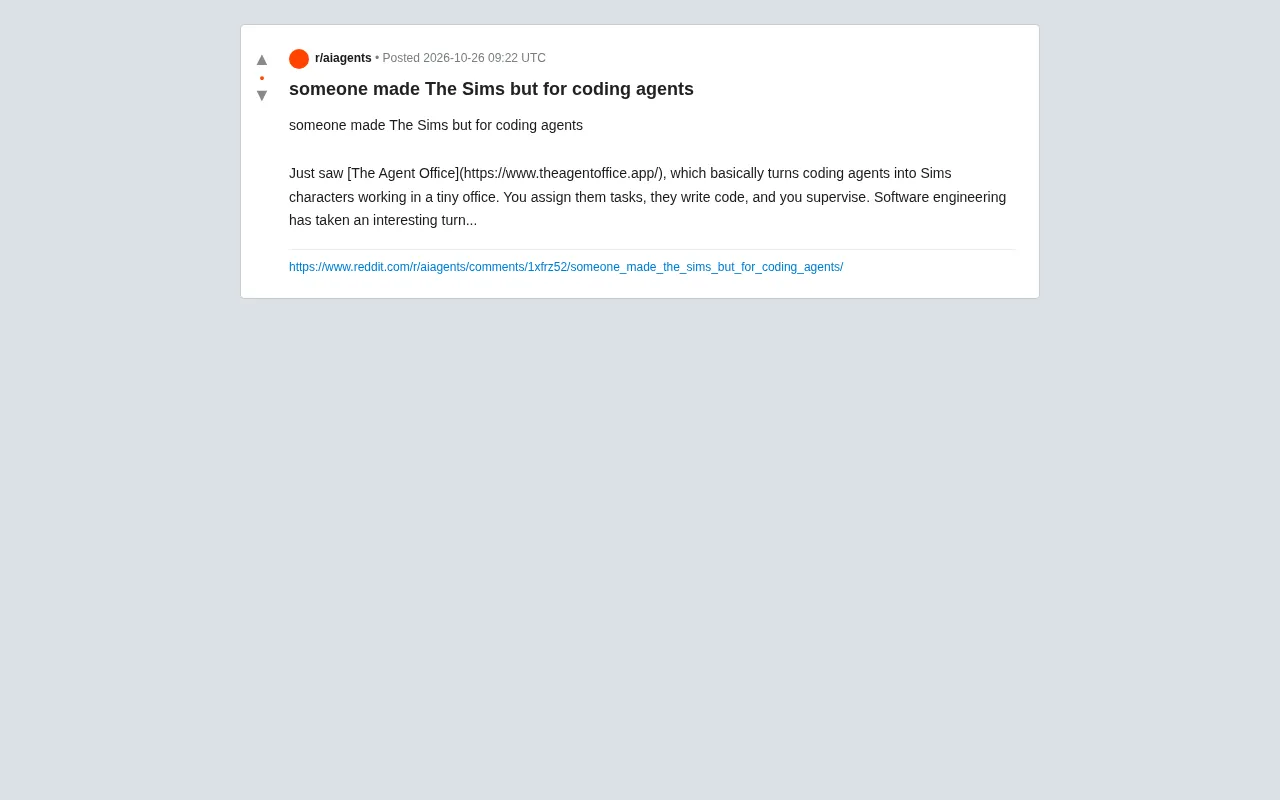
When Coding Agents Become The Sims: The Agent Office Experience
The Agent Office turns coding agents into Sims-like characters you task and supervise in a virtual office. We analyze its design, observability value, and anthropomorphism limits.

How to Efficiently Conquer Sutton & Barto's Reinforcement Learning Bible
A reading guide for Sutton & Barto's Reinforcement Learning textbook, offering staged reading strategies, video and code integration tips to help beginners overcome the dryness of theoretical books and efficiently master RL fundamentals.
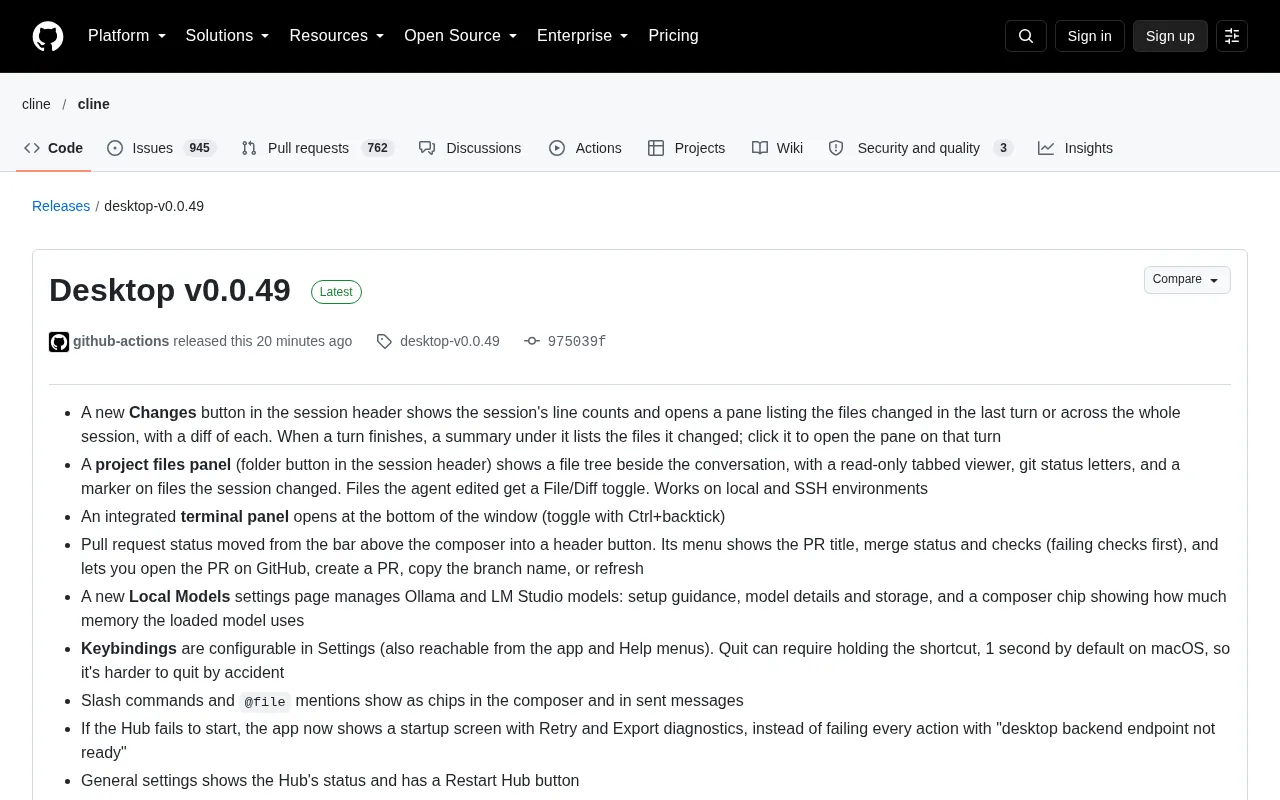
Cline Desktop v0.0.49 Update: Terminal Panel and Local Model Management Go Live
Cline Desktop v0.0.49 adds a Changes panel, project file tree, integrated terminal, and local model management, and fixes Hub startup failures, oversized sessions that couldn't be restored, SSH ProxyJump connections, and other stability issues.

AI Coding Agent Rankings: Claude Code, Codex, or Cursor — Which Is Stronger?
A Bilibili creator ranks ten AI coding agents: Claude Code handles long tasks, Codex runs in parallel in the cloud, Cursor feels smoothest, Copilot now uses usage-based credits, Gemini CLI lands last after shutdown. Includes selection advice and cost analysis.

Empirical Transfer Between Protein Pockets: An Analysis of Experience Reuse in Molecular Optimization
Analysis of LLM agents reusing molecular optimization experience across protein pockets, examining experience-library key design, target information use, and transfer effectiveness, noting current methods better prioritize docking suggestions than prescribe builds.
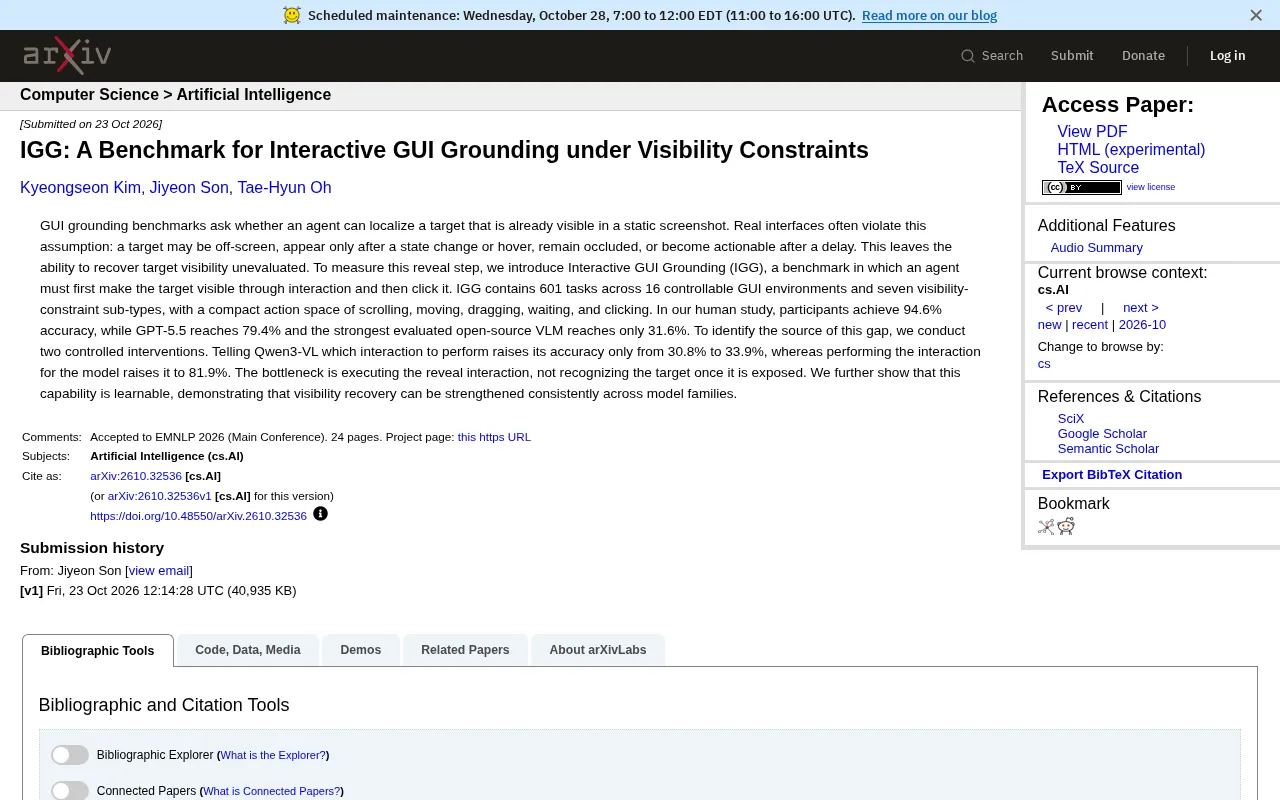
IGG Benchmark: A New Challenge in Interactive GUI Grounding — How Can AI Agents Break Through Visibility Constraints?
IGG benchmark requires AI agents to interactively make GUI elements visible before clicking. Humans achieve 94.6%, open-source VLMs only 31.6%. This article analyzes the design, performance gap, and core bottleneck—executing reveal interactions rather than recognizing targets.

Stop Strangling AI Agents with Workflows — Give Them "Childproofing" Instead
A Reddit developer proposes "childproofing" over rigid workflows: hard environment boundaries, code verification, and test-driven evals let models self-plan.

Former Google Engineer with 15 Years' Experience: AI Coding Assistants Rekindled My Passion for Building
A former Google engineer with 15 years' experience shares how AI coding assistants compressed complex C++ debugging from days to an afternoon, and reflects on anti-AI rhetoric. Explores AI's real value in software development and shifting developer attitudes.

Stop Using LangGraph to Orchestrate AI Agents — Refactor Your Reasoning Harness with 'Child-Proofing'
In 2026, AI agent development is stuck in rigid LangGraph-style workflows. This article presents a 'child-proof' reasoning harness: replace flowchart orchestration with hard environment boundaries, external code validation, and test-driven evaluation — letting models plan and execute autonomously while staying safe and controllable. Includes a Customer Pulse prototype and a candid trade-off analysis.

AdaBPE: How Dynamic Frequency Thresholds Optimize Tokenization for Mixed Corpora
The paper proposes AdaBPE tokenization, which uses dual length- and type-adaptive frequency thresholds to overcome traditional BPE's boundary limitations in mixed natural language and LaTeX symbol corpora, improving domain content encoding efficiency while maintaining general language performance.

TopKLoRA: How Sparse Fine-Tuning Precisely Dismantles Model Backdoors
TopKLoRA is an interpretable-by-design sparse LoRA fine-tuning method that activates only k latents per token. The paper builds backdoor model organisms on gemma-2-2b, Qwen2.5, and other models, locating and ablating necessary and sufficient backdoor circuits an order of magnitude smaller than dense LoRA, achieving precise backdoor removal without losing instruction-following performance.

Does LLM-Optimized Code Actually Consume More Energy? Only 2 of 44 Configurations Save Power in Testing
Does LLM self-refinement really save energy? Hardware-level measurements across all 1,000 EffiBench problems and 11 open-source models show 42 of 44 configurations consume more energy than human reference solutions, by 4% to 886%; limiting output tokens cuts inference energy by up to 69%, and MoE architecture matters more than decoding tuning.

Ditching LangChain for Raw APIs: Why Developers Are Rethinking AI Framework Over-Abstraction
A developer spent 4 hours debugging LangChain, then deleted the framework and rewrote with native Python and FastAPI. This article analyzes the cost of AI framework over-abstraction and when to use frameworks vs. raw APIs with lightweight SDKs.

AI Agentic Systems: Why It's the Must-Have Skill Right Now
Starting from a Reddit discussion, this article breaks down the core concepts and engineering essentials of AI Agentic Systems: autonomous loops, tool calling, termination conditions, observability, and evaluation—plus a pragmatic path to getting started, explaining why building Agent systems is becoming a must-have skill for engineers.

Cline CLI v3.0.74 Released: Task Resume and Model Catalog Overhaul
Cline CLI v3.0.74 fixes duplicate task runs, Hub health check hangs, and Gemini free-key 429 errors, plus a major model catalog refresh with new providers and defaults.

Cline Agents SDK 0.2.0 Released: AI Coding Agent Toolchain Evolves Further
Cline releases @cline/agents 0.2.0, continuing Agents SDK iteration. This article interprets the release, its practical implications for AI coding agent developers, and usage advice for early SDK versions.

Cline Core SDK Releases Version 0.2.0: The AI Coding Toolchain Takes Another Step Forward
Cline Core SDK releases version 0.2.0—the version jump hints at new features or major refactoring. This article analyzes the update's potential impact on AI coding workflows and offers upgrade advice for developers.

Cline Releases @cline/llms 0.2.0: Parsing the LLM SDK Update
Cline releases @cline/llms 0.2.0, a minor LLM SDK update. We analyze the release info, namespace positioning, upgrade considerations, and the engineering habits and documentation gaps behind open-source AI toolchain version cadence.

Cline SDK v0.2.0 Update: Session Reconnection, Slimmer Retries, and a Model Catalog Overhaul
Cline SDK v0.2.0 released: sessions now reattach to the active runtime, model retries cut from 5 to 3, Gemini native search disabled, and the model catalog trimmed from 7,041 to 6,457 with new default models.