#AI编程
9437 related articles

One-Click Takeover for Cursor/Devin/Kiro: A Hands-On Guide to the Codei Local AI Gateway
Codei is a local AI gateway that takes over Cursor, Devin, Kiro and more with one click, routing requests to OpenAI-compatible and Claude-protocol upstreams with failover, remote SSH traffic回传, and full CLI management.
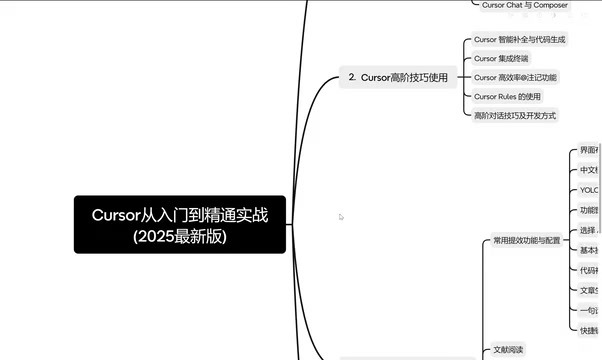
Cursor from Beginner to Expert: A Practical AI Programming Workflow Guide
Based on a Bilibili Cursor course, this guide covers AI programming tool comparisons, Cursor setup, Chat and Compose, advanced completion and annotation techniques, and productivity scenarios like scientific visualization to help developers build an efficient Cursor workflow.

Completion or Agent? One Formula Explains the AI Coding Paradigm Divide
What's the real difference between completion and Agent? One formula—Agent = Model + Harness—explains the AI coding paradigm: completion guesses the next line, Agent reads the repo, edits multiple files, runs tests, and self-corrects. Includes selection criteria and practical usage tips.
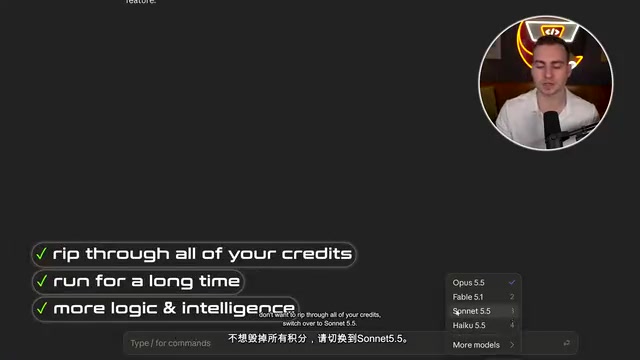
Claude Code Deep Configuration Guide: From Model Selection to Skills in Practice
Based on Tech With Tim's three-hour hands-on course, a systematic walkthrough of Claude Code's model and effort level choices, permission modes, CLAUDE.md conventions, Skills scoping, subagents and Hooks configuration, plus advanced usage like context compaction and parallel sessions—helping you turn a default install into a genuinely efficient workspace.
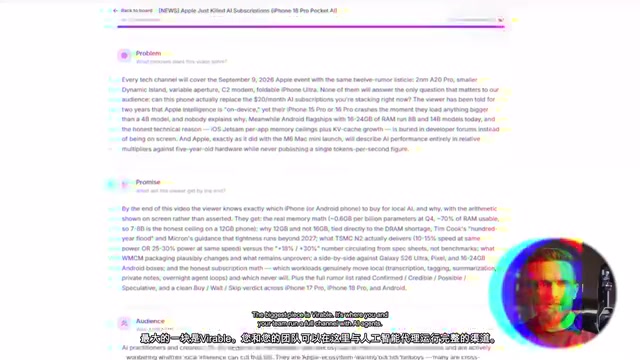
Claude Code Beginner's Guide: Desktop Setup and 6 Key Settings to Avoid Pitfalls
Claude Code desktop tutorial: paid tier, Opus planning and Sonnet building, workspace folders, approval rules, claude.md, compact sessions, and four project demos.

Local Deployment of the Flint Model: A Guide to Running on Ollama and Integrating with Claude Code
Recursive's Flint is a 40B-parameter, 2.5B-activated open-source coding model. This guide covers running Flint locally on Ollama, integrating it with the Claude Code terminal assistant, and analyzing benchmark limitations and practical usage caveats.

TS+Zod Full-Stack in Practice: From Type Safety to openclaw Agents
A deep dive into the practical value of TypeScript and Zod in AI full-stack development: from project initialization and advanced type systems to structured agent output, with Ollama local models and LangChain demonstrating how to constrain LLM response formats, plus an overview of the frontend AI framework ecosystem.

AgentScope 2.0 Step-by-Step Tutorial: Building Enterprise-Grade Multi-Agent Systems from Scratch
A detailed guide to Alibaba's AgentScope 2.0 multi-agent framework based on a Bilibili tutorial: Message core design, model and Agent configuration, Event streaming output, plus two runnable conversational Agent examples for beginners in enterprise agent development.

How Anthropic Decoupled the Brain and Hands of Claude Agents
At AI Engineer, Anthropic reviewed Claude Managed Agents' evolution: from a single-container "pet" architecture to a session log, harness brain, and sandbox hands fully decoupled, cutting first-token latency ~90% and keeping credentials out of the sandbox to resist prompt injection.
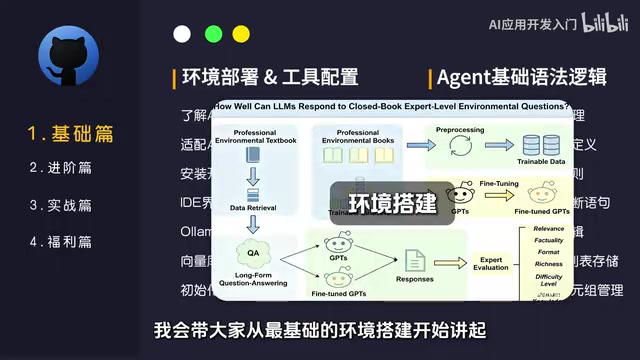
748-Episode AI Agent Development Course on Bilibili: A Complete Guide from Beginner to Enterprise-Level Practice
Breaking down the 748-episode AI Agent development course on Bilibili: Fundamentals covers LLM principles and API calls; Advanced covers RAG, Tool Use, memory management, and multi-agent collaboration; Practical covers intelligent customer service, office automation, and more—plus learning paths and pitfalls to avoid.

Dify Workflow for Beginners: A Complete Guide from Deployment to AI App Building
Based on a Bilibili Dify tutorial, this guide covers Dify's core features, Windows Docker deployment, MySQL connection, five app types and workflow nodes, model integration strategy, and app publishing methods—ideal for AI app development beginners.

Building a Laser Shooting Game with Claude Code: A Camera Scores the Screen
A developer built ScreenPlink, an open-source laser shooting training game, with Claude Code in two weeks: a camera detects laser hits on screen and scores them, while an AI agent debugs via MCP reading physical measurements, with mutation testing and calibration lessons.

AI Disruption + Credential Inflation: A Direction-Selection Guide for Zero-Background Career Changers Entering Programming
Zero background, non-elite degree, or employment gap—how to choose a programming direction? A Bilibili creator's difficulty ladder from operations and automotive testing to Java/C++ plus LLM app development, with advice for different backgrounds.

From Zero to LLM Development: A Four-Phase Learning Roadmap
What to learn to switch into LLM development from scratch? A four-phase roadmap: role awareness, Prompt/RAG/Agent core skills, engineering deployment, and job-hunting practice.
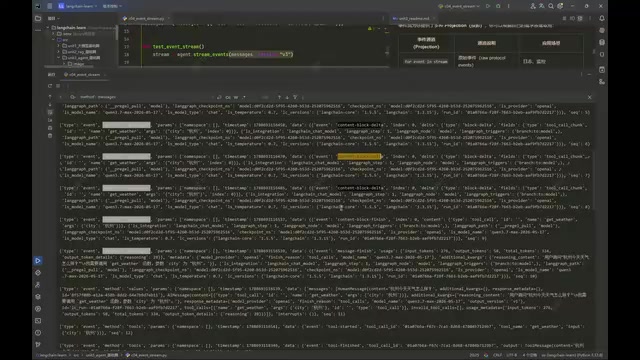
LangChain Agent Event Streaming Explained: A Practical Guide
A deep dive into LangChain 1.3's Event Streaming feature, covering the six event types—Raw, Messages, Tool Calls, Values, Custom, and Interleave—and key practical tips for Agent developers.

ClawBench Multi-threaded Parallel Development: Three Layers That Keep AI from Stepping on Each Other
How does ClawBench enable parallel development? Bilibili creator Long Ze demonstrates six simultaneous AI sessions, cross-project switching, and Worktree branch isolation across three layers, plus how server-side execution lets phones run AI tasks.

From Frontend to AI Agent Development: Career Paths and Skill Roadmap
A frontline AI architect analyzes the shifting landscape for frontend-to-AI-Agent developers, covering three career paths—Agent engineer, FDE, remote contracting—and a skill roadmap for Agent + big frontend.

Gemini 4 Argon in Practice: 1,000 Iterations to Generate 3D Animation, a Leap in Coding and Tool-Calling Capabilities
A Google employee shares a Gemini 4 Argon case: starting from a Pixel CAD file, using Blender MCP to generate an exploded-view animation, self-optimizing code through 1,000 iterations, showcasing powerful coding and multi-step tool-calling capabilities.

Cognition Open-Sources Devin Vulnerability Fixes Plugin: AI Agent Automatically Patches Critical PHP/Node.js/GitLab RCE Flaws
Cognition open-sources Devin Vulnerability Fixes, with 3 MIT-licensed agent skills targeting critical RCE flaws in PHP, Node.js, and self-hosted GitLab—automating inventory, patching, testing, and one PR per repo.

Reactive Optimizers: Rewriting Optimizer Source Code During Training — A New Paradigm for Performance Gains
Reactive Optimizers dynamically rewrites optimizer source code during training for code-level adaptivity. This article explains its core mechanism, differences from meta-learning, and challenges in stability and reproducibility, and explores its potential impact on AI training frameworks.