#AI编程
9437 related articles
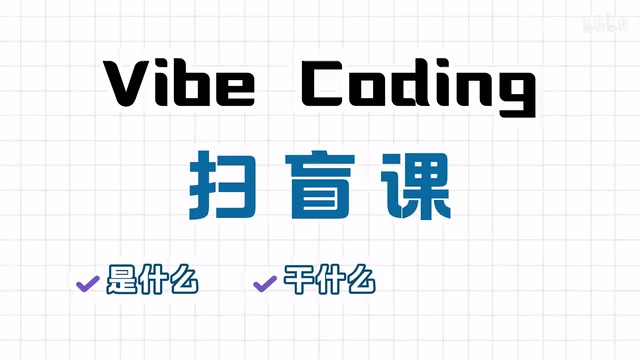
Vibe Coding for Absolute Beginners: From Concept to Hands-On Practice
Based on a popular Bilibili tutorial, this guide breaks down the zero-foundation Vibe Coding learning path: what Vibe Coding is, whether non-technical learners can start, which tools fit, and how to hands-on build your first mobile webpage. Ideal for beginners exploring AI programming.
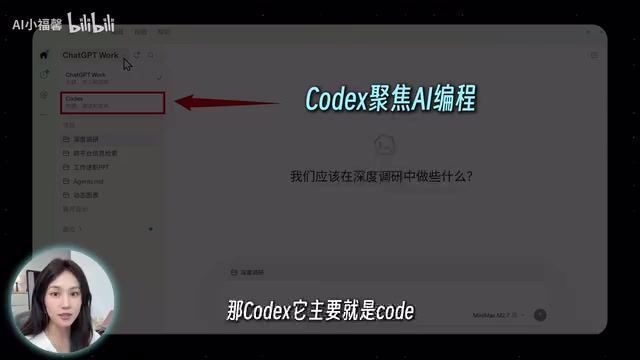
Codex for Absolute Beginners: Connect to Domestic LLMs + Four Hands-On Case Studies
A Codex beginner tutorial: three steps to install and connect to the DeepSeek domestic LLM, with CC Switch for provider switching, plus essential plugins, skills, and four hands-on cases.

MCP Official Servers v2.1.0 Fix Eight Vulnerabilities: Path Traversal and SSRF Protections Upgraded
MCP official servers release v2.1.0, fixing eight security vulnerabilities across filesystem, Everything, and fetch servers, covering path traversal, cross-origin requests, and SSRF; date-version users must explicitly upgrade to 2.0.1.
Claude Code 2.1.310 Update: Monitor Tool Comes to Bedrock, Vertex, and Foundry
Claude Code 2.1.310 brings the Monitor tool and plugin monitoring to Amazon Bedrock, Google Vertex AI, and Azure AI Foundry. Learn how it works, the 30-minute monitoring cap, and key configuration points for the three platforms.
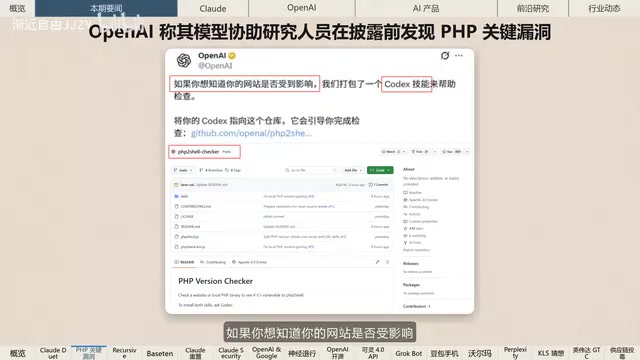
Claude Duet Proactive Agent Launches, OpenAI Discovers Decade-Old PHP Vulnerability
Anthropic opens research preview of proactive agent Claude Duet, powered by Opus 5.5 and waitlisting US Pro/Max users; OpenAI and Wiz disclose PHP2 Shell, a 14-year-old PHP core flaw affecting all PHP versions for nearly a decade; AI also proves the KLS conjecture. This article covers the agent paradigm, security offense-defense, and AI research.

Dual AI Relay Development of Desktop Software: From Crashes to Release
B站UP主实录:两个AI通过GitHub接力开发Windows桌面软件,经历语法错误、剪贴板闪退、权限翻车后成功发布。详解协作机制、自愈闭环与工程化启示。

Codex Agent Engineering in Practice: A Three-Layer Verification Framework for Testing and Observability
Learn Agent engineering testing and observability from the Codex source code: three-layer verification framework, controllable response stream simulation, assertion placement, concurrency barriers, and failure-case telemetry correlation.

Running AI Agents for 16 Days Straight: Deconstructing Factory's Multi-Agent Architecture
Factory deconstructs the Missions multi-agent architecture: validation contracts define completion before code, serial execution plus read-only parallelism lowers errors, structured handoffs prevent context loss, mixed models play to each role's strengths. Longest continuous run: 16 days, with tests at 50% of final code.
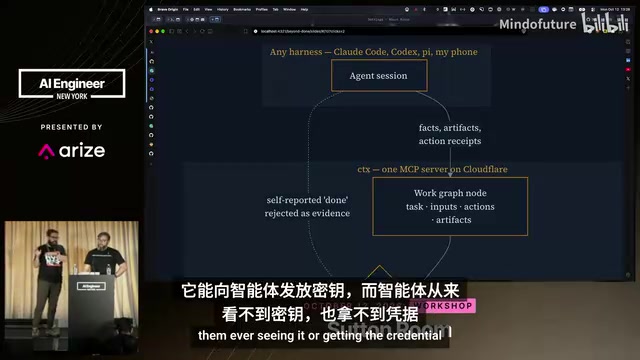
Making AI Agents Prove "Done": The Verification Loop Determines the Scaling Ceiling of Agents
WorkOS at AI Engineer workshop: the bottleneck to agent scaling is self-verification. A three-layer verification loop—verification CLI, Playwright assertions, and System 1 semantic judgment—plus tools like CTX and Riker let agents prove completion and self-heal failures.

Roku Developer Repositories Migrate to GitLab: Platform Strategy or Developer Experience Compromise?
Roku migrates developer repositories from GitHub to GitLab, sparking Hacker News debate. Analysis of cost, compliance, platform neutrality, and impacts on developer workflows and Roku ecosystem collaboration.

Why Is AI-Generated Language So Hard to Understand?
Why is AI-generated language fluent yet hard to understand? Based on a Hacker News discussion, this article analyzes the cognitive load of AI text from three angles—imbalanced semantic density, lack of common ground, and side effects of alignment training—and offers practical advice for getting along with AI language.

JOLT: One Model Plays Both Teacher and Student, Boosting Training Efficiency 6.5x
JOLT is a novel post-training method where one model serves as both teacher and student, with the teacher trained to give usable feedback. It matches GRPO accuracy on MATH with 6.5x fewer tokens. This article analyzes its mechanism, efficiency data, and open questions.

One Person Producing 90 Episodes of AI Anime Shorts: The Complete Production Workflow in 10 Hours for 10 Yuan
No screenwriting experience needed for AI anime shorts: 10 hours and 10 yuan in costs, 4,200 yuan earnings per work on Hongguo. This article breaks down the complete six-step workflow from AI-generated scripts and storyboard scripts to the finished film, with a universal questioning formula and beginner pitfall guide.
WorkBuddy Hands-On Tutorial: 10 Agent Projects from Beginner to Resume-Worthy
WorkBuddy tutorial: a Chinese-language AI work assistant with simpler setup than Codex or Claude Code. 10 hands-on Agent projects for beginners, resume-ready.

Agent Skills Explained: Progressive Disclosure Architecture and Comparison with MCP
An in-depth analysis of Agent Skills architecture: what progressive disclosure is, how Skills give Agents modular expansion, differences from MCP, Function Calling, and Multi-Agent, and a learning path for custom Skills development.

10x Faster AI Short Drama Editing: Doubao + CapCut Automated Editing in Practice
Bilibili creator Zhang Mark shares AI short drama editing: use Doubao Work to install the CapCut editor skill and turn viral editing logic into AI instructions for automatic clip assembly, pacing cuts, music, and subtitles—cutting a one-minute video from half a day to just over ten minutes, plus manual refinement tips.

Open-Source AI Assistant Showdown: Claude Code, OpenClaw, Hermes, and Grok Bot Tested
A power user tests Claude Code, OpenClaw, Hermes, and Grok Bot, comparing open-source customizability vs. managed convenience, plus token costs, stability, and privacy trade-offs.

Same Model, 22-Point Score Gap: Agent Harness Is the Key Variable
Same model, different harness: Terminal-Bench 2.0 scores differ by 22 points—Opus 4.6 from 60.45% to 82.02%, GPT-5.5 from 66.07% to 88.09%. A look at agent harness architecture, SDKs, and a minimal Python loop.
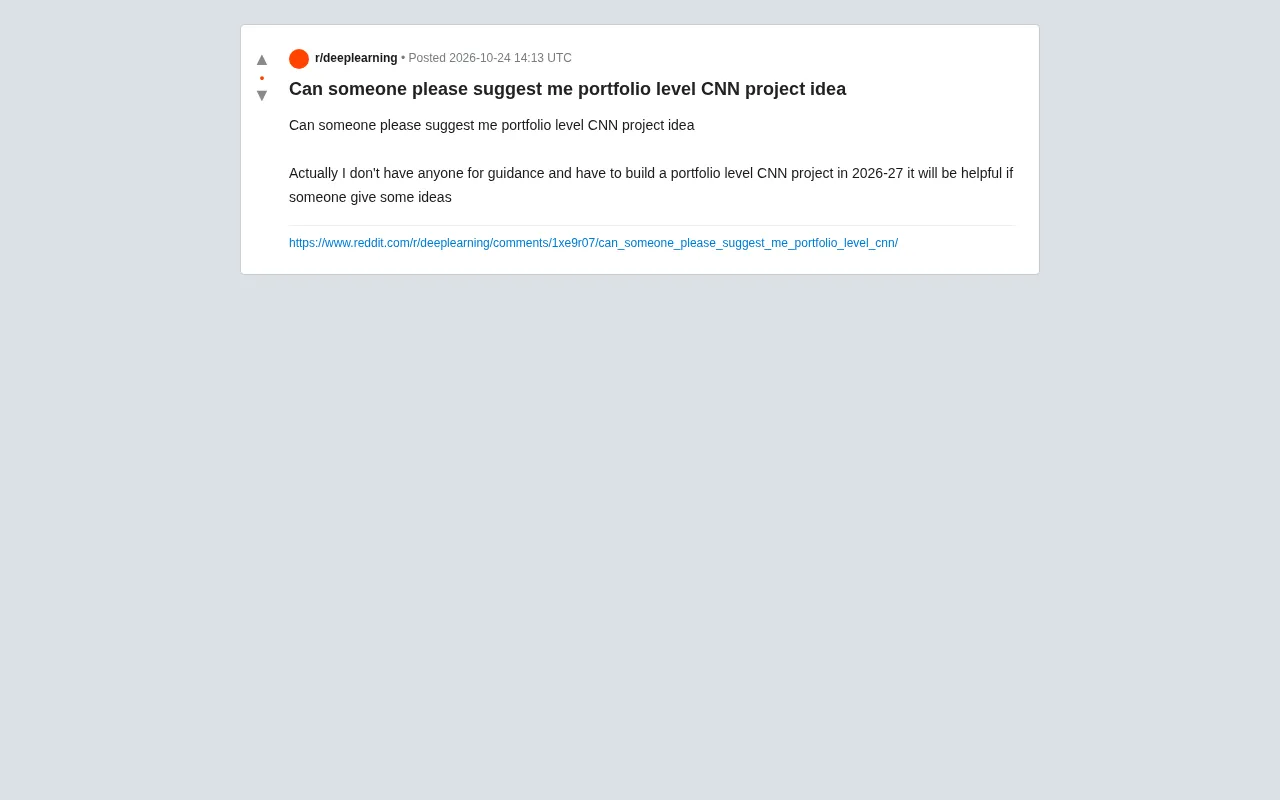
2026 CNN Project Ideas: A Practical Guide to Building Your Portfolio
For 2026-27 portfolio needs, four CNN project directions: agricultural disease detection, medical imaging interpretability, video action recognition, and hybrid CV pipelines, plus engineering habits to make projects stand out.
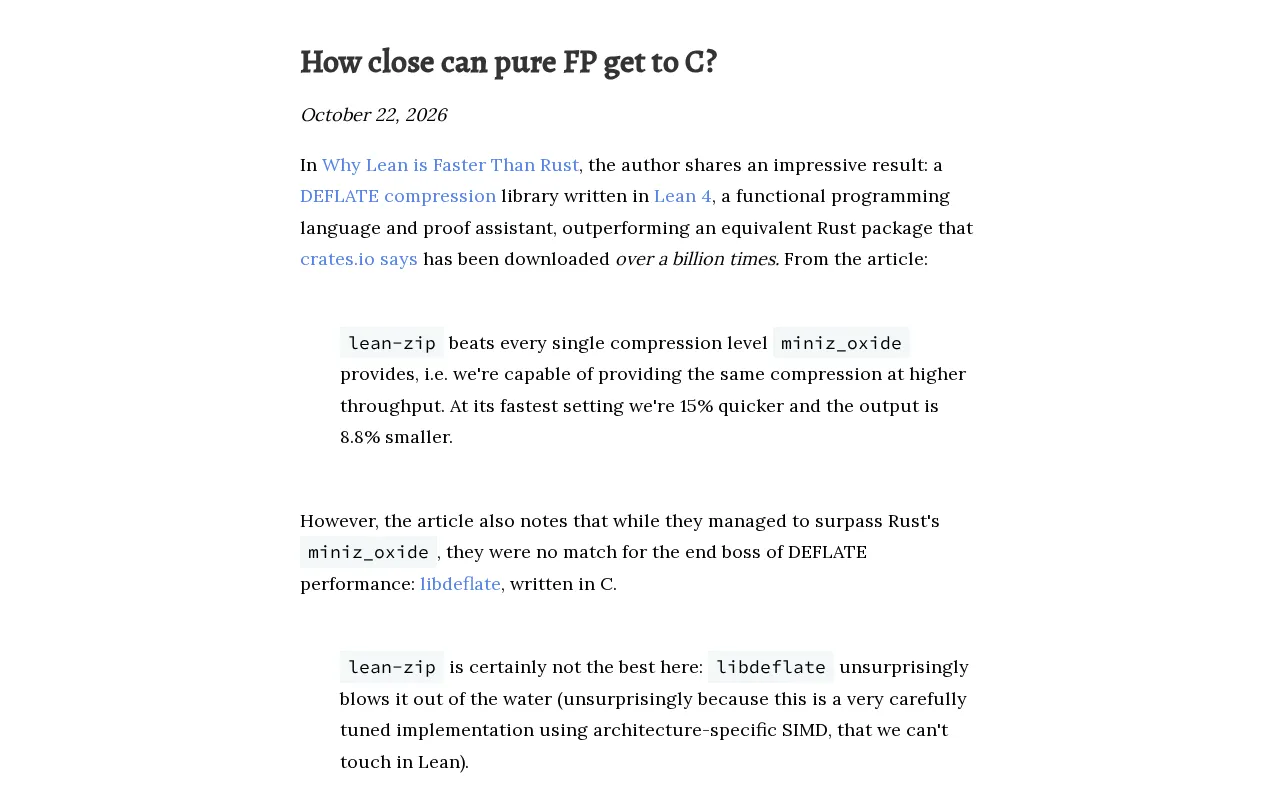
Can Pure Functional Programming Approach C's Performance? An In-Depth Analysis
Exploring how close pure functional programming can get to C performance, based on a Hacker News discussion, analyzing immutability, memory management trade-offs, and community views to guide developer choices.