#AI编程
9426 related articles

Mastering Diffusion Models from Scratch: From Theory to DiT Source Code to Publishing Papers
How to systematically learn diffusion models from scratch: solidify forward diffusion and reverse generation theory, then master DiT source code line by line, and only then pursue model improvement and paper innovation—avoiding the common detour of running code without understanding the principles.

The Only Bilibili Tutorial That Thoroughly Explains Harness Engineering Multi-Agent Collaboration in Practice
An in-depth analysis of the Bilibili Harness Engineering enterprise multi-Agent collaboration tutorial, covering Harness's underlying principles and core components, its content positioning, practical value, and target audience, helping AI Agent developers decide whether it's worth their time.

OpenAI Agents SDK Crash Course: Building Python Agent Workflows in Practice
A complete OpenAI Agents SDK crash course: from Agent and Runner basics, custom tools, MCP, and three session memory options to human approval, guardrails, multi-agent handoffs, hooks, and streaming voice.

Rust Agent Framework Init: Hot-Swapping Its Own Core Mid-Task
Init is a Rust agent framework that can recompile and hot-swap its own core code mid-task. This article covers its technical principles, potential applications, and community reaction.

Claude Code v2.1.311 Update Analysis: Long-Context Compaction and MCP Stability Fixes
Claude Code v2.1.311 fixes long-context interruption past 200K tokens, MCP unresponsive interrupt failures, unavailable subagent tools, and large-file edit lag, and adds idle session hold parameters for self-hosted runners.
GPT-6.1 Sol Powers CodeRabbit: A New A…
GPT-6.1 Sol Powers CodeRabbit: A New AI Approach to Security Review in Complex Codebases
CodeRabbit uses GPT-6.1 Sol to investigate security risks in complex codebases. Its security agent helps developers review detection results and suggested fixes. This article analyzes the capabilities, boundaries, human-machine collaboration positioning, and implementation considerations of this integration.
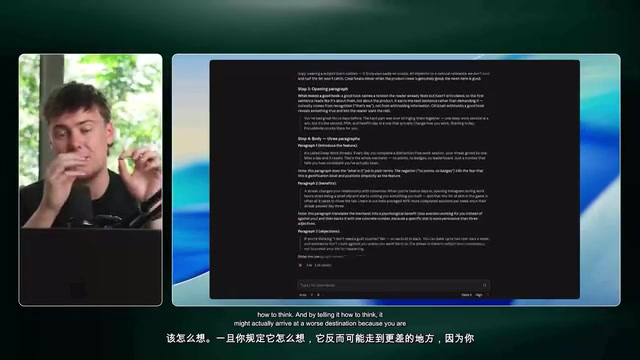
Claude 2026 Best Practices: Delete CLAUDE.md and Let Agents Manage Agents
Claude Code head Boris Cherny suggests regularly deleting CLAUDE.md and rebuilding instructions via ablation. This article breaks down five Claude best practices for 2026.

11-Year Veteran Engineer Live-Dissects: How Vibe Coding Tames Multi-Agent Systems
An 11-year AI lead live-demos orchestrating multiple coding agents via a master agent, building a reminder app from scratch and shipping to TestFlight in hours. Covers multi-agent workflows, prompt injection defense, model cost trade-offs, and evaluation practices.

Anthropic Team Breaks Down Context Engineering: From Claude MD to Filesystem Memory
Anthropic at AI DevCon traced context engineering's evolution: from Claude MD to agent-managed filesystem memory, covering versioning, hashing concurrency, permission layering, and Dreaming.
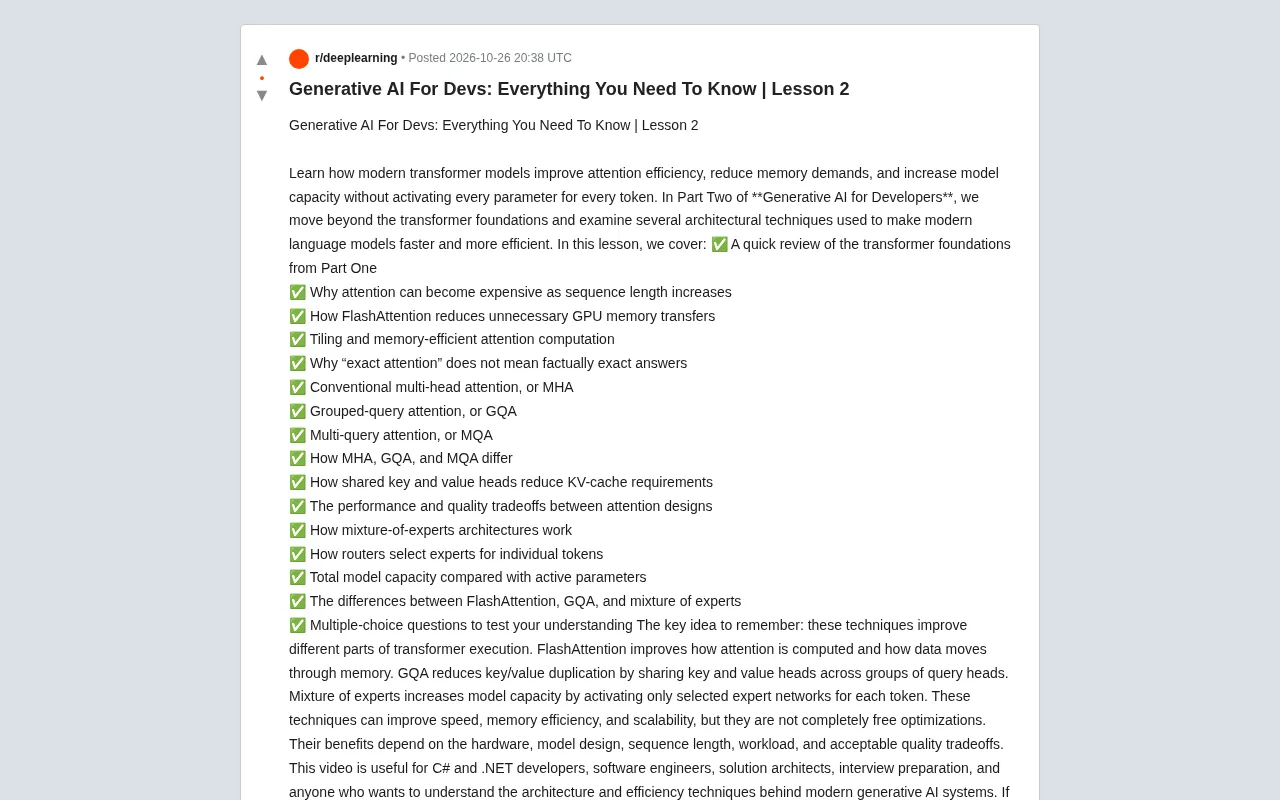
Generative AI for Developers: FlashAttention, GQA, and MoE Architecture Explained
Explaining Lesson 2 of Generative AI For Devs: how FlashAttention reduces GPU memory transfers, how GQA and MQA compress the KV cache by sharing key-value heads, how Mixture of Experts scales model capacity with fewer activated parameters, and the performance-quality trade-offs of each.

Hugging Face Journal Club: How Score Centering Stabilizes Offline Reinforcement Learning
Hugging Face Journal Club discusses a paper proposing Score Centering, a mathematical correction that eliminates drift from inference-training mismatch, stabilizing LLM reinforcement learning under extreme quantization with an efficient top-k approximation.

How Smart People Use AI to Remove Junk: 7 Real-World Cases
AI isn't just generating junk content. Tech creator Riley Brown shares 7 real cases: using Claude to rewrite a TV's OS, jailbreaking a Kindle, AI editing to cut filler, agents filtering email and feeds, replacing apps, and building internal software—showing how proactive users use AI to remove junk and boost efficiency.

LangGraph in Practice: Three Parallel Agents per Request at Just $0.22
protoAgent, built on LangGraph, dispatches one request to three parallel agents, each running Claude Code, with a live org chart and metrics—all for $0.22, MIT-licensed and local-first.
OpenAI Cuts Incident Investigation from Hours to Minutes with Codex Ultrafast
OpenAI engineers use Codex Ultrafast to cut incident investigation from hours to minutes, covering fast security analysis, code refactoring, and daily dev workflows.

Handing the Shop to an AI Agent for Seven Days: A Real Experiment with Zero Human Intervention
A creator hands his real shop to an AI Agent for seven days: automatic orders, customer replies, inventory and pricing, with only approvals over $50. Errors are preserved, and the ledger, guardrails and decision audit are fully shown.
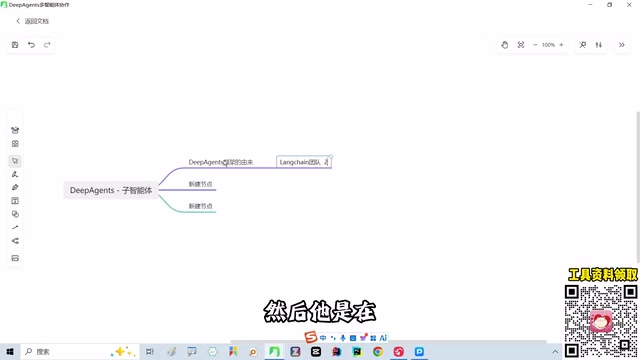
DeepAgent Sub-Agent Breakdown: Precompilation, Sync vs. Async, and Selection Pitfalls
An in-depth breakdown of DeepAgent sub-agents: LangChain ecosystem positioning, sync vs. async differences, precompilation reuse, LangGraph-Server hosting, and selection pitfalls.

Bilibili's 100-Episode Agent Development Course: A Complete Guide from Zero to Employment
A Bilibili creator offers a 100-episode Agent development course covering fundamentals, advanced topics, hands-on projects, and employment—from Agent principles and Prompt engineering to RAG and multi-agent collaboration, with complete roadmap and interview questions. Ideal for zero-foundation learners starting AI agent development.

Backend to Agent Development: Salary Gains and Skill Roadmap Explained
Based on survey data from 2,500+ Agent development jobs, this analysis covers salary gains, a three-stage skill roadmap, and backend engineers' natural advantages for transitioning to Agent development, helping Java developers rationally evaluate AI transition paths.
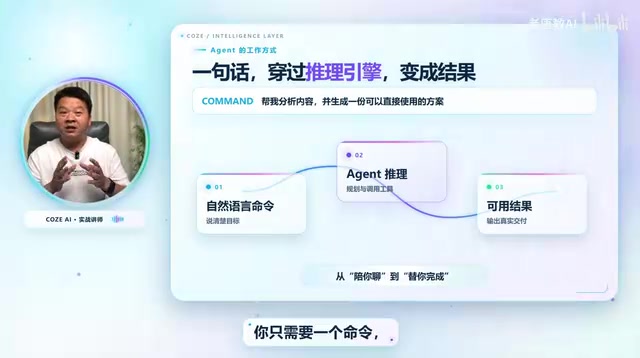
Coze Agent Development Complete Guide: Auto-Build + Workflow Hands-On
A review of Bilibili's Coze agent development course: Coze 3.0 auto-build generates agents from one sentence, manual workflows cover digital humans, e-commerce, education, and more, with local and cloud deployment—hands-on even for beginners.

Bilibili AI Agent Hands-On Course: From Fundamentals to Enterprise-Level Projects
A Bilibili creator launches an AI Agent hands-on course, split into fundamentals, advanced, and hands-on chapters, covering the ReAct framework, LangChain and AutoGen, Function Calling, and enterprise-level projects, with source code, courseware, and a learning roadmap.