#multi-agent collaboration
165 related articles
 Tutorials
·3 min
Can You Really Transition to AI/LLM in Three Months? A Deep Dive into the Learning Roadmap
Deep dive into a popular 3-month AI/LLM transition roadmap: from Python basics and Prompt engineering to LangChain, RAG, Agents, and hands-on projects, with realistic time estimates and pitfall warnings.
Read more →
 Deep Dives
·4 min
Can AI Agents Replace a Development Team? A Practical Guide for Non-Technical People
Can non-technical people use AI Agents to build virtual dev teams? From CEO Agent to Developer Agent, we analyze the theory vs. reality and offer a practical implementation guide.
Read more →
 Product Reviews
·3 min
Mavis Hands-On Review: Multi-Agent Collaboration vs. Single Agent — A Comprehensive Comparison in Academic Research and Web Development
In-depth review of Mavis multi-agent platform across academic retrieval, literature review, and web development. Multi-agent mode significantly outperforms single agents in accuracy and reliability.
Read more →
 Tutorials
·3 min
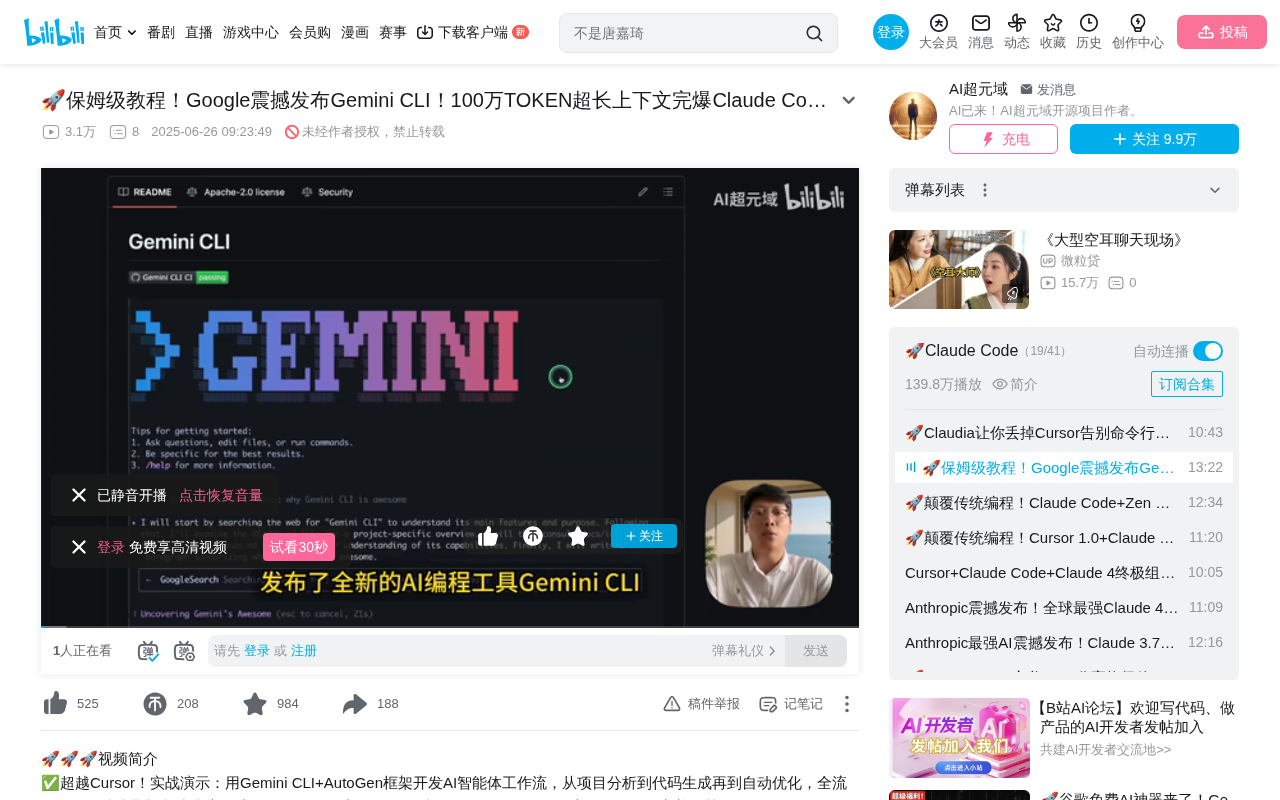
Gemini CLI Complete Guide: MCP Extensions & Memory Files in Practice
Complete guide to Google Gemini CLI setup, MCP Server extensions, and memory files. Covers 1M token context analysis, Context7 docs, Taskmaster task breakdown, and more.
Read more →
 Tutorials
·3 min
OpenClaw Advanced Guide: Model Selection, Memory Restructuring & Gateway Auto-Repair
Deep dive into OpenClaw advanced techniques: Claude Opus 4.6 vs GPT-5.2 model selection, topic-based memory splitting with LanceDB vectorization, Codex deep search integration, and systemd + Claude Code Gateway auto-repair.
Read more →
 Tech Frontiers
·3 min
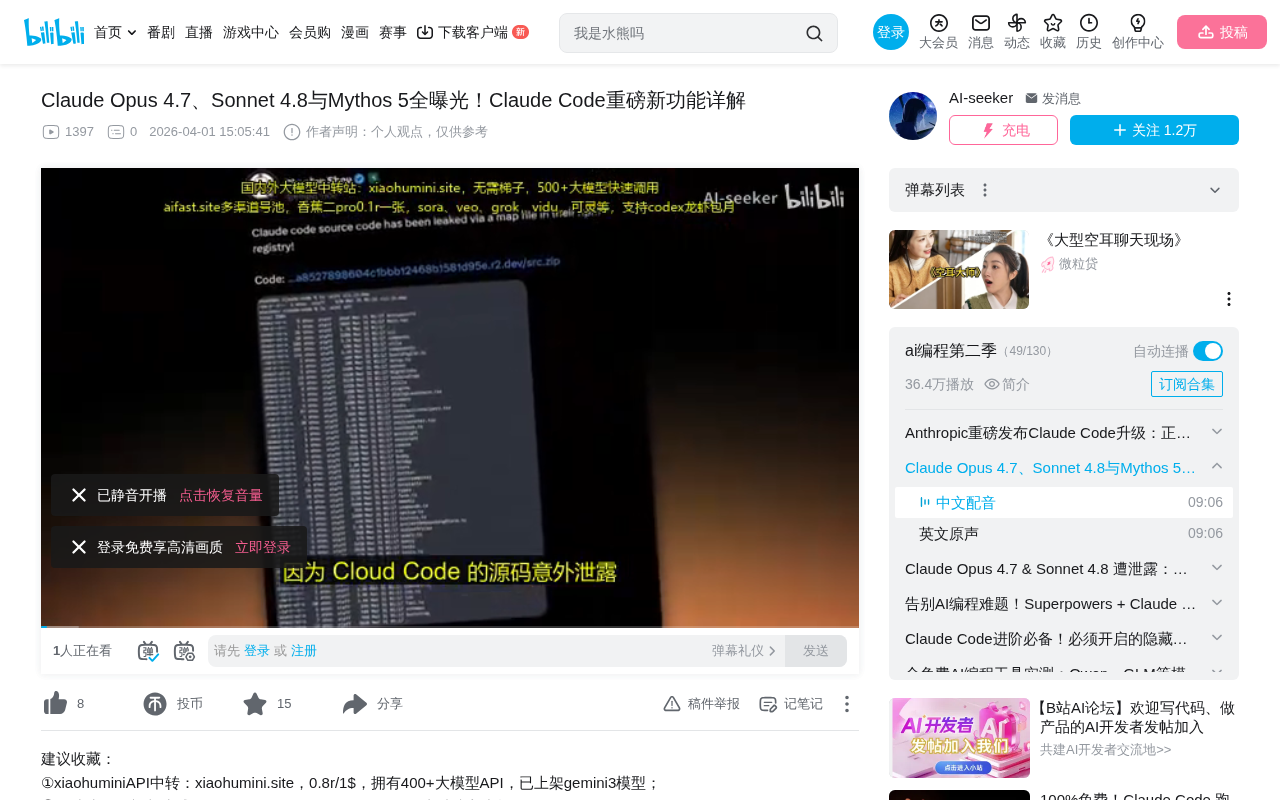
Claude Code Source Code Leak: Full Roadmap for Opus 4.7 and Mythos 5 Exposed
Anthropic suffers a major code leak exposing 500K+ lines of Claude Code source, unreleased Opus 4.7, Sonnet 4.8, Mythos 5 models, 44 hidden feature flags, and the full product roadmap.
Read more →
Industry Insights
Qoder's Context Engineering in Practic…
·4 min
Qoder's Context Engineering in Practice: Four-Layer Retrieval Engine and Memory System Architecture
Deep analysis of Qoder's (Tongyi Lingma international edition) context engineering architecture, including its four-layer retrieval engine, memory engine, context caching, and core product design.
Read more →
Product Reviews
Ruflo: A Multi-Agent Orchestration Sol…
·3 min
Ruflo: A Multi-Agent Orchestration Solution That Turns Claude Code into a 100-Person AI Team
Ruflo is an open-source multi-agent orchestration platform that upgrades single-threaded Claude Code into a distributed AI dev team with 100+ specialized Agents and a SANA self-learning engine.
Read more →
Product Reviews
Agent Memory: Giving AI Coding Agents …
·2 min
Agent Memory: Giving AI Coding Agents Persistent Memory Across Sessions
Agent Memory is an open-source local memory layer providing persistent, cross-session, cross-tool long-term memory for AI coding agents like Claude Code, Cursor, and Codex.
Read more →
Tutorials
Claude Code Hidden Configurations Full…
·3 min
Claude Code Hidden Configurations Fully Explained: From Chat Assistant to Semi-Automated Programming Workflow
Explore Claude Code's source code to unlock hidden configurations like Hooks, Agents, Permissions, and Memories. Transform your AI assistant into a customizable semi-automated development workflow.
Read more →
Tutorials
Orchestrating AI Agents as State Machi…
·2 min
Orchestrating AI Agents as State Machines: Stop Being a Human Confirmation Button
Explore the next evolution of AI coding: applying CI/CD engineering practices to orchestrate Agents as state machines with YAML templates, Gates, and Dashboards for autonomous multi-Agent progression.
Read more →
Tutorials
BMad-Method: Building an AI Agile Deve…
·3 min
BMad-Method: Building an AI Agile Development Team with a Multi-Agent Framework
Deep dive into BMad-Method, an open-source multi-agent framework simulating a full agile team—from business analysis to QA—supporting Claude Code, Cursor, and more.
Read more →
Tutorials
Harness Engineering Deep Dive: Multi-L…
·2 min
Harness Engineering Deep Dive: Multi-Level Memory and Multi-Agent Collaborative Development in Practice
Deep dive into Harness Engineering: deconstructing Claude Code's multi-level memory, defense-in-depth, Hermes Agent autonomous evolution, and multi-Agent collaboration for industrial-grade AI development.
Read more →
Tutorials
Context Engineering Replaces Prompt En…
·1 min
Context Engineering Replaces Prompt Engineering: A Guide to Boosting Programming Efficiency with Claude Code
Learn how Context Engineering replaces Prompt Engineering to boost Claude Code efficiency. Build complex multi-Agent projects with zero coding using structured context files.
Read more →
Tutorials
MCP Protocol Practical Guide: The Stan…
·2 min
MCP Protocol Practical Guide: The Standard Interface for Connecting LLMs to Everything
Deep dive into MCP (Model Context Protocol) principles and practical applications. Learn how LLMs connect to external tools via MCP to become agents, covering Java tech stacks, MCP Server ecosystem, Cherry Studio demos, and A2A protocol comparison.
Read more →
Tutorials
CrewAI Multi-Agent Collaboration in Pr…
·2 min
CrewAI Multi-Agent Collaboration in Practice: Core Concepts, Model Comparison & API Deployment
A deep dive into CrewAI's four core concepts for multi-agent collaboration, with hands-on FastAPI deployment and a comparison of GPT-4o-mini, Qwen MAX, and Llama 3.1.
Read more →
Tutorials
Practical Guide to Building Multi-Agen…
·3 min
Practical Guide to Building Multi-Agent Collaborative Applications with CrewAI + FastAPI
Learn how to build a multi-Agent collaborative system with CrewAI and FastAPI. Covers Agent, Task, Crew concepts, GPT/Tongyi Qianwen/Ollama integration, with complete code examples and model comparisons.
Read more →
Tutorials
WenzAgent Open-Source Framework: A Pra…
·2 min
WenzAgent Open-Source Framework: A Practical Tutorial for Multi-Agent Collaborative Management on LAN
A detailed guide on deploying WenzAgent, an open-source multi-Agent management framework under Apache License, supporting LAN-based multi-device AI agent collaboration with Server-Client architecture.
Read more →
Tutorials
Building an Agent Framework from Scrat…
·2 min
Building an Agent Framework from Scratch: Breaking Down the Four Core Modules with Code Implementation
Learn how to split AI Agent capabilities into four modules—Tool Registry, Message Store, Agent Runtime, and Built-in Tools—and build a reusable, extensible Agent framework using Python decorators.
Read more →
Tutorials
Getting Started with LangChain: Core C…
·3 min
Getting Started with LangChain: Core Concepts and Hands-On Guide for LLM and Agent Development
A systematic guide to LangChain's core features, covering LLM vs. Agent concepts, unified interface design, multi-provider support, environment setup, and hands-on code examples for AI app development.
Read more →