#Context Window
683 related articles
Industry Insights
Gemini CLI Shutdown: A 100K-Star Proje…
·2 min
Gemini CLI Shutdown: A 100K-Star Project Killed Overnight — Three Alternatives Compared
Google's Gemini CLI shut down overnight despite 100K Stars. Compare three alternatives — Claude Code, Aider, and Cline — to find sustainable terminal AI coding tools and avoid vendor lock-in.
Read more →
Tutorials
Vibe Engineering in Practice: AI Evolv…
·3 min
Vibe Engineering in Practice: AI Evolves from Code Generator to Programming Teammate
A deep dive into Vibe Engineering principles: context engineering, sub-agent collaboration, autonomous testing loops, plus OpenAI's case study of a 12-hour Kotlin-to-Rust rewrite.
Read more →
Industry Insights
Qoder's Context Engineering in Practic…
·4 min
Qoder's Context Engineering in Practice: Four-Layer Retrieval Engine and Memory System Architecture
Deep analysis of Qoder's (Tongyi Lingma international edition) context engineering architecture, including its four-layer retrieval engine, memory engine, context caching, and core product design.
Read more →
Product Reviews
Cursor + Claude 3.7 Sonnet Coding Test…
·3 min
Cursor + Claude 3.7 Sonnet Coding Test: Four Side-by-Side Comparisons Reveal Stunning Improvements
Hands-on comparison of Claude 3.7 Sonnet vs 3.5 in Cursor across four front-end tasks, revealing dramatic improvements in requirement understanding, UI aesthetics, and multimodal recognition.
Read more →
Tutorials
Context Engineering in Practice with C…
·3 min
Context Engineering in Practice with CodeBuddy IDE: Two Rule Files to Generate Apps with a Single Sentence
Learn how to apply Context Engineering in CodeBuddy IDE using two custom rule files — a Requirements-to-TODO-LIST engine and a Project Execution engine — to generate complete apps with a single sentence.
Read more →
Product Reviews
Ruflo: A Multi-Agent Orchestration Sol…
·3 min
Ruflo: A Multi-Agent Orchestration Solution That Turns Claude Code into a 100-Person AI Team
Ruflo is an open-source multi-agent orchestration platform that upgrades single-threaded Claude Code into a distributed AI dev team with 100+ specialized Agents and a SANA self-learning engine.
Read more →
 Tech Frontiers
·2 min
Opus 4.8 Lands on Cosmos: Breaking Down Its Long-Running Autonomous Task Execution
Claude Opus 4.8 launches on Cosmos with multi-hour autonomous task execution, end-to-end ticket-to-PR workflows, and deep Linear/Sentry integration, marking a new era for AI coding assistants.
Read more →
Tech Frontiers
Kiro Stops Providing Claude Model Serv…
·2 min
Kiro Stops Providing Claude Model Services to Chinese Users: Impact and Alternatives
Kiro officially stops providing Claude models and Auto Agent to Chinese users. Learn about the impact, official alternatives, refund policies, and practical strategies for affected developers.
Read more →
Product Reviews
Agent Memory: Giving AI Coding Agents …
·2 min
Agent Memory: Giving AI Coding Agents Persistent Memory Across Sessions
Agent Memory is an open-source local memory layer providing persistent, cross-session, cross-tool long-term memory for AI coding agents like Claude Code, Cursor, and Codex.
Read more →
Tutorials
35 Lines of Prompts Let Codex Auto-Opt…
·3 min
35 Lines of Prompts Let Codex Auto-Optimize Your Workflow — Reposted by OpenAI's President
An OpenAI employee used just 35 lines of prompts to have Codex analyze 30 days of work history, identify repetitive tasks, and generate reusable automated Skills. Combined with screen reading and long-term memory, Codex is becoming a proactive workflow optimization agent.
Read more →
 Tech Frontiers
·1 min
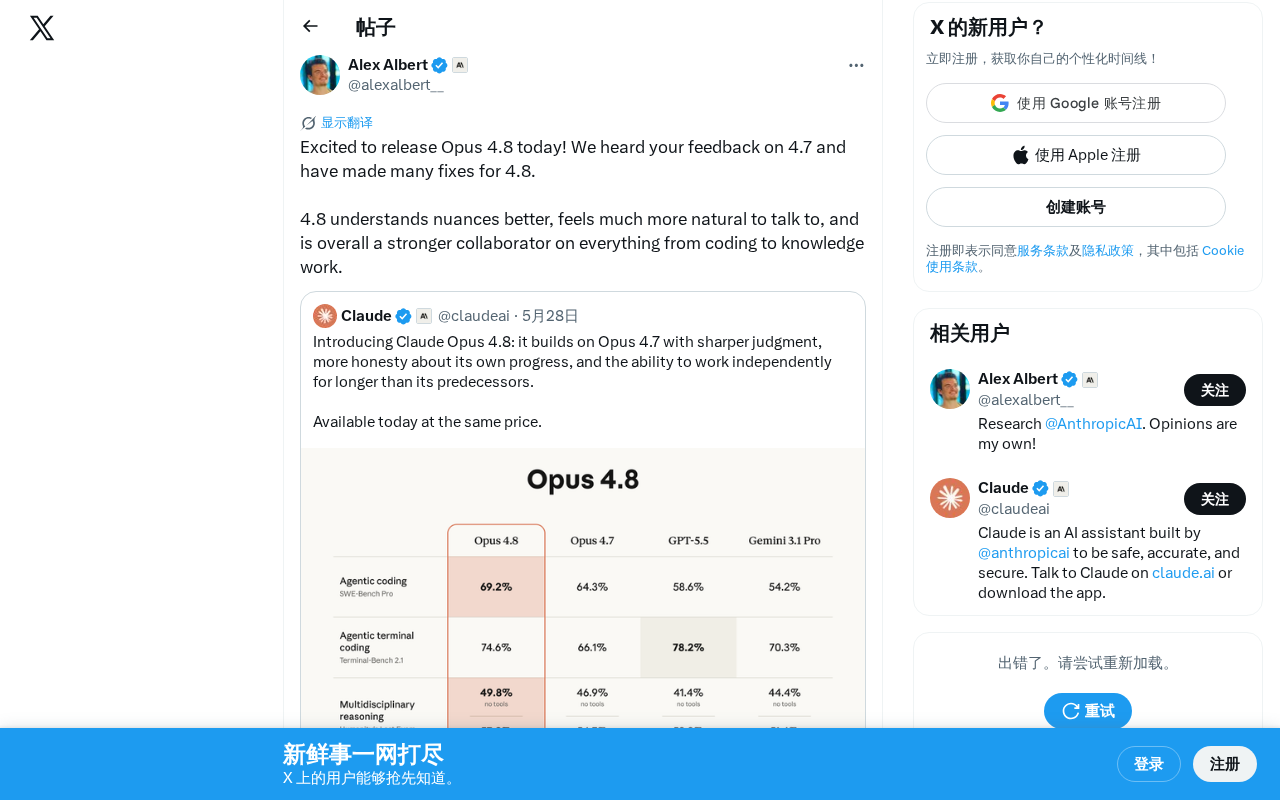
Claude Opus 4.8 Released: Comprehensive Upgrades in Nuanced Understanding and Conversational Naturalness
Anthropic releases Claude Opus 4.8 with three core improvements based on user feedback: better nuance understanding, more natural conversations, and stronger collaboration from coding to knowledge work.
Read more →
Product Reviews
Claude Code's Frontend UI Too Ugly? Th…
·3 min
Claude Code's Frontend UI Too Ugly? This Open-Source Skill Teaches AI Professional Design
AI coding tools produce frontend pages lacking design sense? UI-UX-Pro-Max-Skill is an open-source design enhancement Skill with 67 UI styles, 161 color systems, supporting Claude Code and Cursor.
Read more →
Product Reviews
Claude Opus 4.8 Real-World Testing: Wh…
·2 min
Claude Opus 4.8 Real-World Testing: What $50 in Tokens Actually Gets You
In-depth testing of Claude Opus 4.8 across game dev, UI reproduction, 3D scenes, and tool building—$50 in Tokens reveals its true capabilities and limits.
Read more →
Product Reviews
Claude Code vs Codex Deep Dive: A Prac…
·3 min
Claude Code vs Codex Deep Dive: A Practical Guide to Choosing the Right AI Coding Tool
A comprehensive comparison of Claude Code and OpenAI Codex covering architecture, use cases, and benchmarks to help you choose the right AI coding tool.
Read more →
Tutorials
Build a Claude Code Agentic OS in 3 St…
·3 min
Build a Claude Code Agentic OS in 3 Steps — Stop Using AI Like a Slot Machine
Learn how to transform Claude Code from a random prompting tool into a systematic Agentic OS through three layers: architecture, Obsidian memory, and an observability dashboard.
Read more →
 Tech Frontiers
·1 min
OpenAI Codex New Version Released: A Major Upgrade for the AI Programming Assistant
OpenAI releases a new version of Codex with major improvements in code generation accuracy, multi-language support, and developer workflow integration. Analysis of its impact on the AI programming landscape.
Read more →
Tutorials
CLAUDE.md Configuration Guide: Write Y…
·2 min
CLAUDE.md Configuration Guide: Write Your Project Spec Using a Six-Section Structure
A detailed guide to configuring CLAUDE.md with a six-section structure covering project overview, features, tech stack, directory structure, code conventions, and constraints to boost AI coding efficiency.
Read more →
Tutorials
Claude Code Hidden Configurations Full…
·3 min
Claude Code Hidden Configurations Fully Explained: From Chat Assistant to Semi-Automated Programming Workflow
Explore Claude Code's source code to unlock hidden configurations like Hooks, Agents, Permissions, and Memories. Transform your AI assistant into a customizable semi-automated development workflow.
Read more →
 Tech Frontiers
·2 min
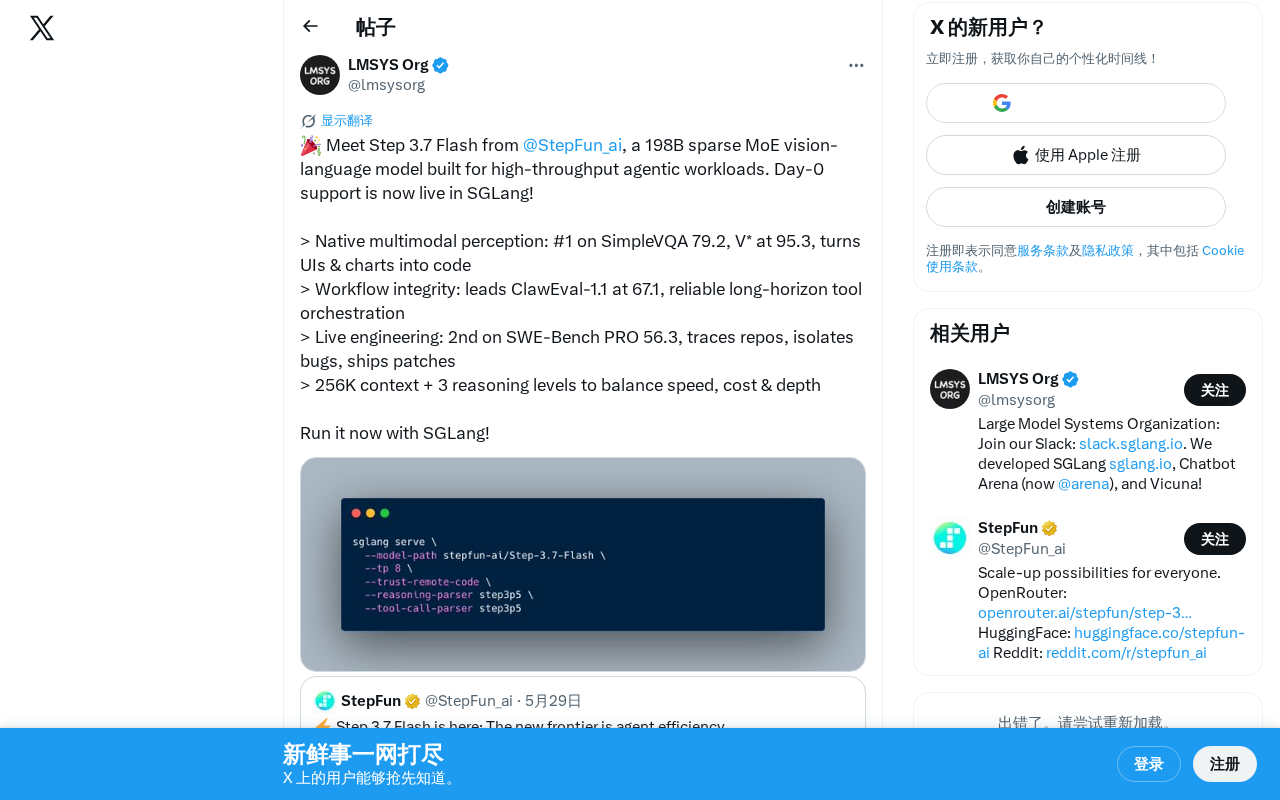
Step 3.7 Flash: Deep Dive into the 198B Sparse MoE Multimodal Model
Deep dive into StepFun AI's Step 3.7 Flash, a 198B sparse MoE vision-language model with 256K context and 3-level reasoning, excelling in multimodal understanding, AI coding, and Agent tool orchestration.
Read more →
 Tech Frontiers
·2 min
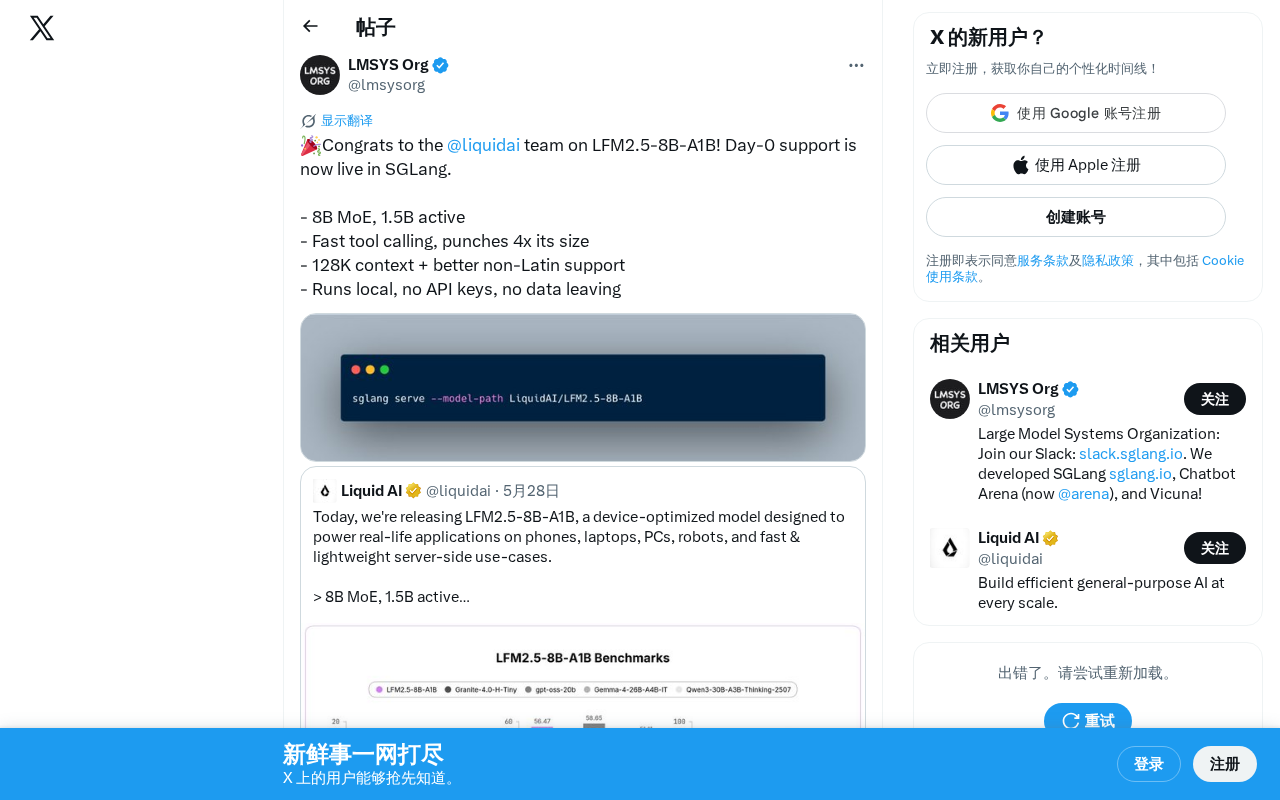
LFM2.5-8B-A1B: A MoE Model with 1.5B Active Parameters Delivering 4x Its Weight Class Performance
Liquid AI releases LFM2.5-8B-A1B, a MoE model with 8B total params but only 1.5B active, matching 6B-class models in tool calling. Supports 128K context, local deployment, multilingual, with SGLang Day-0 support.
Read more →