#automated testing
43 related articles
 Deep Dives
·4 min
Can AI Agents Replace a Development Team? A Practical Guide for Non-Technical People
Can non-technical people use AI Agents to build virtual dev teams? From CEO Agent to Developer Agent, we analyze the theory vs. reality and offer a practical implementation guide.
Read more →
Tutorials
Introduction to Software Testing: A Co…
·3 min
Introduction to Software Testing: A Complete Guide to Classification Systems and Core Concepts
A beginner's guide to software testing covering definitions, purposes, four testing stages, black-box vs. white-box testing, smoke testing, regression testing, and other core concepts.
Read more →
Tutorials
Building a Fully Automated Coding Agen…
·3 min
Building a Fully Automated Coding Agent with n8n: From Issue to PR with Zero Human Intervention
Learn how to build a fully automated coding Agent with n8n workflows — from Slack messages to GitHub Issues, AI auto-coding, and PR submission, all hands-free.
Read more →
Tutorials
Vibe Coding in Practice: From Idea to …
·4 min
Vibe Coding in Practice: From Idea to Deployment in Just Five Steps
A detailed guide to the complete Vibe Coding workflow: design UI with Google Stitch, generate frontend with AI Studio, build backend with AntiGravity—go from idea to deployed app in five steps with zero coding experience.
Read more →
Product Reviews
Ruflo: A Multi-Agent Orchestration Sol…
·3 min
Ruflo: A Multi-Agent Orchestration Solution That Turns Claude Code into a 100-Person AI Team
Ruflo is an open-source multi-agent orchestration platform that upgrades single-threaded Claude Code into a distributed AI dev team with 100+ specialized Agents and a SANA self-learning engine.
Read more →
 Tech Frontiers
·2 min
Google Gemini Drops Update: New Interface Design and Spark Intelligent Agent Assistant Explained
Google Gemini Drops brings a complete interface redesign and Gemini Spark 24/7 intelligent agent assistant. Deep analysis of the upgraded experience, agentic AI capabilities, and competition with ChatGPT and Copilot.
Read more →
Tutorials
35 Lines of Prompts Let Codex Auto-Opt…
·3 min
35 Lines of Prompts Let Codex Auto-Optimize Your Workflow — Reposted by OpenAI's President
An OpenAI employee used just 35 lines of prompts to have Codex analyze 30 days of work history, identify repetitive tasks, and generate reusable automated Skills. Combined with screen reading and long-term memory, Codex is becoming a proactive workflow optimization agent.
Read more →
Tutorials
Claude Code Hidden Configurations Full…
·3 min
Claude Code Hidden Configurations Fully Explained: From Chat Assistant to Semi-Automated Programming Workflow
Explore Claude Code's source code to unlock hidden configurations like Hooks, Agents, Permissions, and Memories. Transform your AI assistant into a customizable semi-automated development workflow.
Read more →
Tutorials
BMad-Method: Building an AI Agile Deve…
·3 min
BMad-Method: Building an AI Agile Development Team with a Multi-Agent Framework
Deep dive into BMad-Method, an open-source multi-agent framework simulating a full agile team—from business analysis to QA—supporting Claude Code, Cursor, and more.
Read more →
Product Reviews
Augment Remote Agent Hands-On: Running…
·3 min
Augment Remote Agent Hands-On: Running 10 Cloud AI Agents in Parallel for Programming
Hands-on review of Augment Remote Agent: 10 cloud AI Agents coding in parallel, covering bug fixes, PR generation, documentation, and more with detailed workflows and real-world examples.
Read more →
Industry Insights
AI Fully Automated Orchestration in Pr…
·3 min
AI Fully Automated Orchestration in Practice: How Software Production Costs Are Being Completely Disrupted
Deep analysis of AI fully automated software orchestration: from Claude Code workflows to parallel orchestration strategies, exploring how models like MiniMax M1 drive software production costs toward zero.
Read more →
Tutorials
Complete Guide to Building Claude MCP …
·2 min
Complete Guide to Building Claude MCP Services: From Local Development to Remote Deployment
Complete guide to MCP server setup: FastMCP local development, Claude CLI registration, STDIO vs HTTP communication modes, and Docker containerized remote deployment for AI-callable tool services.
Read more →
Tutorials
Cursor AI + Back4App Full-Stack Develo…
·3 min
Cursor AI + Back4App Full-Stack Development in Practice: Build Production-Ready Web Apps with a Single Prompt
Learn how to use Cursor AI with Back4App to auto-build user auth, databases, and deploy a full finance tracker app using natural language — no backend code needed.
Read more →
Tutorials
Cursor 2.0 in Practice: Vibe Coding Me…
·3 min
Cursor 2.0 in Practice: Vibe Coding Methodology & Guide to 10x Coding Efficiency
Deep dive into Cursor 2.0's Vibe Coding methodology with two real-world scenarios: full-stack site building and enterprise bug fixing using the Rules, Commands, Context architecture for 10x dev efficiency.
Read more →
Product Reviews
Zenflow Hands-On Review: Spec-Driven A…
·3 min
Zenflow Hands-On Review: Spec-Driven AI Coding vs. Pure Prompt-Based Development
In-depth review of Zenflow's spec-driven AI coding vs Google AI Studio's prompt-based approach. Covers multi-agent execution, automated validation, version rollback, and the paradigm shift in AI programming.
Read more →
 Research
·3 min
110K PRs Tested: Which of 5 AI Coding Agents Is Most Reliable?
Empirical study of 110K open-source PRs comparing 5 AI coding agents (GitHub Copilot, Claude Code, Devin) on merge rates, code survival, and long-term maintainability—revealing AI code's 50% one-year survival rate.
Read more →
 Tutorials
·3 min
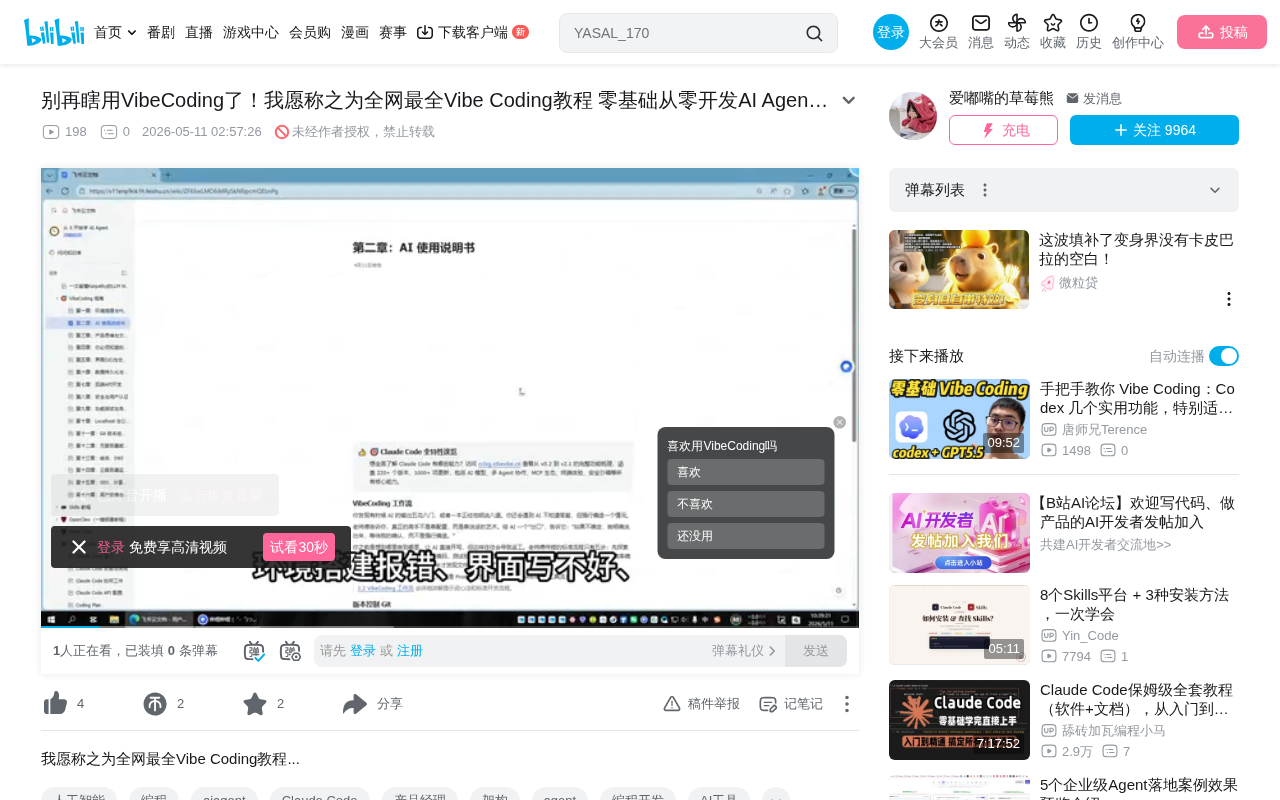
Complete Vibe Coding Tutorial: 15 Key Steps to Building an AI Agent from Scratch
A systematic breakdown of 15 key steps for building AI Agents with Vibe Coding, covering environment setup, product docs, frontend UI, backend APIs, databases, and deployment.
Read more →
 Product Reviews
·3 min
Google Jules 2.0 Major Upgrade: Deep Dive into Seven New Features
Google's AI coding assistant Jules exits Beta with environment snapshots, Critic Agent reinforcement learning code review, interactive planning, web preview, web search, and more.
Read more →
 Tutorials
·3 min
Harness Engineering: A Practical Guide to AI Development — From Prompts to Mastering AI Agents
A deep dive into Harness Engineering's three-layer architecture: Information, Constraint, and Automation layers, covering Agent failure modes, OpenAI and Anthropic best practices, and AI tool selection strategies for controlled AI development.
Read more →
 Deep Dives
·3 min
Harness Engineering Explained: Building Stable and Efficient Work Systems for AI
Deep dive into Harness Engineering: how to build execution environments, toolchains, and feedback loops for AI. From Prompt Engineering to system-level engineering for stable AI production.
Read more →